


The Amazon Battery and Battery Revolution: Powering More Than Just Your Devices
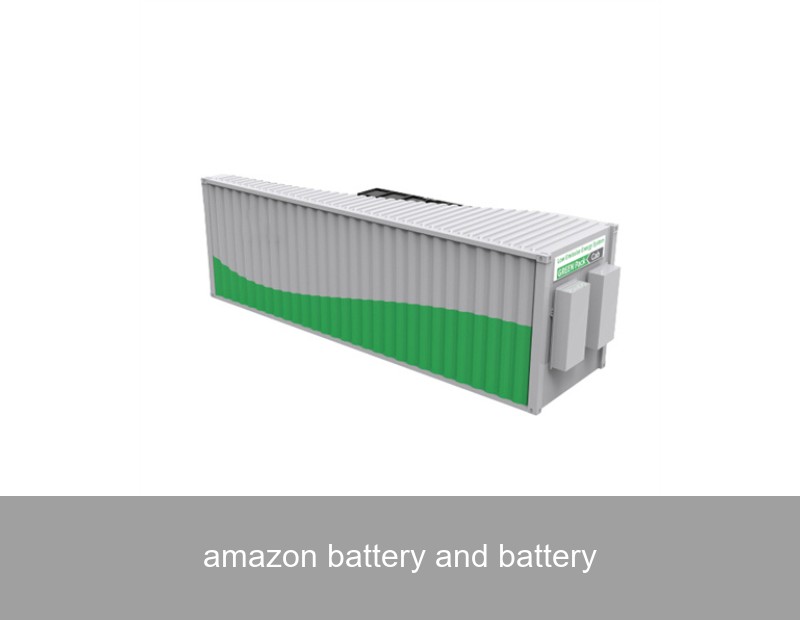
When you hear "Amazon battery," you might think of the rechargeable cells for your Kindle or the backup for your Ring camera. But there's a much larger, more critical "battery" story unfolding—one that powers the vast, humming network of Amazon Web Services (AWS) data centers, fulfillment centers, and its entire global logistics empire. This isn't about single-use cells; it's about sophisticated, grid-scale battery and battery energy storage systems (BESS) that are becoming the unsung heroes of our digital and sustainable future.
The Grid Strain Phenomenon
Our modern economy runs on a paradox: we demand instantaneous digital services (streaming, next-day delivery, cloud computing) while simultaneously pushing for a greener grid powered by intermittent renewables like solar and wind. This creates a fundamental mismatch. The sun doesn't shine at peak e-commerce hours, and the wind doesn't always blow when data center demand surges. This strain isn't theoretical; it manifests as grid instability, rising energy costs, and even the threat of outages that can halt a digital operation in its tracks.

Image Source: Unsplash - A modern data center, a significant driver for advanced battery storage needs.
Data: The Energy Cost of Instant Gratification
Let's put some numbers to the challenge. According to the International Energy Agency (IEA), data centers and transmission networks accounted for about 1-1.5% of global electricity use in 2022, a figure poised to grow with AI. In the U.S., commercial buildings like massive fulfillment centers are energy-intensive hubs. During periods of peak demand, often on hot summer afternoons, electricity prices can spike by 300% or more. For a mega-corporation, this isn't just an operational cost—it's a significant financial and resilience risk.
| Challenge | Impact on Operations | Traditional Response |
|---|---|---|
| Peak Demand Charges | Exponentially higher electricity bills for short periods of high use. | Pay the fee, or manually shut down non-critical loads (disruptive). |
| Grid Instability/Outages | Downtime for data centers & halted logistics; revenue loss. | Diesel generators (noisy, polluting, slow to respond). |
| Intermittent Renewable Supply | Can't rely solely on solar/wind for 24/7 operations. | Remain dependent on the fossil-fuel-based grid. |
Case Study: Powering Resilience in Texas
The 2021 Winter Storm Uri in Texas was a stark wake-up call. Grid failure led to widespread blackouts, crippling businesses. A major logistics and warehousing company (with an operational profile similar to an Amazon fulfillment hub) in the Dallas-Fort Worth area had previously invested in a solution. They deployed a 2.5 MW / 10 MWh containerized battery storage system at their distribution center. Here’s what happened during the crisis:
- Seamless Transition: When the grid failed, the BESS immediately provided backup power to critical refrigeration and sorting systems for over 4 hours, preventing millions in spoilage and lost throughput.
- Peak Shaving: In normal operations, the system automatically discharges during expensive peak periods, cutting their demand charges by an estimated 28% annually.
- Renewable Integration: Paired with a rooftop solar array, the battery stores excess solar energy generated midday for use in the evening, increasing their on-site renewable consumption by 60%.
This real-world example moves the concept of an "Amazon battery" from a consumer product to an industrial-grade resilience and financial tool.
Beyond Backup: The Modern Battery System
Today's advanced BESS is a smart, multi-functional asset. It's a Swiss Army knife for energy management:
- Peak Shaving: Automatically discharges to flatten your energy demand curve.
- Energy Arbitrage: Charges when grid electricity is cheap (often at night) and discharges when it's expensive.
- Frequency Regulation: Provides millisecond-response services to help stabilize the broader grid (a potential revenue stream).
- Renewable Firming: Makes solar and wind power dispatchable and reliable, smoothing out generation gaps.

Image Source: Unsplash - An engineer inspecting a containerized battery energy storage system (BESS).
Highjoule's Role: The Intelligent Energy Architect
This is where Highjoule's expertise becomes critical. Since 2005, we've evolved from a component provider to a global leader in integrated, intelligent storage solutions. We understand that a successful deployment isn't just about the battery cells—it's about the system intelligence, safety, and long-term performance.
For commercial and industrial clients facing challenges akin to those of major tech and logistics giants, Highjoule offers:
- Highjoule HPS Series (Commercial & Industrial): Scalable, containerized solutions from 500 kWh to 10 MWh+, featuring our proprietary cell-to-system safety architecture and advanced thermal management for unparalleled lifespan and safety.
- Intelligent Energy Management System (i-EMS): The brain of the operation. Our AI-driven software platform optimizes every kilowatt-hour for maximum financial return, whether through demand charge reduction, arbitrage, or grid services. It seamlessly integrates with on-site solar, wind, and existing building management systems.
- Microgrid Solutions: We design and deploy turnkey microgrids that combine solar, storage, and generator controls, enabling facilities like campuses, hospitals, and industrial parks to operate as self-sufficient "islands" during grid outages, while cutting costs and carbon daily.
Our approach ensures that your "battery" investment is a future-proofed asset, not just a cost center. As the National Renewable Energy Lab (NREL) has documented, strategic storage deployment is key to grid reliability and decarbonization.
Future Charged: What's Next?
The narrative is shifting. The "Amazon battery" is no longer a small cylinder in a device; it's the cornerstone of a resilient, efficient, and sustainable enterprise. As electric vehicle fleets become the norm for last-mile delivery and AI computation demands soar, the role of intelligent storage will only magnify. The question for business leaders is no longer if they need a comprehensive energy strategy, but how quickly they can implement one.
Is your business merely reacting to utility bills and grid warnings, or are you proactively building an energy ecosystem that powers your operations, protects your bottom line, and contributes to a stable, green grid for everyone?
 Inquiry
 Online Chat