


Unlocking Energy Independence: A Deep Dive into the Deye Solar Hybrid Inverter
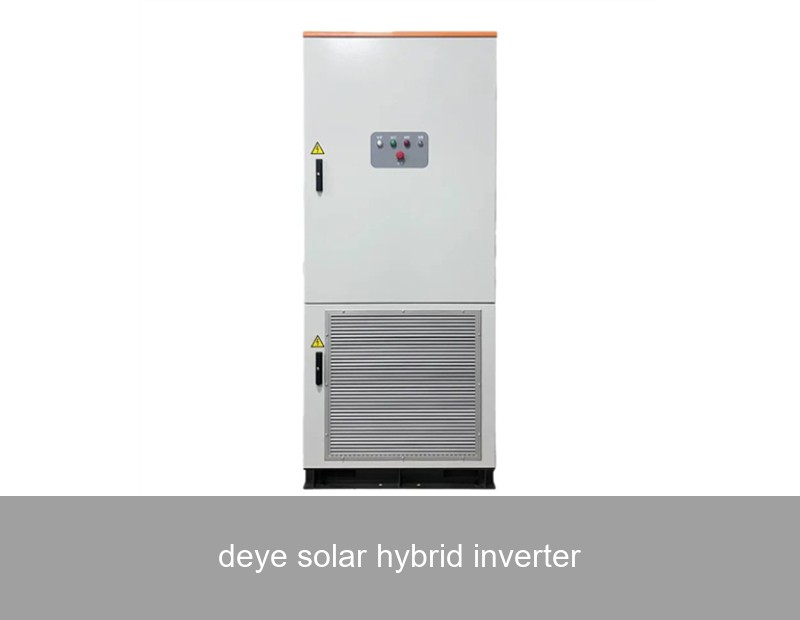
Have you ever watched your electricity bill climb with the seasons and wondered if there's a smarter way to power your home or business? You're not alone. Across Europe and the US, a quiet revolution is happening on rooftops and in utility rooms, driven by a desire for control, resilience, and sustainability. At the heart of this shift is a critical piece of technology: the solar hybrid inverter. Unlike traditional inverters, a hybrid model is the intelligent brain of a modern energy system, seamlessly managing power from solar panels, the grid, and a battery bank. Today, we're focusing on a leading name in this space—the Deye solar hybrid inverter—and exploring why it's becoming the go-to choice for those serious about their energy future.
Table of Contents
What Exactly is a Deye Solar Hybrid Inverter?
Think of your energy system as an orchestra. The solar panels are the musicians, the batteries are the backup singers, and the grid is the concert hall's own sound system. The Deye solar hybrid inverter is the conductor. It doesn't just convert direct current (DC) from your panels to alternating current (AC) for your home—a job for any solar inverter. It dynamically conducts multiple energy flows. It decides when to send solar energy to power your appliances, when to charge your battery storage for later use, and when to pull from or send excess energy back to the grid, all while optimizing for efficiency and cost.

Image Source: Unsplash - Representative image of a modern inverter installation.
Deye has established itself as a powerhouse in this category by focusing on robust engineering, high conversion efficiencies, and remarkable versatility. Their inverters are designed to handle a wide range of input voltages from solar arrays and integrate with various battery chemistries, including popular lithium-ion options like LFP (LiFePO4). This flexibility is crucial for tailoring systems to specific needs, whether for a family home in California or an agricultural business in Germany.
The Grid Evolution: Why Hybrid Technology Matters Now
The "why now" is a compelling mix of global trends and local pain points. Let's break it down:
- Rising Energy Costs: In Europe, gas price volatility has sent electricity tariffs soaring. In the US, grid modernization costs and peak demand charges are pushing bills higher. Solar alone helps, but without storage, you're still vulnerable when the sun sets.
- Grid Instability & Outages: From heatwaves straining California's grid to extreme weather events across Europe, power reliability is a growing concern. A traditional grid-tied solar system shuts off during a blackout for safety. A hybrid inverter with backup functionality keeps your lights on.
- The Self-Consumption Imperative: Feed-in tariffs (payments for sending solar power to the grid) are declining globally. The new economic model is maximizing self-consumption—using the energy you produce directly. A Deye inverter, paired with a battery, can push self-consumption rates from 30-40% to 70% or more.
According to the International Energy Agency (IEA), global renewable capacity is set to expand by 2.5 times by 2030, with solar PV accounting for three-quarters of this growth. This explosive growth demands smarter infrastructure at the consumer level, which is precisely where hybrid inverters excel.
Key Features That Set Deye Hybrid Inverters Apart
Not all hybrid inverters are created equal. When evaluating a Deye unit, several features consistently stand out to system integrators and energy experts like our team at Highjoule:
| Feature | Benefit | Practical Impact |
|---|---|---|
| High Dual MPPT Efficiency | Allows connection of solar arrays on different roof orientations with minimal power loss. | Maximizes energy harvest from complex rooftops, common in European urban settings. |
| Seamless UPS (Uninterruptible Power Supply) Switch | Switches to backup power in milliseconds (typically <20ms). | Critical loads like computers, medical devices, and refrigeration experience no interruption during a grid outage. |
| Advanced Battery Management | Wide compatibility and smart charging algorithms that extend battery lifespan. | Protects your significant investment in battery storage and ensures long-term system health. |
| Smart Energy Management Software | Intuitive monitoring and control via app, with configurable time-of-use settings. | Enables users to automatically use cheap grid power or battery power during peak expensive hours, optimizing savings. |
A Real-World Case Study: Resilience for a Family Farm in Bavaria
Let's move from theory to practice. Consider the case of the Schmidt family farm in Bavaria, Germany. Their challenges were multifaceted: rising operational energy costs, the need for reliable power for milking and cooling systems, and a commitment to sustainable farming.
In collaboration with a Highjoule-certified installer, a system centered around a Deye 12kW solar hybrid inverter was implemented. The system included 15kW of solar panels and a 20kWh Highjoule Harmony LFP battery. The goal was not just to save money, but to create an energy-resilient operation.
- Energy Self-Sufficiency: The farm achieved an 82% rate of self-consumption for its solar production.
- Outage Protection: During two significant winter grid outages (totaling 11 hours), the farm's critical operations continued uninterrupted.
- Financial Return: By combining solar self-consumption, intelligent peak shaving, and residual feed-in, the system is projected to pay for itself in under 8 years, with decades of low-cost energy to follow.

Image Source: Unsplash - Representative image of agricultural solar installation.
This case mirrors the findings of studies like those from the National Renewable Energy Lab (NREL), which highlight the value of solar-plus-storage for commercial resilience.
Beyond the Hardware: The Highjoule Advantage
At Highjoule, we understand that a superior component like a Deye inverter is only one part of a successful energy solution. Since 2005, we've evolved from a component supplier to a global provider of integrated, intelligent energy systems. Our role is to bridge the gap between advanced technology and real-world user experience.
When you choose a Highjoule system featuring a Deye hybrid inverter, you're not just buying hardware. You're gaining access to:
- System-Level Engineering: We ensure the inverter, Highjoule batteries, solar arrays, and safety equipment are perfectly matched and certified for your region (be it UL standards in the US or CE directives in Europe).
- Highjoule Energy OS: Our proprietary energy management platform provides a single, clear interface to monitor, control, and optimize your entire system's performance, turning raw data into actionable insights.
- Professional Network: We work exclusively with a vetted network of certified installers. This guarantees that your system is designed correctly, installed safely, and commissioned for peak performance from day one.
For us, the Deye solar hybrid inverter is a preferred engine in our broader ecosystem—a reliable, high-performance component that we expertly integrate into a tailored solution for residential, commercial, and microgrid applications.
Making the Choice: Is a Hybrid System Right for You?
So, how do you decide? The move to a hybrid system is particularly compelling if you answer "yes" to any of the following:
- Do you experience frequent grid outages or have critical loads that cannot go offline?
- Is your main goal to maximize independence from the grid and volatile energy prices?
- Do you have time-of-use electricity rates where power is significantly cheaper at night?
- Are you planning for future expansion, like adding an electric vehicle charger?
The beauty of a modular system built around a capable hybrid inverter is its future-proof nature. You can start with solar and add storage later, or scale up your battery bank as your needs evolve.
A Final Thought to Ponder
Energy is no longer just a monthly bill—it's a foundational resource to manage actively. The technology, led by innovators like Deye and integrated by specialists like Highjoule, is here and proven. The question isn't just about saving money tomorrow, but about what kind of resilience and control you want to build for your home or business today. What would you power first if the grid went down, and what's stopping you from making that backup plan a permanent reality?
 Inquiry
 Online Chat