


Unlock Energy Independence: Your Guide to a Solar Power System with Battery
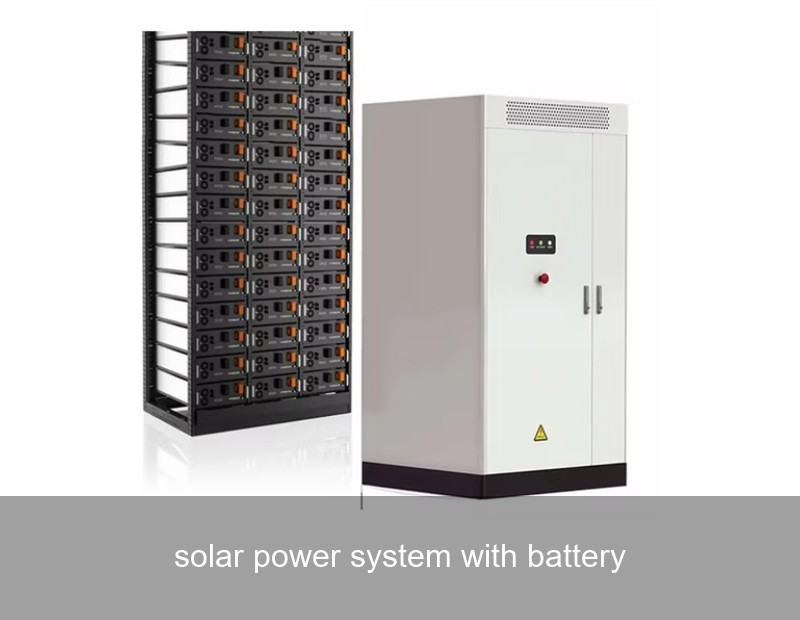
Imagine a rainy afternoon. Your solar panels are resting, but your home is still powered by the sun from yesterday. This isn't a fantasy; it's the daily reality for homes and businesses equipped with a solar power system with battery. For years, solar panels were the undisputed stars of renewable energy. But there was a catch: when the sun went down, or clouds rolled in, you'd immediately draw power from the grid. Today, the game has changed. The true power of solar is unlocked not just by capturing sunlight, but by storing it for precisely when you need it most. This combination is transforming how we think about energy—from a monthly bill to a personal asset we control.
Why the Solar Battery is No Longer a Luxury
Let's talk about a common phenomenon. You've seen the graphs: a solar panel system produces a beautiful bell curve of energy peaking at midday. But the average household's energy demand curve looks different—it often spikes in the early morning and again in the evening. This creates a "duck curve," a growing challenge for utilities where daytime solar oversupply plummets as the sun sets and demand surges. Without a battery, that precious midday surplus is often sent back to the grid for minimal credit, leaving you buying expensive power at night.
The data is compelling. According to the U.S. Department of Energy, integrating storage is key to achieving high levels of solar penetration on the grid. Financially, the equation is improving rapidly. Between 2015 and 2023, the average price of lithium-ion battery packs fell by over 80%, making a solar power system with battery more accessible than ever. Coupled with rising electricity rates and increasing grid instability in many regions, the return on investment now extends beyond savings to include tangible value in resilience and security.

Image: A modern home integrating solar panels with a wall-mounted battery storage unit. Source: Unsplash
Key Components of a Modern Solar Battery System
Understanding the pieces will help you see the whole picture. A robust system isn't just panels plus a box; it's an integrated ecosystem.
- Solar Photovoltaic (PV) Panels: These are your energy harvesters, converting sunlight into direct current (DC) electricity.
- Battery Storage Unit: The heart of your independence. Modern systems typically use Lithium Iron Phosphate (LFP) chemistry, prized for its long life, safety, and stability. Capacity is measured in kilowatt-hours (kWh).
- Hybrid or AC-Coupled Inverter: This is the brain. It manages energy flow, converting DC from panels or batteries to usable AC for your home, and deciding when to charge, discharge, or export.
- Energy Management System (EMS): The smart software that learns your usage patterns, weather forecasts, and utility rate schedules to optimize your system automatically for savings or backup.
Think of it this way: the panels are your farm, the battery is your granary, the inverter is your mill, and the EMS is your savvy farm manager.
Battery Technologies at a Glance
| Technology | Typical Lifespan (Cycles) | Key Advantage | Best For |
|---|---|---|---|
| Lithium Iron Phosphate (LFP) | 6,000+ | Safety, Longevity, Stability | Residential & Daily Cycling |
| NMC (Nickel Manganese Cobalt) | 3,000 - 4,000 | Higher Energy Density | Applications where space is limited |
| Lead-Acid (Advanced) | 1,000 - 1,500 | Lower Upfront Cost | Secondary or Budget-Conscious Backup |
A Real-World Case: Resilience in California
Let's move from theory to a powerful, data-driven case. Consider a mid-sized winery in Sonoma County, California. This region is not only sun-rich but also increasingly vulnerable to Public Safety Power Shutoffs (PSPS) to prevent wildfires. For the winery, a power outage during fermentation could ruin an entire vintage, representing a business-critical risk.
In 2022, the winery installed a 250 kW solar array paired with a 500 kWh solar power system with battery. The results over one year were telling:
- Energy Self-Sufficiency: The system covered 92% of the facility's annual energy needs.
- Outage Protection: During four separate PSPS events totaling 12 days, the battery provided seamless backup power, maintaining critical refrigeration and control systems. Zero product was lost.
- Financial Return: By avoiding peak utility charges (which can exceed $0.50/kWh in California) and participating in a limited grid services program, the project achieved an estimated payback period of under 7 years.
This case, echoed by many across the U.S. and Europe, illustrates the triple value proposition: savings, sustainability, and strategic resilience.
Choosing the Right System for Your Needs
Your energy profile is unique. A family home in Germany has different patterns than a dairy farm in Wisconsin. Asking the right questions is crucial:
- What is your primary goal? Maximizing self-consumption to cut bills? Providing essential backup during outages? Or contributing to grid stability?
- What is your critical load? During an outage, do you need to keep the lights, fridge, and internet on, or an entire medical device or commercial operation running? This defines your necessary battery capacity.
- How is your utility structured? Do you have time-of-use rates, net metering, or demand charges? A smart system can be programmed to navigate these tariffs for maximum savings.
Highjoule's Smart, Integrated Solutions
This is where expertise and integration matter. At Highjoule, with nearly two decades of experience, we don't just sell components; we deliver intelligent energy ecosystems. Our HPS Series residential battery systems, built with premium LFP cells, are designed for safety and a lifespan that matches your solar panels. They integrate seamlessly with leading inverters and are managed by our Highjoule EnergyOS platform.
For our commercial and industrial clients, our GridMax C&I solutions are scalable containerized or modular systems. They manage complex loads, reduce peak demand charges—a huge portion of commercial bills—and can even provide revenue through grid service programs. Crucially, our systems are designed with a holistic view, ensuring every component communicates perfectly for efficiency, safety, and a user-friendly experience monitored from your smartphone.
As the International Energy Agency notes, smart policy and innovation are accelerating storage deployment. We build our products to be at the forefront of this shift.

Image: A technician performing checks on a large-scale commercial battery energy storage system. Source: Unsplash
The Future is Bright and Stored
We're moving towards a decentralized, digital, and resilient energy model. The future solar power system with battery will likely be part of a virtual power plant (VPP), where thousands of individual systems are aggregated to support the grid during stress, turning prosumers into active grid participants. Technologies like vehicle-to-home (V2H) will integrate your EV as another storage asset.
The journey to energy independence is clearer than ever. It starts with understanding your own power, and choosing a partner that provides not just hardware, but the intelligence to make it work for you, day and night.
What would you power first if the grid went down, and how would knowing your energy is secure change your sense of comfort and control?
 Inquiry
 Online Chat