


Demystifying the Deye High Voltage Hybrid Inverter: Your Smart Energy Hub
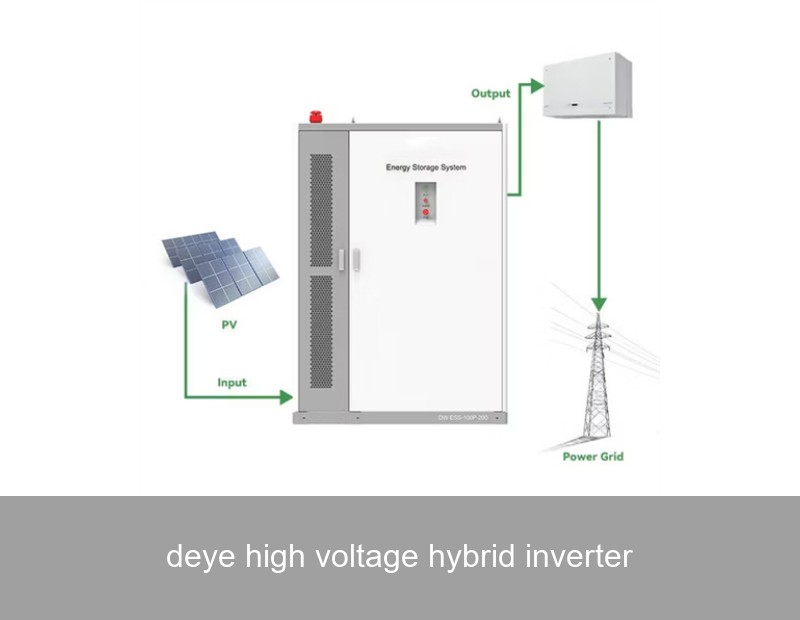
Have you ever looked at your electricity bill and wondered if there's a smarter, more independent way to power your home or business? You're not alone. Across Europe and the U.S., a quiet energy revolution is happening, driven by a desire for resilience, sustainability, and control. At the heart of many of these modern energy systems is a key component: the high voltage hybrid inverter. And when it comes to advanced, reliable technology in this space, brands like Deye are frequently at the top of the list. But what exactly does a Deye high voltage hybrid inverter do, and why is it considered a cornerstone of a smart energy setup? Let's plug in and find out.
Table of Contents
- What is a High Voltage Hybrid Inverter?
- Why the Deye High Voltage Hybrid Inverter Stands Out
- A Real-World Case: Powering a German Family Home
- Beyond the Inverter: The Highjoule Integrated System Approach
- Making the Choice: Is a High Voltage Hybrid System Right for You?

A modern hybrid inverter forms the brain of a sophisticated home energy system. (Image credit: Unsplash)
What is a High Voltage Hybrid Inverter?
Think of your energy system as a symphony orchestra. You have solar panels (the string section generating the melody), battery storage (the percussion holding the rhythm), and the grid (the background harmony). The high voltage hybrid inverter is the conductor. It intelligently manages all these power sources, ensuring they work in perfect harmony to meet your energy demands efficiently and safely.
Unlike traditional inverters that only convert solar DC power to AC for your home, a *hybrid* inverter does this and manages battery charging and discharging. The "high voltage" part refers to the battery connection. Instead of linking to multiple low-voltage batteries (e.g., 12V or 48V) in parallel, it connects to a battery bank with a much higher DC voltage, often ranging from 200V to over 500V. This brings significant advantages:
- Higher Efficiency: Reduced energy loss during conversion and transmission within the system.
- Simpler Installation: Fewer cables and connections compared to large low-voltage battery banks.
- Enhanced Safety: Designed with advanced protection mechanisms for high-voltage DC systems.
- Scalability: Often easier to expand system capacity by adding more high-voltage battery modules.
The Core Functions in a Nutshell
| Function | Benefit to You |
|---|---|
| Solar Conversion (DC to AC) | Powers your appliances directly with free solar energy. |
| Bidirectional Charging | Stores excess solar in batteries for use at night or during outages. |
| Grid Interaction | Can sell surplus power back (where permitted) or draw from the grid when needed. |
| Backup Power Supply | Provides seamless power during grid failures (with backup functionality). |
| Smart Energy Management | Optimizes energy flow based on weather, usage patterns, and tariff rates. |
Why the Deye High Voltage Hybrid Inverter Stands Out
Deye has earned a strong reputation in the global market for its robust and feature-rich inverters. Their high voltage hybrid models, such as the SUN series, are particularly praised for several technical merits that translate into real-world reliability and performance.
First, their high conversion efficiency, often peaking at over 98%, means you lose very little of your precious solar generation as waste heat. Every kilowatt-hour counts. Second, they offer exceptional flexibility in operation modes. You can prioritize self-consumption, maximize feed-in tariff revenue, or set a schedule to use cheap off-peak grid electricity to charge your batteries—a feature increasingly valuable in markets with time-of-use pricing, like many in California and parts of Europe.
Furthermore, Deye inverters typically come with sophisticated monitoring software. This isn't just a simple power meter; it's a portal to understanding your energy ecosystem. You can track production, consumption, and battery status in real-time from your smartphone, empowering you to make informed decisions about your energy use. For a deeper dive into inverter efficiency standards and testing, organizations like the U.S. Department of Energy's Solar Energy Technologies Office provide valuable resources.
A Real-World Case: Powering a German Family Home
Let's move from theory to practice. Consider the Müller family in Bavaria, Germany. Faced with rising electricity costs and a commitment to reducing their carbon footprint, they installed a 12 kW solar array on their roof. The core of their system is a Deye high voltage hybrid inverter paired with a 16 kWh high-voltage lithium-ion battery.
- Annual Solar Production: ~11,500 kWh
- Annual Household Consumption: ~8,200 kWh
- Self-Consumption Rate (before battery): ~35% (excess solar was fed to the grid)
- Self-Consumption Rate (with Deye inverter & battery): Over 85%
- Grid Independence: The system is designed to provide full backup power for essential loads during frequent local grid fluctuations.
The Deye inverter's smart logic ensures that solar power first meets immediate household demand, then charges the battery. Only when both are satisfied does any excess go to the grid. During the evening peak, the home draws from the battery, avoiding expensive grid electricity. Over a year, this setup slashed their grid electricity purchases by over 70%. The system's reliability through Bavaria's cold, cloudy winters also proved the inverter's robust performance in less-than-ideal conditions, a critical factor for European climates. For comparative data on residential storage performance, independent bodies like the International Energy Agency (IEA) publish relevant market analyses.

Homes equipped with solar and smart inverters are achieving unprecedented energy independence. (Image credit: Unsplash)
Beyond the Inverter: The Highjoule Integrated System Approach
While an exceptional inverter like Deye's is crucial, it's only one piece of the puzzle. The true potential of your energy investment is unlocked when all components are seamlessly integrated, professionally installed, and backed by long-term support. This is where the expertise of a system provider like Highjoule becomes invaluable.
With nearly two decades of experience since 2005, Highjoule doesn't just supply components; we engineer complete, optimized power solutions. For residential and commercial clients across Europe and North America, we often incorporate leading inverters like Deye into a broader, smarter ecosystem.
Our value lies in system design, integration, and intelligent energy management. For instance, a Highjoule system might pair a Deye high voltage hybrid inverter with our own high-density battery modules and our proprietary Energy Management System (EMS) platform. This platform takes optimization a step further, allowing for predictive energy scheduling based on weather forecasts and dynamic electricity prices, and even managing multiple energy assets like EV chargers.
We ensure that the inverter, batteries, solar panels, and grid connection are perfectly matched and compliant with all local codes and regulations—a complex task that varies significantly from Germany to Texas. Our focus is on delivering resilience, sustainability, and tangible ROI through a single, responsible partnership.
Highjoule Services at a Glance
- Custom System Design & Engineering: Tailoring solutions for homes, businesses, and microgrids.
- Technology Agnostic Integration: Expertly incorporating best-in-class hardware like Deye inverters.
- Smart EMS Software: Providing the intelligence to maximize financial and energy returns.
- Professional Installation & Commissioning: Ensuring safety, performance, and warranty compliance.
- Global Support & Monitoring: Offering remote diagnostics and maintenance for peace of mind.
Making the Choice: Is a High Voltage Hybrid System Right for You?
So, is a system built around a Deye high voltage hybrid inverter your next smart move? The answer depends on your goals. If your primary aim is to maximize self-consumption of solar energy, gain protection from power outages, and build a future-proof system that can potentially integrate with electric vehicles, then yes, this technology is a leading contender.
The initial investment is higher than a solar-only system, but the long-term savings and energy security can be substantial. It's particularly compelling in regions with high electricity rates, unreliable grids, or declining feed-in tariff payments for solar exports.
Choosing the right partner for this journey is as important as choosing the hardware. You need a provider who can navigate the technical complexities, regulatory landscape, and provide a solution that will perform reliably for 15-20 years. It's about building a long-term energy partnership, not just making a one-time purchase.
What specific energy challenge in your home or business—be it unpredictable bills, grid instability, or a sustainability target—could a smart, hybrid energy system solve for you?
 Inquiry
 Online Chat