


Understanding the Real Cost of a Solar Power Generator for Your Home or Business
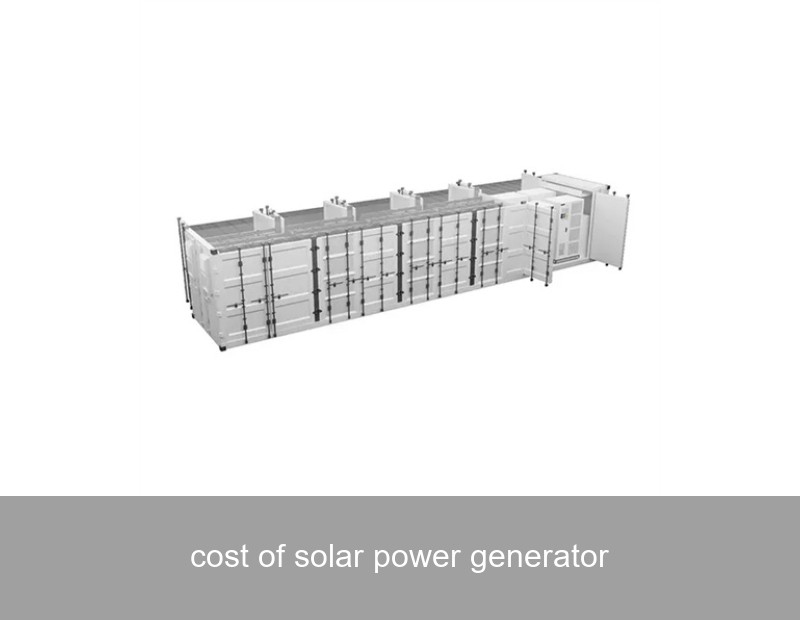
So, you're thinking about going solar. You've probably heard the headline: "Solar panel prices have dropped dramatically!" And it's true. But when you start researching the actual cost of a solar power generator for your property, the numbers can seem confusing. Is it just the price of those shiny panels on your roof? The answer is a resounding no. The true cost is a blend of hardware, software, installation, and—critically—the intelligence to make every kilowatt-hour count. Let's demystify what you're really investing in and how that investment pays back over decades.
The Price Tag Puzzle: Beyond the Solar Panel Quote
Ask for a solar quote, and you'll typically get a figure based on cost per watt of the panel system. In the U.S., the average installed cost for residential solar is around $2.50 to $3.50 per watt, according to the National Renewable Energy Laboratory (NREL). For a 10-kilowatt system, that's a significant upfront investment. But this is just the beginning. This "sticker price" often omits crucial components that define a modern, functional solar power generator: the inverter, the mounting system, the permitting, and most importantly, the energy storage system. Without storage, a large portion of your self-generated energy might be exported to the grid at a low rate, only for you to buy it back at night at a higher price. This cycle directly impacts your long-term savings and system value.
Breaking Down the True Cost of a Solar Power Generator
To make an informed decision, you need to view the system through the lens of Levelized Cost of Energy (LCOE). LCOE calculates the average net present cost of electricity generation over the system's lifetime. It's the ultimate metric. Here’s what contributes to it:
- Hardware Costs: Solar panels, inverters, mounting, and the battery storage unit.
- "Soft Costs": Permitting, inspection, interconnection fees, and installer labor.
- Financing Costs: Interest if you're using a loan or lease.
- Operational Costs: Maintenance, monitoring services, and potential inverter replacement.
- Performance Factor: System efficiency, degradation rate, and local weather patterns.
Let's visualize how these costs often distribute in a premium installation with storage.
| Cost Component | Approx. Share of Total Project | Impact on Long-Term Value |
|---|---|---|
| Solar Panels & Mounting | 25-30% | Defines energy harvest potential. |
| Inverter & Power Electronics | 10-15% | Critical for efficiency and system health. |
| Battery Energy Storage System (BESS) | 30-40% | Maximizes self-consumption, provides backup, unlocks grid services. |
| Installation & Soft Costs | 25-30% | Varies greatly by region and installer. |
As you can see, the battery is a major part of the equation. This is where choosing the right technology partner becomes crucial. A high-quality, integrated storage solution doesn't just add cost; it dramatically enhances ROI by optimizing every other part of the system.
Case Study: Real Numbers from a California Warehouse
Consider a real-world example from our work at Highjoule. A medium-sized logistics warehouse in Fresno, California, faced high daytime cooling costs and punitive demand charges from the utility. Their old solar setup was underperforming, sending excess midday energy to the grid for minimal credit.
We installed a turnkey Highjoule HES-100 commercial energy storage system alongside a new solar array. The system's AI-driven controller, NeuroGrid™, doesn't just store energy; it predicts consumption patterns and wholesale electricity prices. Here’s the 12-month result:
- Solar Self-Consumption Increased: From 35% to over 85%.
- Demand Charges Reduced: By 40%, by flattening the peak load.
- Payback Period: The enhanced system's payback time was calculated at 6.2 years, compared to over 10 years for a solar-only setup.

Image Source: Unsplash (Representative image of a commercial solar installation)
This case shows that the cost of the solar power generator was higher upfront, but the cost of delivered, usable power plummeted. The storage system transformed their solar array from a simple offset tool into a strategic energy asset.
The Highjoule Factor: How Smart Storage Reduces Lifetime Cost
At Highjoule, we believe the discussion about the cost of a solar power generator is incomplete without focusing on lifetime value. Since 2005, we've engineered our systems not as add-ons, but as the intelligent core of your energy ecosystem.
Our Residential HES-Series and Commercial HES-M Series batteries use lithium iron phosphate (LFP) chemistry, renowned for its safety, longevity (over 10,000 cycles), and stable performance. This means your storage asset will last as long as your solar panels, protecting your investment. But hardware is only half the story. Our NeuroGrid™ Energy Management Platform is the secret sauce that lowers your effective LCOE. It automatically decides, in real-time, whether to use solar energy immediately, store it, or sell it back to the grid based on weather forecasts, tariff structures, and your usage habits.

Image Source: Unsplash (Representative image of an energy management system display)
For our utility and microgrid partners, this intelligence aggregates to form virtual power plants (VPPs), adding another revenue stream that can further offset the system's cost. By choosing an integrated Highjoule solution, you're investing in a system designed to extract maximum financial and operational value from every sunbeam, directly addressing the total cost of ownership.
The Future of Solar Cost: More Than Just Cheaper Panels
Where is the cost of solar power generators headed? Panel efficiencies will gradually improve, but the next frontier is in system intelligence and market integration. Policies like the EU's RePowerEU plan and the U.S. Inflation Reduction Act (IRA) are creating incentives that specifically reward paired solar and storage. These aren't just subsidies; they're recognition that the grid needs flexible, dispatchable clean energy.
The future cost winner won't be the cheapest panel installer, but the provider who delivers the lowest LCOE through superior system design, software, and long-term reliability. This aligns perfectly with Highjoule's mission: to provide smart, efficient, and sustainable power solutions that are cost-effective over a 25-year horizon, not just on installation day.
What's Your Solar Cost Equation?
The initial quote is a single data point. The real question you should be asking any provider is: "What will be the net cost of my energy over the next 25 years, and how does your system ensure it's the lowest possible?" This shifts the conversation from upfront price to long-term value.
Are you ready to analyze your property's specific consumption patterns, local incentives, and grid tariffs to calculate the true cost of a solar power generator that includes the intelligence to maximize your independence and savings?
 Inquiry
 Online Chat