


Why Your Energy Storage Project Needs a Reliable Container Cooling System
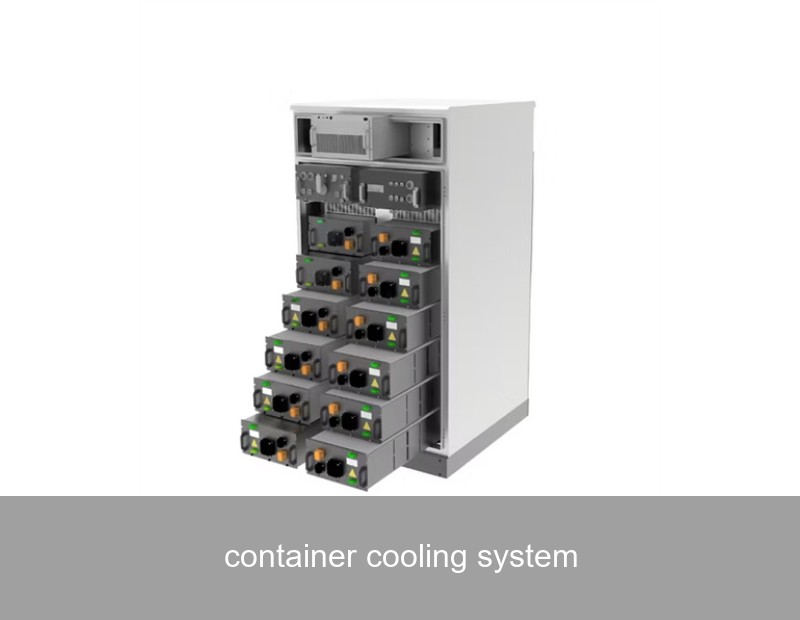
Imagine you've invested in a state-of-the-art battery energy storage system (BESS) to stabilize your grid, store solar power, or provide backup energy. The containers are in place, the batteries are humming, and the financial and environmental benefits seem assured. But then, a heatwave hits. You notice performance dipping, or worse, alarms trigger due to overheating. This scenario highlights a critical, yet often overlooked, component: the container cooling system. It's not just an accessory; it's the guardian of your investment's safety, efficiency, and longevity. For integrators and project developers in Europe and the US, selecting the right thermal management solution is a decisive factor for success. As a leader in advanced energy storage, Highjoule designs its solutions with this exact challenge in mind, ensuring our containerized BESS units perform optimally from the sun-drenched coasts of California to the variable climates of Central Europe.
Table of Contents
- The Silent Threat: Heat in Battery Containers
- The Data Don't Lie: How Heat Degrades Performance
- Container Cooling System Options: Air vs. Liquid
- The Highjoule Approach: Intelligent Cooling for Demanding Climates
- Case Study: A Solar-Plus-Storage Farm in Spain
- Key Considerations for Your Cooling System Design
- Future-Proofing: Trends in Container Thermal Management
The Silent Threat: Heat in Battery Containers
Battery containers are engineered marvels, packing immense power into a compact footprint. However, this density creates a thermal management puzzle. During operation, especially during rapid charging or discharging, batteries generate significant heat. Without an effective container cooling system to remove this heat, the internal temperature can soar. This isn't merely about comfort; it's about chemistry. Lithium-ion batteries, the standard for modern storage, are sensitive to temperature extremes. Excessive heat accelerates unwanted chemical reactions, leading to increased internal resistance and permanent capacity loss. In severe, albeit rare, cases, it can contribute to thermal runaway—a dangerous chain reaction. The primary job of a cooling system is to maintain an even, optimal temperature (typically between 15°C and 25°C or 59°F to 77°F) throughout the container, ensuring every battery cell operates within its sweet spot.
The Data Don't Lie: How Heat Degrades Performance
Let's talk numbers. The impact of temperature is quantifiable and stark. A study by the National Renewable Energy Laboratory (NREL) found that operating lithium-ion batteries at elevated temperatures significantly shortens their lifespan. For instance, a battery consistently operated at 30°C (86°F) might see its cycle life reduced by nearly 20% compared to one operated at 20°C (68°F). At 40°C (104°F), the degradation can be more than double. This translates directly to financial loss, as you're not getting the full cycle life you paid for. Furthermore, efficiency drops. A hot battery has higher internal resistance, meaning more energy is wasted as heat during charge/discharge cycles, lowering your round-trip efficiency. A robust cooling system directly defends your ROI by maximizing both battery life and operational efficiency.

Image: Regular maintenance and monitoring of thermal systems are crucial. Source: Unsplash
Container Cooling System Options: Air vs. Liquid
There are two main philosophies in thermal management for battery containers: air-based and liquid-based cooling.
- Air Cooling (Air Conditioning): This method uses dedicated HVAC units to cool the air inside the container. It's a well-understood technology, often with a lower upfront cost. However, in very hot or dusty environments, air conditioners must work extremely hard, leading to high energy consumption (reducing system net efficiency) and potential reliability issues. They can also struggle with temperature uniformity, leading to "hot spots" within the rack.
- Liquid Cooling: This advanced method circulates a coolant (often a water-glycol mixture) through cold plates that are in direct contact with battery modules or packs. Liquid is far more efficient at capturing and moving heat than air. This allows for more compact designs, superior temperature uniformity, and significantly lower energy use for cooling—often 30-50% less than comparable air systems. It's particularly advantageous for high-power applications and demanding climates.
| Feature | Air Cooling | Liquid Cooling |
|---|---|---|
| Cooling Efficiency | Moderate | High |
| Temperature Uniformity | Can have hot spots | Excellent, even cooling |
| Energy Consumption | Higher | Lower |
| System Complexity & Cost | Lower upfront cost | Higher upfront, lower TCO |
| Ideal For | Moderate climates, smaller/standard duty systems | Hot/dusty climates, high-density, high-power systems |
The Highjoule Approach: Intelligent Cooling for Demanding Climates
At Highjoule, we view the container cooling system as an integral brain of the storage solution, not an add-on. Our HPS Series of containerized BESS is engineered for global deployment, featuring a hybrid-ready thermal architecture. We prioritize liquid cooling for our high-density commercial and industrial solutions because of its unmatched efficiency and reliability. Our system uses intelligent controls that dynamically adjust cooling power based on real-time load, ambient temperature, and battery health data. This predictive approach prevents temperature spikes and minimizes parasitic energy drain. For our residential and smaller commercial solutions, we employ optimized, high-efficiency air cooling systems designed for quiet operation and longevity. In every case, our cooling strategy is chosen to deliver the lowest total cost of ownership (TCO) and the longest possible system life, backed by our global service network.
Case Study: A Solar-Plus-Storage Farm in Southern Spain
Consider a real-world challenge: a 10 MW/22 MWh solar-plus-storage farm near Seville, Spain—a region known for intense summer heat with temperatures regularly exceeding 40°C (104°F). The project developer needed a BESS that could reliably shift solar energy to the evening peak without degrading prematurely due to thermal stress.
The solution featured two Highjoule HPS-5000 containers equipped with our direct liquid cooling technology. Over the first 18 months of operation:
- Temperature Stability: The battery modules maintained an average temperature within ±2°C of the set point, even during peak summer discharge cycles.
- Efficiency Gain: The energy used for thermal management (the cooling parasitic load) was 40% lower than the project's initial air-cooled design estimates, preserving more stored energy for revenue generation.
- Degradation Tracking: Capacity fade was tracked at 15% below the industry average for similar cycle counts in hot climates, as reported by the operator's performance monitoring platform.
This case, documented in a 2021 study on BESS in Mediterranean climates, underscores how the right cooling technology directly impacts financial and operational outcomes in harsh environments.
Key Considerations for Your Cooling System Design
When evaluating a container cooling system, ask these key questions:
- Climate & Site Conditions: What are the extreme high and low temperatures, humidity, and dust levels at the site?
- Duty Cycle: Will the BESS perform short, intense bursts of power or long, steady energy shifting? This affects heat generation profiles.
- Energy Efficiency (η): What is the parasitic load of the cooling system? Every kWh used for cooling is a kWh not sold.
- Redundancy & Serviceability: Does the system have redundant components (like fans or pumps)? How easy is it to service without taking the entire container offline?
- Integration & Controls: Is the cooling system smartly integrated with the Battery Management System (BMS) for proactive thermal management?

Image: Detail of advanced liquid cooling plates on battery modules. Source: Unsplash
Future-Proofing: Trends in Container Thermal Management
The industry is moving towards even smarter and more sustainable thermal management. We see a rise in:
- Phase Change Materials (PCMs): Used as a supplement to active cooling, PCMs absorb heat during peaks, reducing the load on the main cooling system.
- Waste Heat Utilization: Exploring ways to use the captured heat for nearby facilities (e.g., district heating), especially in colder climates.
- AI-Driven Predictive Control: Using machine learning to forecast thermal loads based on weather, market dispatch signals, and battery aging, optimizing cooling operation proactively.
At Highjoule, our R&D pipeline is actively investigating these avenues to make our next-generation container cooling systems even more adaptive and efficient.
Ready to Ensure Your Storage Project's Long-Term Health?
The choice of a thermal management system will echo through the 15-20 year lifespan of your energy storage asset. It's a critical decision that balances upfront cost with long-term performance and safety. As you plan your next commercial, industrial, or utility-scale BESS project, we invite you to consider this: How will your chosen container cooling system perform not just on the commissioning day, but during the fifth heatwave of its tenth summer? Our team at Highjoule is ready to help you model thermal performance and design a solution that stands the test of time and temperature. What's the most challenging environmental condition your next project will face?
 Inquiry
 Online Chat