


Coffret de Protection DC: The Unsung Hero of Your Solar and Battery Safety
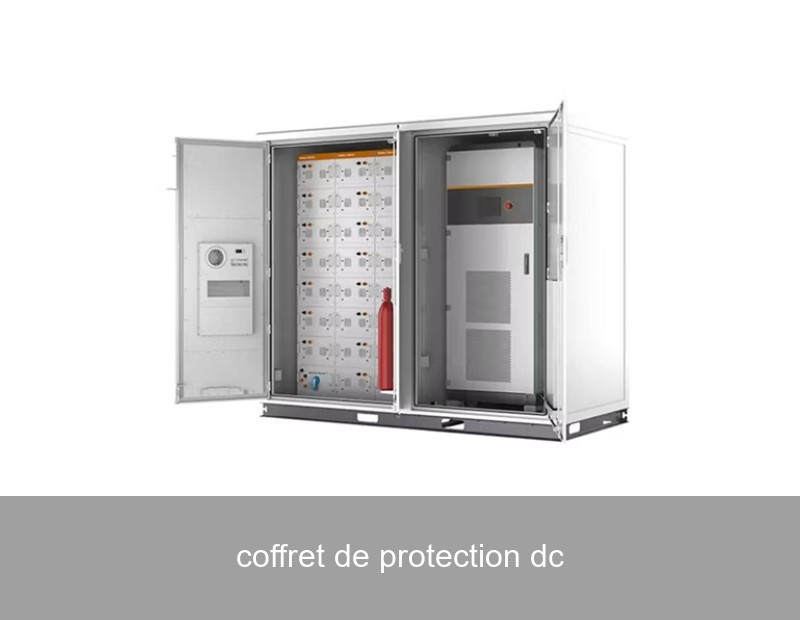
When we think about solar power or battery energy storage systems (BESS), our minds often jump to sleek panels, powerful batteries, or smart inverters. Yet, there's a critical, box-shaped component silently ensuring the entire system's safety and reliability: the DC protection enclosure, or as it's known in many technical specifications, the coffret de protection DC. This isn't just a simple junction box; it's the dedicated guardian of the direct current (DC) side of your installation, where currents are high, and risks require meticulous management. For system integrators, installers, and savvy homeowners, understanding this component is non-negotiable for a safe, compliant, and long-lasting energy asset.
The Hidden Phenomenon: Why DC Safety is Often Overlooked
There's a common misconception that because solar panels produce "clean" energy, the electrical infrastructure is inherently safe. This leads to a phenomenon where AC (alternating current) safety protocols are well-established, while DC safety, particularly in photovoltaic (PV) and DC-coupled storage systems, receives less spotlight. The reality is starkly different. A DC electrical fault, such as an arc, behaves very differently from an AC arc. Unlike AC, which crosses zero voltage 100 or 120 times per second (allowing arcs to self-extinguish), a DC arc is persistent, stable, and can sustain itself almost indefinitely, generating extreme heat upwards of 3,000°C. This presents a significant fire risk if not properly contained and interrupted by specifically designed protection devices housed within a secure coffret de protection DC.
The Critical Data: Understanding DC Arc Risks
Let's put the risk into perspective with some compelling data. Studies and reports from fire safety organizations have highlighted the unique dangers of DC arcs in PV systems:
- Persistence: A DC arc fault can sustain itself as long as the sun is shining on the panels, creating a continuous ignition source.
- Incidence: While statistically rare in well-installed systems, the NFPA notes that electrical components are a leading cause of solar-related fires, with DC wiring and connections being a primary area of concern.
- Economic Impact: Beyond the safety hazard, an unmanaged DC fault can lead to catastrophic system failure, resulting in thousands of dollars in equipment damage and lost energy production.
The table below summarizes key differences between AC and DC arc faults:
| Characteristic | AC Arc Fault | DC Arc Fault (PV Systems) |
|---|---|---|
| Voltage Zero-Crossing | Yes (self-extinguishing tendency) | No (sustained arc) |
| Primary Detection Method | Current/Voltage waveform analysis | Advanced algorithms monitoring arc signature & current/voltage noise |
| Common Protection Device | Standard Circuit Breakers, AFCI | DC-specific Arc Fault Circuit Interrupters (DC-AFCI), DC Circuit Breakers |
A Real-World Case Study: Mitigating Risk in a French Vineyard
Consider a 2022 installation at a premium vineyard in the Bordeaux region of France. The estate installed a 250 kWp ground-mounted solar array to power its irrigation systems and winery operations. The initial design used standard combiner boxes. However, during the commissioning phase, the lead engineer from the EPC (Engineering, Procurement, and Construction) firm insisted on upgrading to a fully integrated coffret de protection DC solution for each string inverter. The enclosures housed not just DC disconnect switches and fuses, but also DC arc-fault detection devices and surge protection modules (SPD).
The value of this decision became clear during a severe thunderstorm the following summer. A lightning-induced surge hit the array. The SPDs in the protection enclosures safely diverted the excess energy to ground. Simultaneously, a branch of a tree fell, damaging a subset of DC cabling, creating a potential arc fault condition. The integrated DC-AFCI units detected the abnormal signature and disconnected the affected strings within milliseconds, preventing a possible fire in the dry vegetation underneath the array. The result? Zero equipment damage, zero fire, and only a minor, isolated production loss that was repaired within a day. This case underscores that a proper DC protection enclosure isn't an optional extra; it's a core risk mitigation and business continuity asset.

Image Source: Unsplash - Representative image of a commercial solar installation.
Key Components of a Robust DC Protection Enclosure
A high-quality coffret de protection DC is a system in itself. It integrates several vital components:
- Enclosure: A robust, weatherproof (IP65 minimum), UV-resistant housing, often made of fiberglass or coated metal, to protect internal components from environmental stress.
- DC Disconnect Switch/Isolator: Provides a visible break and a safe means for manual disconnection for maintenance.
- DC Fuses or Circuit Breakers: Protect against overcurrent conditions. DC breakers are specifically designed to interrupt DC voltage, which is more challenging than AC.
- DC Arc Fault Circuit Interrupter (DC-AFCI): The intelligent brain that monitors for the unique signature of a dangerous arc and trips the circuit.
- Surge Protection Device (SPD): Safeguards sensitive electronics from voltage spikes caused by lightning or grid switching.
- Monitoring Ports: Some advanced enclosures include communication capabilities for remote monitoring of string currents, voltages, and device status.
The Highjoule Solution: Intelligent Protection for Modern Systems
At Highjoule, we view the coffret de protection DC not as a commodity, but as the first line of defense in our holistic energy safety philosophy. Our PowerShield Pro Series of DC protection enclosures are engineered for the demands of commercial, industrial, and large-scale residential applications. They are designed to seamlessly integrate with both our Highjoule H-Series hybrid inverters and our GridTitan BESS solutions.
What sets the PowerShield Pro apart is its integrated intelligence. We combine UL-listed DC components with optional smart monitoring sensors that feed data into our Highjoule Energy Operating System (HEOS). This means you can see the real-time status of each DC string, receive proactive alerts for any performance deviations, and have a clear digital record of all protection events. This level of insight transforms the enclosure from a passive safety box into an active diagnostic tool, simplifying O&M and maximizing system uptime. For installers, our enclosures feature a modular, tool-less design for faster, error-free wiring, reducing on-site labor time significantly.

Image Source: Unsplash - Example of a professionally wired electrical enclosure.
Installation and Maintenance Best Practices
Even the best enclosure is only as good as its installation. Key best practices include:
- Location & Accessibility: Install in a well-ventilated area, protected from direct sunlight if possible, and always accessible for service.
- Proper Sizing & Labeling: Ensure the enclosure and all internal components are correctly rated for the system's maximum voltage and current. Clearly label all inputs and outputs.
- Torque Specifications: This is critical. Use a calibrated torque wrench on all DC connections to prevent loose connections (a prime cause of hot spots and arcs).
- Regular Inspection: As part of annual maintenance, visually inspect for signs of corrosion, overheating, or physical damage. Verify the integrity of seals.
For a deeper dive into electrical standards, the International Electrotechnical Commission (IEC) provides the foundational standards for DC equipment.
Future Trends in DC Circuit Protection
The evolution of the coffret de protection DC is tightly linked to advancements in solar and storage technology. As system voltages continue to rise (with 1500V DC becoming standard in utility-scale and moving into commercial), the demands on protection devices increase. We are moving towards even more integrated solutions, where protection, disconnection, and monitoring are fused into single, digitally-native devices. Furthermore, the rise of microgrids and complex behind-the-meter systems demands that DC protection can communicate and coordinate with the overall energy management system, a principle at the core of Highjoule's product development strategy.
Given the critical role this component plays, what specific challenges have you faced in selecting or installing DC protection for your latest PV or battery storage project?
 Inquiry
 Online Chat