


China's Soaring Battery Storage Capacity: A Global Game Changer for Renewable Energy
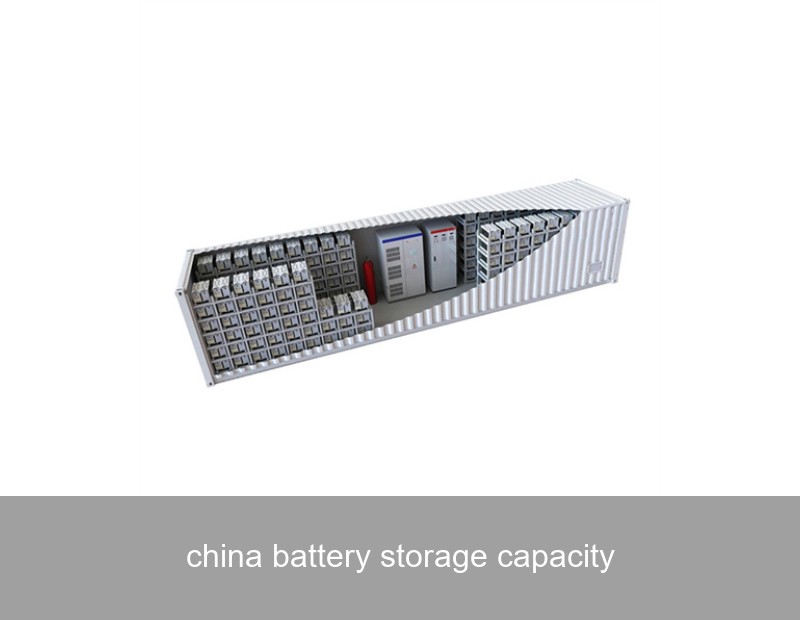
Imagine a world where solar and wind power aren't just clean, but also relentlessly reliable—powering factories, homes, and cities through the night and calm spells. This vision hinges on one critical technology: battery energy storage systems (BESS). And right now, a seismic shift is occurring. China's battery storage capacity is experiencing unprecedented growth, reshaping global supply chains and accelerating the clean energy transition for markets in Europe and the United States. This isn't just about manufacturing scale; it's about innovation, cost reduction, and real-world deployment at a pace that offers crucial lessons and opportunities worldwide.
Table of Contents
The Phenomenon: From Gigawatts to Terawatts
For years, discussions about renewable energy hit a familiar wall: "What happens when the sun doesn't shine or the wind doesn't blow?" Battery storage was the promised solution, but often considered too expensive or immature for widespread adoption. Enter China. Over the past five years, the country has not only become the dominant force in battery cell production but has also launched a massive domestic deployment campaign. We're witnessing a move from pilot projects to gigawatt-scale installations, fundamentally changing the economics and feasibility of storage globally. This rapid scaling is solving the intermittency puzzle, making "firm" renewable power a tangible reality.

Image: Utility-scale battery storage systems are becoming a common sight at renewable energy plants worldwide. (Source: Unsplash, Photographer: American Public Power Association)
The Data & Driving Forces
The numbers behind China's battery storage surge are staggering. According to the China Energy Storage Alliance (CNESA), the country's cumulative installed power generation capacity of energy storage soared to over 86 gigawatts (GW) by the end of 2023, with electrochemical (battery) storage representing the fastest-growing segment. Newly added capacity in 2023 alone was reportedly greater than the total installed in all previous years combined. But what's fueling this boom?
- National Policy & Targets: China's 14th Five-Year Plan explicitly targets energy storage as a strategic industry, with clear goals for installed capacity. Provincial mandates require new renewable projects to integrate storage, creating a guaranteed market.
- Manufacturing Dominance: China controls a significant portion of the global lithium-ion battery supply chain, from raw material processing to cell and pack assembly. This vertical integration drastically lowers costs.
- Technological Innovation: Beyond lithium-ion, Chinese companies are at the forefront of scaling alternative chemistries like sodium-ion and flow batteries, which promise greater safety and sustainability for different applications.
- Grid Modernization Needs: With the world's largest installed capacity of wind and solar, China faces acute grid balancing challenges. Storage is a practical solution for frequency regulation, peak shaving, and renewable integration.
This powerful combination of top-down policy, industrial might, and internal necessity has created a virtuous cycle of innovation, cost reduction, and deployment. The learning curve is steep, and the benefits are spilling over to global markets.
Global Implications for the US & Europe
For energy stakeholders in Europe and the United States, China's battery storage capacity expansion is a double-edged sword presenting both challenges and immense opportunities. On one hand, it underscores competitive pressures on domestic manufacturing. On the other, it has been a primary driver in the steep decline in global battery pack prices, which have fallen nearly 90% over the past decade according to BloombergNEF (BloombergNEF, 2023). This cost reduction is making solar-plus-storage and wind-plus-storage projects economically viable without heavy subsidies, accelerating decarbonization goals on both continents.
However, smart integration is key. Simply having a low-cost battery is not enough. Systems must be intelligently engineered, seamlessly integrated with local grid codes and market structures, and backed by long-term performance guarantees. This is where global providers with deep technical expertise and a nuanced understanding of Western energy markets add critical value.
The Highjoule Approach: Intelligence Meets Global Supply
At Highjoule, we've been navigating this evolving landscape since 2005. We see the growth in China's battery storage capacity as a catalyst that allows us to deliver even more value to our commercial, industrial, and utility clients in Europe and North America. Our strategy is not merely to source hardware, but to leverage global innovation through our proprietary, AI-driven energy management platform, NeuronOS.
Our systems, such as the Highjoule C&I PowerStack for businesses and the Utility-scale Megaflex BESS, integrate high-quality, globally-sourced battery cells (including options from leading Chinese manufacturers) with our intelligent software layer. This combination ensures:
- Optimal Economics: NeuronOS continuously analyzes energy prices, consumption patterns, and weather forecasts to automate charge/discharge cycles, maximizing ROI whether through energy arbitrage, demand charge reduction, or grid services.
- Unmatched Safety & Longevity: Our integrated thermal management and predictive analytics monitor cell-level health, preventing issues and extending system life far beyond basic warranties.
- Grid-Friendly Integration: We ensure our systems meet the strict grid compliance standards (like UL9540 in the US and CE in Europe) and can provide critical services like frequency response, helping to stabilize the grid as renewable penetration increases.
In essence, Highjoule synthesizes the best of global hardware advancements with localized, intelligent software to create resilient and profitable power solutions for a decarbonizing world.
Case Study: California's Grid & Chinese Tech
Let's look at a real-world example that ties these threads together. California, a global leader in renewable adoption, has aggressively pursued energy storage to manage its grid, especially after sunset when solar generation drops—a phenomenon known as the "duck curve."
In 2021, a major energy storage project in Monterey County, California, came online: the 400 MWh Moss Landing Energy Storage Facility (Phase II). This facility utilizes lithium-ion battery racks supplied by a major Chinese manufacturer. The project's scale and speed of deployment were directly enabled by the accessible supply chain and mature technology stemming from China's manufacturing scale. According to the California Energy Commission, such large-scale storage has been instrumental in avoiding blackouts during extreme heat waves, by discharging stored solar energy during peak evening demand.
| Project Aspect | Details | Global Connection |
|---|---|---|
| Name & Location | Moss Landing Energy Storage (Phase II), California, USA | US Grid Stability Need |
| Capacity | 400 MWh (can power ~300,000 homes for 4 hours) | Scale made possible by global manufacturing |
| Core Technology | Lithium-ion Battery Racks | Supplied by a leading Chinese manufacturer |
| Primary Grid Service | Peak Shaving, Renewable Integration | Solves local "duck curve" challenge |
This case demonstrates a clear model: global technology supply meeting local grid resilience needs. The success hinges not just on the batteries themselves, but on the sophisticated power conversion systems, control software, and grid interconnection expertise provided by the system integrator—a domain where companies like Highjoule excel.

Image: The future grid relies on a diverse mix of renewables backed by storage. (Source: Unsplash, Photographer: Karsten Wurth)
The Future Energy Landscape
Looking ahead, the trajectory of China's battery storage capacity will continue to influence global markets. We anticipate further cost declines, accelerated innovation in alternative chemistries, and an increasing focus on the entire lifecycle—including recycling and second-life applications for used EV batteries. For businesses and utilities in the West, the question is shifting from "Should we invest in storage?" to "How can we implement the most intelligent, future-proof storage solution?"
The answer lies in choosing partners who offer more than just hardware. It requires a provider with global technology access, deep domain expertise in local markets, and a software-defined approach that ensures your asset remains adaptive and profitable for decades. At Highjoule, we build systems that are not just storage containers, but active financial and grid assets.
An Open Question for Energy Decision-Makers
As you evaluate your organization's energy resilience and sustainability strategy, consider this: With battery storage economics improving faster than many predicted, what specific grid constraint, energy cost spike, or sustainability target could a smart storage system solve for you in the next 18 months?
 Inquiry
 Online Chat