


Unlocking Grid Independence: The Power of the 1MW Three Phase Solar Energy Storage Cabinet
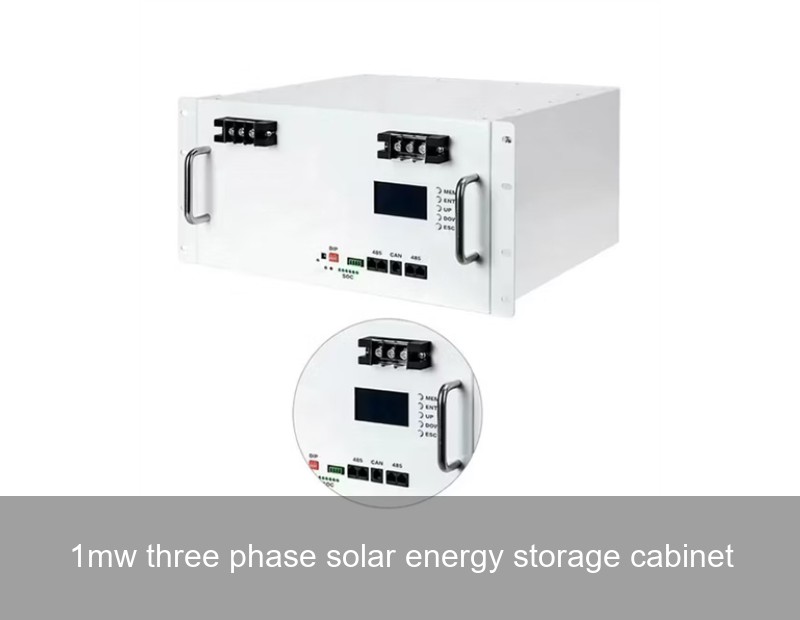
Imagine a world where your business isn't at the mercy of grid instability or peak demand charges. For commercial and industrial leaders across Europe and the U.S., this vision is becoming a reality, and at its heart is a powerful solution: the 1MW three phase solar energy storage cabinet. This isn't just a battery; it's a sophisticated energy management hub, a cornerstone for resilience, sustainability, and significant cost savings. Let's explore how this technology is reshaping the energy landscape and how companies like Highjoule are leading the charge with intelligent, scalable solutions.
What is a 1MW Three Phase Solar Energy Storage Cabinet?
At its core, a 1MW three phase solar energy storage cabinet is a large-scale, containerized battery system designed to store excess energy generated from solar photovoltaic (PV) arrays and discharge it when needed. The "1MW" refers to its power rating—it can deliver one megawatt of electricity, enough to power hundreds of homes or a mid-sized factory. "Three phase" indicates it connects directly to the industrial and commercial electrical grid, which uses a three-phase alternating current (AC) system for efficient power distribution. Think of it as a massive, smart energy bank for your business.
These systems typically integrate lithium-ion battery racks (like Lithium Iron Phosphate or LFP, known for safety and longevity), advanced power conversion systems (PCS), thermal management, and a sophisticated energy management system (EMS) all within a secure, self-contained cabinet or containerized unit. This plug-and-play architecture simplifies deployment for projects like solar farms, manufacturing plants, data centers, and microgrids.
Why Does a 1MW System Matter? The Data Behind the Demand
The shift towards these systems isn't just a trend; it's an economic and strategic imperative. Let's look at the driving forces:
- Skyrocketing Energy Costs: In Europe, industrial electricity prices have seen extreme volatility, with peaks exceeding €400 per MWh in 2022 (Eurostat). In the U.S., demand charges can constitute up to 50% of a commercial utility bill.
- Grid Reliability Concerns: Aging infrastructure and extreme weather events are causing more frequent outages. The U.S. experienced a 78% increase in power outages from 2011-2021 (U.S. Energy Information Administration).
- Renewable Integration: Solar power is intermittent. A 1MW storage cabinet acts as a buffer, storing midday solar surplus for use in the evening, maximizing self-consumption from 30-40% to over 80%.
For a business, this translates to three clear benefits: cost reduction through peak shaving and energy arbitrage, enhanced resilience via backup power, and sustainability progress by enabling a higher penetration of clean solar energy.
A Real-World Case: Manufacturing Resilience in Germany
Consider a concrete example from Bavaria, Germany. A medium-sized automotive parts manufacturer faced crippling peak demand charges and sought to insulate itself from grid instability. Their solution? A 1.2 MWp solar carport coupled with a 1MW/2MWh Highjoule H-Cube Commercial three-phase energy storage system.

The Highjoule H-Cube cabinet, featuring UL1973-certified LFP batteries and a high-efficiency PCS, was seamlessly integrated. The system's intelligent EMS was programmed to:
- Store excess solar generation from the carport.
- Discharge during evening production peaks to avoid high tariff rates.
- Provide 2 hours of critical process backup during grid outages.
The results after one year were compelling:
| Metric | Result | Impact |
|---|---|---|
| Peak Demand Reduction | 28% | Annual savings of €85,000 on demand charges |
| Grid Energy Consumption | Reduced by 60% | Lower carbon footprint and energy costs |
| Solar Self-Consumption | Increased from 35% to 88% | Maximized return on solar investment |
| Uninterrupted Operations | During 3 minor grid faults | Zero production downtime |
This case exemplifies the tangible, multi-faceted ROI a well-engineered 1MW storage cabinet delivers.
Key Components of a High-Performance Storage Cabinet
Not all storage cabinets are created equal. A reliable, safe, and long-lasting system hinges on its core components:
- Battery Cells & Chemistry: LFP (Lithium Iron Phosphate) is now the industry standard for commercial storage due to its superior thermal stability, long cycle life (6,000+ cycles), and cobalt-free chemistry. Highjoule exclusively uses Grade-A LFP cells with integrated cell-level monitoring.
- Power Conversion System (PCS): This bidirectional inverter is the "brain" of power flow. Look for high round-trip efficiency (over 95%), seamless grid-forming capabilities for backup, and robust grid support functions.
- Energy Management System (EMS): This is the strategic intelligence. A top-tier EMS, like Highjoule's NeuronOS, uses AI-driven forecasting to optimize charge/discharge cycles based on weather, tariff schedules, and load patterns.
- Thermal Management: Consistent, liquid-based cooling is crucial for safety and battery longevity, especially in demanding 1MW applications where heat generation is significant.
The Highjoule Approach: Intelligent Energy Management
Since 2005, Highjoule has been at the forefront of advanced energy storage, moving beyond simple hardware to deliver comprehensive, intelligent power solutions. Our 1MW H-Cube Commercial cabinet is engineered for the demands of the European and North American markets.

What sets our system apart is the deep integration of hardware and software. The H-Cube is powered by NeuronOS, our proprietary energy management platform. This platform doesn't just react; it predicts and optimizes. By analyzing historical consumption, real-time solar production, and utility price signals, it autonomously operates your storage asset to maximize financial return and reliability.
Our services extend beyond the sale. Highjoule offers Energy-as-a-Service (EaaS) models, where we finance, install, and maintain the system on your site, and you simply pay for the energy or savings it provides. We also provide full microgrid integration, allowing the 1MW cabinet to orchestrate power between solar, generators, and the grid, creating a true island of energy independence for your facility.
Future Trends and Your Energy Strategy
The landscape is evolving rapidly. We're moving towards virtual power plants (VPPs), where thousands of distributed storage units, like 1MW cabinets, are aggregated to act as a single, grid-stabilizing power plant. Furthermore, new grid codes are mandating storage systems to provide essential grid services like frequency regulation.
This means investing in a storage system today is not just about solving current problems—it's about positioning your business as an active, intelligent participant in the future energy market. Choosing a platform with advanced, software-upgradable capabilities is critical.
Is Your Business Ready to Take Control of Its Energy Future?
The data is clear, the technology is proven, and the financial case is stronger than ever. A 1MW three-phase solar energy storage cabinet is more than an expense; it's a strategic asset. What would a 30% reduction in your peak demand charges do for your bottom line? How much is guaranteed operational continuity during a grid outage worth to your business? The first step to answering these questions is understanding your specific energy profile and potential. What does your facility's load curve look like, and where are your biggest opportunities for savings and resilience?
 Inquiry
 Online Chat