


Demystifying Battery Pack Specifications for Your Energy Storage Project
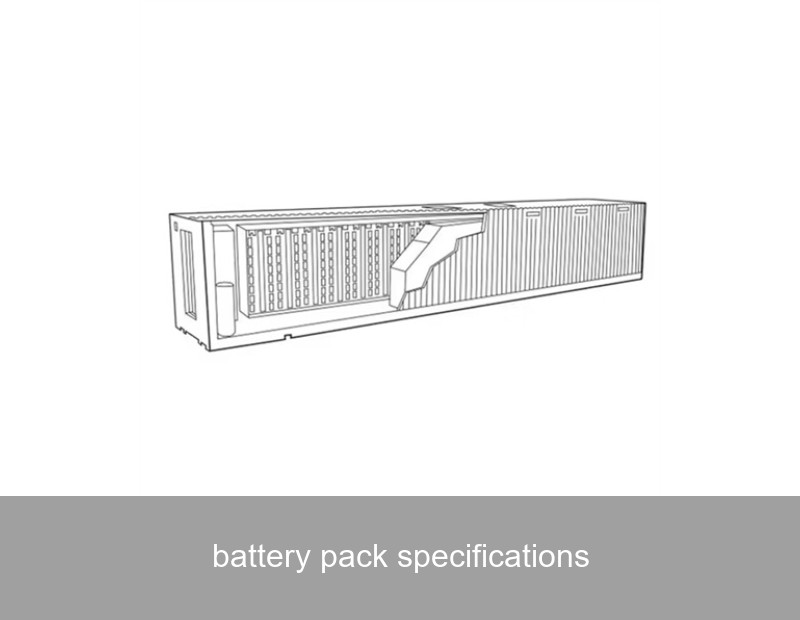
So, you're looking at energy storage solutions and find yourself staring at a datasheet filled with terms like "nominal capacity," "C-rate," and "cycle life." You're not alone. For many business owners, facility managers, and homeowners, battery pack specifications can feel like a confusing technical maze. But here's the thing: these specs aren't just engineering jargon—they are the direct blueprint for your system's performance, cost savings, and reliability. Choosing the right battery isn't about finding the highest numbers; it's about matching the right specifications to your unique energy needs. Let's break down what these numbers truly mean for your project in Europe or the US.
Key Battery Pack Specifications Decoded
Think of battery pack specifications as the personality and capabilities of your energy storage system. Two batteries with the same "kWh" rating can behave entirely differently based on the other specs on their sheet. Here’s your guide to the essentials.
Capacity & Energy (kWh): Your Energy "Fuel Tank"
This is the most recognized spec. Measured in kilowatt-hours (kWh), it tells you how much energy the battery can store. A 10 kWh battery can, in theory, deliver 10 kW for one hour, or 5 kW for two hours.
- Usable vs. Total Capacity: Pay close attention! Some manufacturers list the total (gross) capacity, while others list the usable capacity, which is what you can actually access without damaging the battery. A system with a 95% Depth of Discharge (DoD) on a 10 kWh gross pack gives you 9.5 kWh usable—a crucial detail for financial payback calculations.

Image Source: Unsplash - Professional battery installation
Power & C-Rate (kW): Your Energy "Engine Size"
Power, measured in kilowatts (kW), is the rate at which the battery can deliver or absorb energy. This determines how fast you can use your stored energy. Can it power your entire factory's startup surge, or just your critical office loads?
- The C-Rate: This is a key multiplier. A 1C rate means a 10 kWh battery can discharge at 10 kW. A 0.5C rate means it can only discharge at 5 kW. For applications needing high bursts of power (like smoothing grid demand spikes), a higher C-rate is essential. Highjoule's H-Series Industrial packs, for example, are engineered for high C-rates, making them ideal for demanding frequency regulation and peak shaving duties.
| Application | Focus Specs | Why It Matters |
|---|---|---|
| Residential Solar Self-Consumption | High Cycle Life, High DoD, Round-Trip Efficiency | Maximizes daily savings, needs to last 10+ years with daily cycling. |
| Commercial Peak Shaving | High Power (C-Rate), Modular Scalability | Must discharge rapidly during short, expensive peak tariff periods. |
| Off-Grid / Microgrid | Wide Temperature Range, Robust Cycle Life, High Capacity | System reliability in varied climates with less grid backup is critical. |
Voltage & Configuration: The System's Backbone
The nominal voltage of the battery pack determines its compatibility with inverters and other system components. It's a foundational spec set by how the individual battery cells are arranged in series and parallel. A well-designed pack, like those in Highjoule's modular M-Grid product line, allows for flexible configuration, making system expansion straightforward as your energy needs grow.
Depth of Discharge & Cycle Life: The Longevity Duo
These are the specs that define your battery's lifespan and value over time.
- Depth of Discharge (DoD): Using 100% of a battery's capacity every time stresses it. A 90% DoD rating means using only 90% of its total capacity is recommended for optimal life.
- Cycle Life: This states how many charge/discharge cycles (e.g., from 100% to 10% DoD and back) the battery can perform before its capacity degrades to a specified percentage (often 80% of its original capacity). A spec of "6,000 cycles to 80% capacity" is a direct promise of long-term performance.
Efficiency & Temperature Range: The Real-World Performers
Round-Trip Efficiency: If you put 10 kWh of solar energy into a battery with 95% round-trip efficiency, you get 9.5 kWh back out. Losses occur as heat. Higher efficiency means more of your generated power is usable, improving your ROI. Operating Temperature Range: A battery's performance plummets outside its ideal range. A spec of "-20°C to 50°C" ensures reliable operation in a Minnesota winter or an Arizona summer, a non-negotiable for outdoor installations. Highjoule systems integrate active thermal management to maintain efficiency and safety across this full range.
Specifications in Action: A Real-World Case Study
Let's move from theory to practice. A mid-sized dairy processing plant in Bavaria, Germany, faced steep demand charges and wanted to increase the self-consumption of its rooftop solar PV. Their challenge was twofold: they needed high power to cover short, intense energy spikes from refrigeration compressors, and high cycle life for daily solar storage.
- Phenomenon: High grid demand charges and intermittent solar generation.
- Data & Specs Targeted: The solution required a battery system with a high C-rate (≥1C) for power, ≥5000 cycles for longevity, and ≥95% round-trip efficiency to maximize solar savings.
- Case & Solution: The plant installed a 250 kWh / 300 kW Highjoule H-Series battery system. Its high-power specifications allowed it to discharge rapidly during the plant's 30-minute peak demand window, cutting demand charges by over 40%. Simultaneously, its high cycle life specification ensured it could handle daily solar charging and discharging. According to data from the Fraunhofer Institute for Solar Energy Systems, such industrial applications typically see payback periods of 6-8 years, heavily dependent on these core specifications.
- Insight: The project's success wasn't due to one single spec, but the harmonization of power, cycle life, and efficiency specs to match a specific, dual-use case. A battery with higher capacity but lower power rating would have failed to shave the peak. A battery with high power but low cycle life would have degraded too quickly.
Looking Beyond the Data Sheet: The Highjoule Difference
While the raw numbers are vital, the true performance of a battery system is also defined by the intelligence that manages it and the safety that protects it. This is where specifications meet system design. At Highjoule, our battery pack specifications are the foundation of a broader, smarter solution.
Our proprietary Energy Management System (EMS) acts as the brain, dynamically reading your load profiles, tariff rates, and weather forecasts. It doesn't just use the battery's capacity and power; it optimizes them in real-time. For instance, it might decide to discharge at a lower C-rate for a longer duration one day, and a high burst the next, based on the grid's needs—all within the safe specifications of the hardware to maximize its lifespan.
Furthermore, specifications like thermal stability and cell-level monitoring are baked into our design. Each Highjoule pack includes comprehensive monitoring of voltage, temperature, and state of health for every module. This data isn't just for diagnostics; it feeds back into the EMS to make better decisions, ensuring the system operates not just at its specified limits, but at its optimal point for safety and longevity. It's the difference between buying a list of components and investing in a guaranteed performance outcome.
Asking the Right Questions
Now that you can read the spec sheet with more confidence, your conversation with any provider should go deeper. Don't just ask for the capacity. Ask: "What is the guaranteed usable capacity at end of warranty?" "How does the C-rate affect the warranted cycle life?" "How does your EMS software actively manage the battery to stay within its ideal specifications under real-world stress?"
We believe an informed customer makes the best partner. At Highjoule, we're ready to go through every line of our specifications with you and map them directly to your energy goals. What specific energy challenge—be it unpredictable demand charges, renewable energy curtailment, or backup power needs—are you looking to solve, and how can the right set of battery pack specifications be engineered to address it?
 Inquiry
 Online Chat