


Allpowers Portable Power Station: Your Ultimate Guide to Off-Grid Energy Freedom
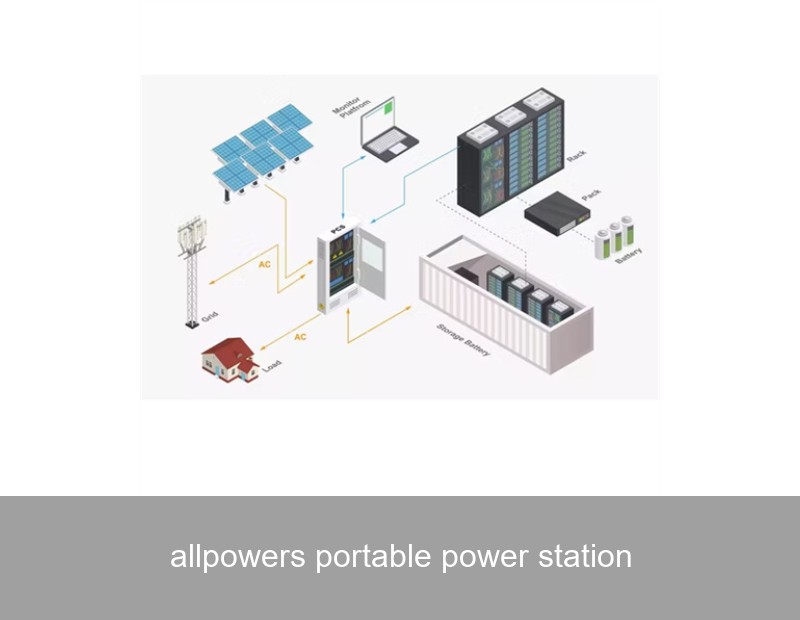
Have you ever been in the middle of a crucial work call on your laptop during a camping trip, only to watch your battery dip into the red? Or perhaps you've nervously eyed the news during a storm, wondering how long your fridge will keep food safe if the grid goes down. This modern anxiety—the gap between our need for constant power and the limitations of traditional outlets—is precisely what portable power stations like those from Allpowers aim to solve. These compact, battery-powered generators are revolutionizing how we access electricity anywhere, anytime. But as a leader in advanced, stationary energy storage, we at Highjoule see this as just one piece of a much larger energy independence puzzle. Let's explore the world of portable power and how it connects to a smarter, more resilient energy ecosystem.
Table of Contents
What is an Allpowers Portable Power Station?
An Allpowers portable power station is essentially a large, sophisticated battery in a box. Unlike noisy gas generators, they operate silently, emit zero fumes, and can be used safely indoors. They store energy (typically from a wall outlet or solar panels) in a high-capacity lithium battery—often LiFePO4 for superior safety and longevity—and deliver it via various ports: AC outlets, USB-C, USB-A, and 12V carports. They are the go-to solution for powering devices like smartphones, laptops, cameras, mini-fridges, CPAP machines, and even small power tools during outdoor adventures, road trips, or short-duration power outages.

Image Source: Unsplash - Portable power enables modern off-grid living.
The Data Behind the Portable Power Boom
The demand for portable power is skyrocketing. According to a report by Grand View Research, the global portable power station market size was valued at USD 3.9 billion in 2022 and is expected to expand at a compound annual growth rate (CAGR) of 8.5% from 2023 to 2030[1]. This surge is driven by several factors: an increase in outdoor recreational activities, a growing frequency of extreme weather events causing grid instability, and the rise of remote work. In the US alone, the Energy Information Administration (EIA) notes that customers experienced an average of just over 5 hours of power interruptions in 2021[2]. For short outages, a portable unit can be a lifesaver. But this phenomenon reveals a deeper need: a fundamental desire for energy resilience that extends beyond a few hours and a few devices.
Case Study: From Portable Power to Whole-Home Backup
Consider the experience of the Miller family in California, USA. After a minor wildfire-related outage in 2022, they purchased a 1500Wh Allpowers power station. It successfully kept their Wi-Fi, phones, and a small medical device running for 8 hours. However, later that year, a severe storm triggered a 36-hour blackout. Their portable station was depleted within the first day, forcing them to prioritize between the medical device and the refrigerator. They realized their solution had a critical capacity limit.
This is a common turning point. The Millers began researching permanent solutions and discovered Highjoule. They installed a Highjoule HES-10kW residential energy storage system paired with their existing rooftop solar. The system features:
- Scalable Capacity: A modular design starting at 10kWh, expandable to over 30kWh.
- Seamless Backup: An automatic transfer switch that powers essential home circuits (refrigeration, heating/cooling, medical equipment, lighting) within milliseconds of an outage.
- Smart Energy Management: Software that optimizes solar self-consumption, stores excess energy, and can even reduce costs by drawing power during off-peak tariff periods.
In the next outage, the Highjoule system automatically took over, powering their essential loads for the full 36+ hours. Their Allpowers unit was still invaluable—now used as a mobile power source for tools in the garage and for their son's camping trips. The portable station became a complementary tool, not their primary defense.
Beyond Portable: The Highjoule Integrated Energy Approach
While portable power stations excel at mobility and small-scale, short-term power, Highjoule focuses on integrated, intelligent stationary storage for homes, businesses, and communities. Our systems are designed not just for backup, but for complete energy optimization and grid services.
| Feature | Portable Power Station (e.g., Allpowers) | Highjoule Stationary Storage System |
|---|---|---|
| Primary Use Case | Portable, short-term power for devices & small appliances | Whole-home/business backup, energy bill management, grid support |
| Typical Capacity | 300Wh - 2,000Wh | 5kWh - 30kWh+ (scalable) |
| Integration | Standalone, manual connection | Integrated with solar inverters, home energy management systems (HEMS) |
| Grid Interaction | None | Advanced features like time-of-use optimization, potential for virtual power plant (VPP) participation |
| Installation | None required (plug-and-play) | Professional installation required for safety and grid compliance |
For our commercial and industrial clients across Europe and the US, Highjoule systems provide critical load shedding, demand charge reduction, and ensure business continuity. Our Industrial Energy Platform (IEP) can manage multiple MWh of storage, integrating with on-site renewables like wind or solar to create robust microgrids that operate independently from the public grid if needed.

Image Source: Unsplash - The future of home energy combines solar generation with intelligent storage.
Choosing the Right Solution for Your Needs
So, is an Allpowers portable power station or a Highjoule stationary system right for you? The answer often lies in your "energy resilience hierarchy."
- Portable Power Station (Allpowers): Ideal for mobility and short-term, low-power needs. Perfect for camping, tailgating, powering a home office in the garden, or as an emergency kit component for charging communication devices during a short outage.
- Residential Energy Storage (Highjoule HES Series): Essential for whole-home backup, maximizing solar self-consumption, and achieving long-term energy independence. It's the solution when you need to keep your lights, HVAC, and major appliances running for extended periods.
- Commercial & Microgrid Solutions (Highjoule IEP/Commercial Series): Critical for business continuity, operational cost savings, and supporting the transition to 100% renewable energy. These systems are engineered for scale, durability, and complex energy management.
Think of it this way: a portable power station is an excellent, powerful "energy flashlight." A Highjoule stationary system is your home or business's entire "energy foundation and brain." Many of our most energy-savvy customers start with a portable unit and later invest in a Highjoule system, using both in harmony for ultimate flexibility and security.
As you contemplate your own path to energy resilience, what is the single most critical circuit or device in your home or business that, if powered without fail, would give you the greatest peace of mind during an extended grid outage?
 Inquiry
 Online Chat