


How Much Sun Does the Earth Receive? Unlocking Energy Potential with Solutions like the TRB 40
Have you ever gazed at a bright, sunny sky and wondered, just how much energy is pouring down on us? The question of "how much sun does the Earth receive" isn't just a fascinating astronomical trivia; it's the fundamental key to our clean energy future. Every hour, the sun bathes our planet in more energy than humanity uses in an entire year. Yet, capturing and, more importantly, utilizing this power reliably remains the central challenge. This is where advanced solar energy storage, exemplified by systems like the Highjoule TRB 40, transforms raw potential into 24/7 practical power. Let's explore the incredible scale of solar energy and how modern technology is making it a dependable cornerstone for homes and businesses.
Table of Contents
- The Phenomenon: A Flood of Free Energy
- The Data: From Terawatts to Kilowatt-Hours
- The Challenge: The Intermittency Gap
- The Solution: Bridging the Gap with Intelligent Storage
- Case Study: A German Bakery's Recipe for Energy Independence
- The Future: Your Role in the Energy Transition
The Phenomenon: A Flood of Free Energy
Our sun is a massive nuclear fusion reactor, constantly converting matter into energy. This energy radiates into space in all directions, and a tiny fraction—about one-billionth—reaches Earth. But "tiny" is a relative term. The power delivered by sunlight to the Earth's outer atmosphere, known as the solar constant, is approximately 1,361 watts per square meter. Now, consider the Earth's cross-sectional area. The total power intercepted is staggering, averaging around 173,000 terawatts (TW). To put that in perspective, one terawatt is one trillion watts. The entire global human civilization currently operates at a continuous power consumption rate of about 18 terawatts. Simply put, the Earth receives over 9,000 times more power from the sun than we consume.

Image Source: Unsplash - Representative image of solar potential.
The Data: From Terawatts to Kilowatt-Hours
Global figures are mind-boggling, but let's bring it down to a level we can relate to: our rooftops. The amount of sun a specific location receives is called solar irradiance, typically measured in kilowatt-hours per square meter per day (kWh/m²/day). This varies greatly by geography. For example, sunny Arizona might average 6-7 kWh/m²/day, while northern Germany might see 2.5-3.5 kWh/m²/day.
Let's do a quick calculation. A standard 400-watt solar panel covers about 2 square meters. In Arizona, on a good day, that single panel could capture roughly (6 kWh/m²/day * 2 m² * 0.18 efficiency) ≈ 2.16 kWh of electricity. In a month, that's about 65 kWh—enough to power a highly efficient refrigerator. A typical residential solar array of 20 panels could therefore generate over 1,300 kWh monthly, often covering a significant portion of a home's needs. But here's the catch: this energy is produced only when the sun shines. Which leads us to the critical challenge.
Average Solar Irradiance in Key Markets
| Region | Average Daily Solar Irradiance (kWh/m²) | Potential Annual Yield for a 5kW System* |
|---|---|---|
| Southwestern USA (e.g., Arizona) | 6.0 - 7.0 | 8,500 - 10,000 kWh |
| Southern Europe (e.g., Spain) | 5.0 - 5.5 | 7,000 - 8,000 kWh |
| Central Europe (e.g., Germany) | 2.8 - 3.5 | 4,000 - 5,000 kWh |
| Northeastern USA (e.g., New York) | 3.5 - 4.2 | 5,000 - 6,000 kWh |
*Estimated values, actual yield depends on system configuration, tilt, and shading.
The Challenge: The Intermittency Gap
So, we have an abundance of energy, but it's not on-demand. Energy demand peaks in the early morning and evening, often when solar production is low or zero. This creates the "duck curve"—a graph showing the gap between solar production and daily demand. Without a way to store the midday solar surplus for use later, we either rely on fossil-fuel-powered plants to ramp up quickly (which is inefficient and polluting) or we waste the clean solar energy. This intermittency is the single biggest hurdle to achieving a grid powered primarily by renewables.
The Solution: Bridging the Gap with Intelligent Storage
This is where battery energy storage systems (BESS) become the game-changer. Think of them as a "energy bank" for your solar power. Instead of sending excess electricity to the grid for minimal compensation, you store it for your own use. This maximizes self-consumption, provides backup power during outages, and can even enable participation in grid services in some regions.
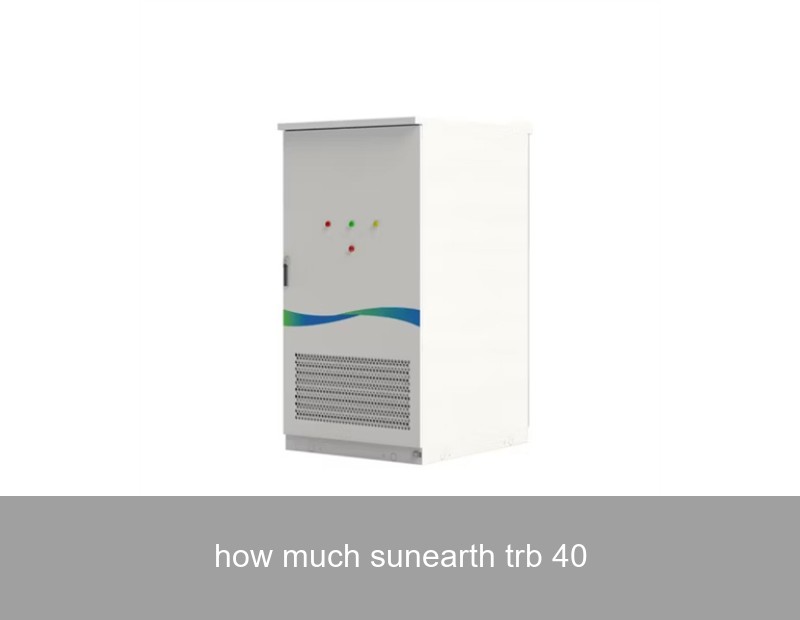
At Highjoule, with nearly two decades of expertise, we design storage solutions that do more than just hold a charge. Our systems are built for intelligence, safety, and longevity. Take our TRB 40 commercial storage unit as a prime example. It's not just a battery; it's an integrated energy management platform.
- Scalable Capacity: With a modular design starting at 40 kWh, the TRB 40 can be scaled to meet the needs of a large commercial facility, a community microgrid, or an industrial plant.
- Advanced Battery Chemistry: Utilizing lithium iron phosphate (LFP) cells, it offers superior thermal stability, safety, and a lifespan exceeding 6,000 cycles, ensuring a lower total cost of ownership.
- Smart Energy Management: Integrated with Highjoule's proprietary Helios OS, the system intelligently decides when to charge, discharge, or hold based on weather forecasts, electricity tariffs, and consumption patterns.
- Grid Services Ready: For businesses, it can provide revenue streams by offering frequency regulation or peak shaving services to the local utility, turning an energy cost center into a potential profit center.
By pairing a robust solar array with a system like the TRB 40, the question shifts from "how much sun do we get?" to "how efficiently can we use every photon we capture?"

Image Source: Unsplash - Representative image of a modern battery storage unit.
Case Study: A German Bakery's Recipe for Energy Independence
Let's look at a real-world application. Bäckerei Schmidt (name changed for privacy), a medium-sized bakery in Bavaria, Germany, faced soaring energy costs and wanted to reduce its carbon footprint. Their operations, especially the large ovens and refrigeration, consumed significant power, with a sharp peak in the early morning.
The Problem: Their 100 kW rooftop solar system produced a surplus between 10 AM and 4 PM, but they had to draw expensive grid power during their pre-dawn baking hours and high evening demand.
The Solution: Highjoule installed a tailored storage solution centered around two TRB 40 units, providing 80 kWh of usable storage capacity. Integrated with their solar inverters and the Helios OS, the system was programmed to prioritize charging the batteries with solar excess during the day.
The Results (Data from 12-month operation):
- Self-Consumption Rate Increased: From 35% to 82%. They now use the vast majority of the solar energy they produce.
- Grid Energy Cost Reduction: Their monthly electricity bill was reduced by 68%.
- Peak Load Shaving: The system discharges during their morning peak, ensuring they never exceed a predefined power draw from the grid, avoiding costly demand charges.
- Backup Power: The system provides essential backup power for refrigeration, preventing spoilage during brief grid outages.
“For a business like ours with high and predictable energy patterns, the Highjoule system wasn't just an upgrade; it was a strategic financial decision,” said the bakery's owner. The project's payback period is estimated at under 7 years, thanks in part to supporting German energy transition policies and intelligent software optimization.
The Future: Your Role in the Energy Transition
The journey from understanding the vast solar resource to harnessing it effectively is now within reach for businesses and homeowners alike. The technology has matured from a niche alternative to a robust, economically savvy pillar of modern energy infrastructure. Whether it's a residential setup needing a few kilowatt-hours of backup or an industrial plant requiring megawatt-scale load management, the principle remains the same: capture, store, and optimize.
Highjoule's mission since 2005 has been to provide these intelligent, efficient, and sustainable power solutions globally. From our residential EverCharge series to our industrial-scale Megapack solutions and the versatile TRB 40, we engineer systems that make renewable energy reliable.
So, the next time you see the sun shining, consider this: We have the resource. We have the technology. The real question is, what could you power with the sun you receive, if you could store it?
 Inquiry
 Online Chat