


Advanced Energy Storage Solutions: Powering a Resilient and Sustainable Future
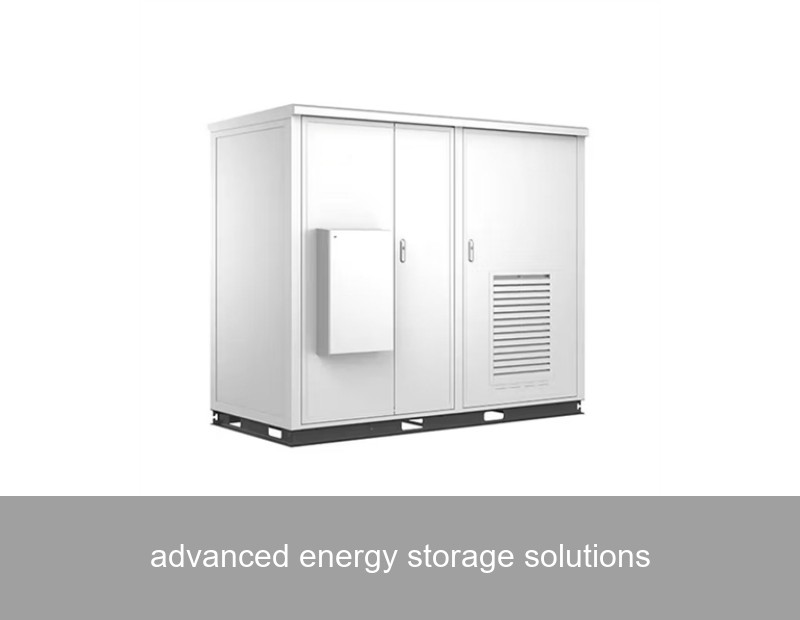
Have you ever wondered how we can truly harness the power of the sun and wind, even when the sun sets or the wind stops blowing? The answer lies at the heart of the modern energy transition: advanced energy storage solutions. These systems are far more than just batteries; they are the intelligent keystone that unlocks the full potential of renewable energy, stabilizes our grids, and empowers businesses and homeowners to take control of their energy destiny. As we move away from fossil fuels, the ability to store clean energy efficiently and dispatch it precisely when needed is no longer a luxury—it's a necessity for energy security, cost savings, and environmental stewardship.
Table of Contents
The Challenge: Intermittency Meets Rising Demand
a sunny afternoon in California sees solar panels generating more electricity than the grid can consume, leading to curtailment—essentially, wasted clean energy. Fast forward a few hours to the evening peak, and the grid scrambles, often firing up natural gas "peaker" plants to meet demand. This mismatch between renewable generation and consumption patterns is the fundamental challenge of intermittency. Simultaneously, electrification of transport and heating is accelerating demand. Our traditional grid, designed for one-way power flow from centralized plants, is straining under this new paradigm. The result? Higher costs, grid instability, and a slower transition to renewables.
The Data: Why Storage is the Critical Enabler
The numbers speak volumes about the urgent need for advanced energy storage. According to the International Energy Agency (IEA), the world needs to add close to 1,200 GW of energy storage capacity by 2030 to stay on track for net-zero emissions. In the U.S. alone, the Energy Information Administration (EIA) projects that battery storage capacity will multiply significantly, driven by both utility-scale projects and behind-the-meter installations. The economic case is equally compelling. Levelized cost of storage (LCOS) has plummeted, with BloombergNEF reporting a drop in lithium-ion battery pack prices by over 80% in the last decade. This isn't just about technology; it's about a fundamental economic shift making storage a savvy investment.
Key Benefits Quantified:
- Grid Services: Storage can respond to grid signals in milliseconds, providing frequency regulation far more efficiently than traditional plants.
- Demand Charge Management: For commercial users, storage can shave peak demand, potentially reducing electricity bills by 20-30%.
- Renewables Integration: Storage can increase the usable capacity of a solar farm, making it a more reliable and dispatchable asset.
The Solution: Components of Modern Advanced Storage
Today's advanced energy storage solutions are sophisticated, software-driven ecosystems. Let's break down the core components:
| Component | Function | Evolution |
|---|---|---|
| Battery Cells & Packs | The core energy storage medium (e.g., Lithium Iron Phosphate - LFP). | Shift towards LFP for safety, longevity, and reduced cobalt dependency. |
| Battery Management System (BMS) | The "brain" of the battery, ensuring safety, balancing, and health monitoring. | Advanced algorithms for state-of-charge (SOC) and state-of-health (SOH) estimation. |
| Power Conversion System (PCS) | Bi-directional inverter converting DC battery power to AC grid power. | Increasingly modular and efficient designs, supporting grid-forming capabilities. |
| Energy Management System (EMS) | The top-level intelligence optimizing dispatch based on weather, tariffs, and grid needs. | AI and machine learning for predictive optimization and participation in energy markets. |
It's the seamless integration and intelligent control of these components that transforms a simple battery into a true advanced energy storage solution.

Image Source: Unsplash - A modern utility-scale battery storage installation.
Case Study: Grid Stability and Renewable Integration in Germany
Let's look at a real-world application. Germany's "Energiewende" (energy transition) has led to a high penetration of wind and solar. However, grid congestion in the north-south corridors has been a persistent issue. A project in Schleswig-Holstein, a region with abundant wind power, deployed a 50 MW / 100 MWh advanced battery storage system to address this.
The Problem: Local wind farms were frequently curtailed due to grid bottlenecks, wasting clean energy and hurting project economics.
The Advanced Solution: The storage system was strategically placed to "soak up" excess wind generation during periods of low demand or grid congestion. It would then release the stored energy during peak demand periods or when renewable output was low.
- Reduced wind curtailment by an estimated 15-20% in its local grid area.
- Provided primary frequency response (FCR) services to the continental European grid, earning significant ancillary service revenue.
- Improved local grid voltage stability, deferring the need for costly traditional grid upgrades.
This case exemplifies the dual value of advanced storage: maximizing renewable asset utilization while providing critical grid stability services. It's a blueprint being replicated across Europe and North America.
Highjoule's Role: Intelligent Storage for Every Application
At Highjoule, with nearly two decades of experience since 2005, we've been at the forefront of designing and deploying these intelligent systems. We understand that a one-size-fits-all approach doesn't work for advanced energy storage solutions. That's why our portfolio is tailored to specific needs:
For Commercial & Industrial (C&I) Clients:
Our H-Series C&I ESS is engineered for peak shaving, backup power, and energy cost optimization. Integrated with our proprietary JouleMind AI EMS, it learns your facility's load patterns and electricity tariffs to automatically schedule charging and discharging for maximum savings. For a manufacturing plant in Texas, this meant reducing their demand charges by 28% annually, paying back the system investment in under 5 years.
For Utility and Microgrid Projects:
The Highjoule GridStack is our containerized, utility-grade solution. It's designed for renewables firming, frequency regulation, and black-start capabilities. Its grid-forming inverters can act as a voltage and frequency source, making it ideal for stabilizing microgrids with high renewable penetration or strengthening weak grid connections in remote areas.

Image Source: Unsplash - An engineer monitoring advanced energy management software.
For Residential Communities and New Developments:
Our EcoNode solution provides scalable, behind-the-meter storage for residential clusters. It allows communities to share the benefits of a centralized storage asset, increasing self-consumption of rooftop solar and providing resilience during outages.
Across all our systems, safety and longevity are paramount. We use premium LFP chemistry, coupled with a multi-layered safety architecture and 24/7 remote monitoring from our Global Operations Center.
The Future Landscape and Your Next Step
The evolution of advanced energy storage solutions is accelerating. We're moving towards longer-duration storage technologies (8+ hours), greater supply chain diversification, and the rise of "virtual power plants" (VPPs)—where thousands of distributed storage systems are aggregated to act as a single, grid-scale resource. The synergy with electric vehicle bidirectional charging (V2G) is another frontier poised to redefine energy resilience.
This isn't just a technological shift; it's a fundamental rethinking of how we produce, distribute, and consume energy. The question is no longer if storage will be needed, but how to implement it most effectively for your specific goals—whether you're a factory manager looking to cut costs, a utility planner ensuring reliability, or a developer building the sustainable communities of tomorrow.
What specific energy challenge—be it rising costs, reliability concerns, or sustainability targets—could an intelligent storage strategy solve for you in the next 18 months?
 Inquiry
 Online Chat