


Unlocking Energy Independence: The Power and Potential of the 51.2V 200Ah Lithium Battery
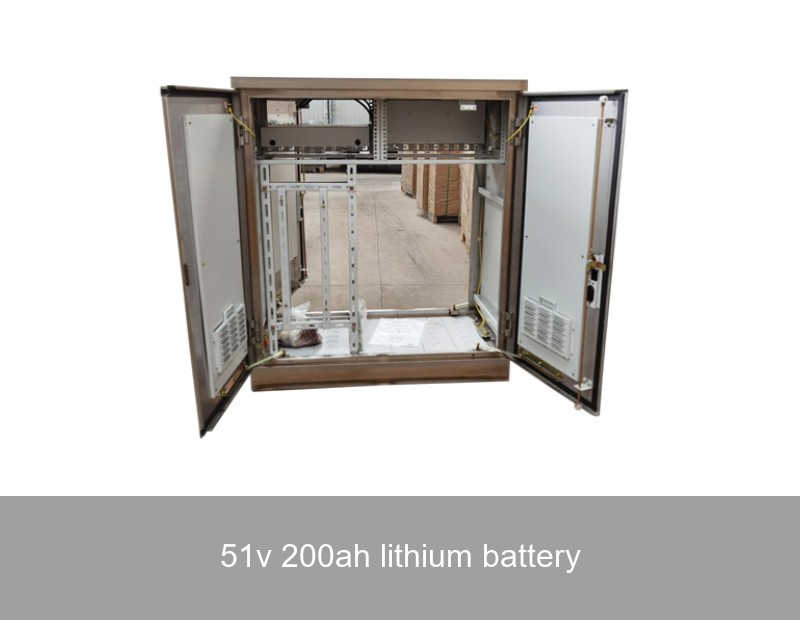
You're likely here because you've encountered the specification "51.2V 200Ah lithium battery" while researching solar storage, backup power, or off-grid systems. It's a common benchmark, but what does it truly mean for your home or business? Is it just a collection of numbers, or is it the key to a more resilient and cost-effective energy future? As we navigate rising electricity costs and an increasing frequency of grid instability, understanding this specific energy storage unit becomes crucial. Let's demystify this technology and explore how a well-designed 51.2V 200Ah lithium battery system, like those engineered by Highjoule, can transform from a simple component into the intelligent heart of your power ecosystem.
Why 51.2V? Understanding the Technical Sweet Spot
Voltage isn't an arbitrary choice. In the world of energy storage, 51.2V (often rounded to 51V) has emerged as a dominant standard for commercial and residential battery systems, and for good reason. It's a perfect marriage of efficiency, safety, and compatibility.
First, a bit of battery chemistry: lithium iron phosphate (LiFePO4) cells, the preferred technology for stationary storage due to their safety and longevity, have a nominal voltage of 3.2V. By connecting 16 of these cells in series, we achieve 51.2V (16 x 3.2V). This voltage level is strategically high enough to minimize current for a given power level, reducing energy losses as heat in the cables and components. This directly translates to higher system efficiency and lower operating costs.
Furthermore, 51.2V systems operate below the 60V safety threshold that defines "low voltage" in many electrical codes, such as the NEC in the US. This simplifies installation, reduces safety enclosure requirements, and often lowers permitting hurdles. Finally, this voltage seamlessly interfaces with a vast array of 48V inverter/chargers, which are the industry workhorses for solar integration and backup power. In short, 51.2V isn't a random number; it's the optimized result of physics, safety engineering, and market convergence.
200Ah Capacity: What Can It Really Power?
Ampere-hours (Ah) tell us the battery's "fuel tank" size. A 200Ah battery at 51.2V holds a substantial amount of energy. Let's do the math to make it tangible:
Usable Energy = Voltage (V) x Capacity (Ah) x Depth of Discharge (DoD)
Assuming a conservative and longevity-preserving 90% Depth of Discharge (common for quality LiFePO4 systems):
51.2V x 200Ah x 0.90 = 9,216 Watt-hours, or approximately 9.2 kWh of usable energy.
So, what does 9.2 kWh power? Here’s a practical breakdown for a typical home or small business:
| Appliance / Load | Average Power (Watts) | Runtime on 9.2 kWh |
|---|---|---|
| Refrigerator | 150 | ~61 hours |
| LED Lighting (Whole Home) | 300 | ~30 hours |
| Internet Router & Modem | 20 | ~460 hours |
| Residential Heat Pump (Fan only) | 750 | ~12 hours |
| Microwave (30 min use) | 1000 | ~9 cycles |
It's important to understand that a single 51.2V 200Ah battery is an excellent foundation. For larger needs, these units are designed to be scaled. Highjoule's modular systems, for instance, allow you to start with a core unit and seamlessly add more battery modules in parallel to increase capacity to 20kWh, 30kWh, or more, all managed by a single, intelligent controller.
Beyond the Spec Sheet: Real-World Performance Factors
Choosing a battery isn't just about voltage and capacity. The real value—and the difference between disappointment and decades of reliable service—lies in the engineering details.
- Cycle Life & Warranty: A quality LiFePO4 battery should offer 6,000+ cycles to 80% of its original capacity. Look for a warranty that backs this up. Highjoule, for example, provides a industry-leading 10-year warranty on its core battery systems, reflecting deep confidence in their product lifespan.
- Battery Management System (BMS): This is the brain of the battery. A superior BMS doesn't just protect from over-charge or discharge; it actively balances cells, monitors temperature, and communicates detailed system health to your inverter and monitoring platform, ensuring optimal performance and safety.
- Thermal Management: Lithium batteries perform best within a specific temperature range. Systems with active cooling/heating management, like Highjoule's ClimateGuard™ technology, maintain peak efficiency and cycle life in both scorching summers and freezing winters, a critical factor for diverse climates in Europe and North America.
- Grid Services & Software: The modern battery is a smart grid citizen. Advanced systems can be configured for time-of-use arbitrage (charging when electricity is cheap, using it when it's expensive), peak shaving to avoid demand charges for businesses, and even providing grid support functions.
Case Study: A Berlin Bakery's Recipe for Resilience
Let's move from theory to practice. Consider "Brot & Mehr," a mid-sized artisan bakery in Berlin. Their challenge was twofold: unpredictable grid outages risking dough proofing and refrigeration, and high electricity demand charges during their pre-dawn baking hours.
The Solution: They installed a Highjoule H-Stack Commercial 51.2V 200Ah system, configured as a 4-module parallel array, creating a 40kWh (usable) storage capacity. It was integrated with their existing rooftop solar and a new 20kW inverter.
The Data-Driven Outcome (First Year):
- Backup Power: Seamlessly handled three grid outages (longest was 8 hours) with zero operational impact.
- Cost Savings: By using stored solar energy and grid power during off-peak hours (11 pm - 6 am) to cover the morning baking peak, they reduced their demand charges by 28%. Combined with increased solar self-consumption, their overall electricity bill dropped by an estimated €3,400 annually.
- ROI: Projected payback period of just under 7 years, not including the intangible value of business continuity. The system's 10-year warranty ensures many years of savings thereafter.
This case illustrates that the value of a 51.2V 200Ah-based system extends far beyond emergency backup; it's an active financial tool for energy management. You can explore more on how businesses leverage storage for savings from sources like the U.S. Department of Energy.

Image Source: Unsplash (Representative image of a commercial bakery)
Choosing the Right 51.2V 200Ah System
With many options on the market, here’s a quick guide to focus your selection:
- For Residential Off-Grid: Prioritize cycle life, a robust BMS, and compatibility with your inverter brand. Scalability is key—start with what you need, plan for future expansion.
- For Residential Solar + Backup: Look for systems with integrated energy management software that can optimize self-consumption and provide whole-home or critical-load backup during outages.
- For Commercial & Industrial: Focus on systems with proven reliability, high discharge rates for demand shaving, and advanced software for monitoring and controlling multiple units. Service and warranty support from a global provider like Highjoule is paramount.
The Highjoule Integrated Solution: More Than Just a Battery
At Highjoule, we view the 51.2V 200Ah lithium battery as the core of a comprehensive energy ecosystem. Our H-Cell series battery modules are built with automotive-grade LiFePO4 cells and feature a proprietary, multi-layer BMS for military-grade protection and monitoring. But we go further.
Our batteries are designed to seamlessly connect with Highjoule's intelligent hybrid inverters and the Highjoule Energy OS—a cloud-based platform that gives you granular control over your energy flow. Whether your goal is maximizing solar self-consumption at a home in California, avoiding demand charges for a factory in Germany, or creating a resilient microgrid for a remote community, our systems are engineered to adapt.
We provide tailored solutions for commercial, industrial, residential, and utility-scale applications, backed by nearly two decades of global experience. It's this holistic approach—where hardware, software, and deep application expertise converge—that transforms a standard battery specification into a personalized power asset.

Image Source: Unsplash (Representative image of a sustainable home with solar and EV)
So, as you consider a 51.2V 200Ah lithium battery for your project, we leave you with this question: Is your goal simply to store electricity, or is it to build an intelligent, adaptable, and financially savvy energy foundation for the next decade and beyond?
 Inquiry
 Online Chat