


Demystifying the Cost: How Much for a 2.5 kW Inverter and What You *Really* Need to Know
"How much does a 2.5 kW inverter cost?" It’s one of the most common questions we hear from homeowners embarking on their solar journey. And while a quick online search might give you a ballpark figure—say, anywhere from $800 to $2,500—that number alone is almost meaningless. You see, the inverter is the intelligent heart of your solar energy system. Choosing one based solely on the lowest upfront cost is like buying a car engine without considering the car's efficiency, reliability, or warranty. The real question isn't just "how much," but "what am I getting for my investment, and how will it perform over the next 20 years?"
Key Factors Influencing a 2.5kW Inverter's Price
The price variation isn't arbitrary. It reflects critical differences in technology, capability, and long-term value. Let's break down what you're actually paying for.
1. Inverter Type: The Core Technology
The biggest price driver is the type of inverter. For a typical residential 2.5kW system, you have three main choices:
- String Inverters: The most cost-effective entry point. All your solar panels are connected in a series (a "string") to a single inverter. Prices are lower, but shade on one panel can affect the whole string's output.
- Microinverters: A small inverter attached to each individual panel. They maximize energy harvest from each panel (crucial if your roof has partial shading) and offer panel-level monitoring. This advanced technology comes at a higher initial cost per watt.
- Hybrid or Battery-Ready Inverters: This is where the future lies. These inverters not only convert DC to AC but are also designed to seamlessly integrate with a battery storage system. They are inherently "smart," managing energy flow between solar panels, the battery, and the grid. They command a premium but are essential for energy independence.

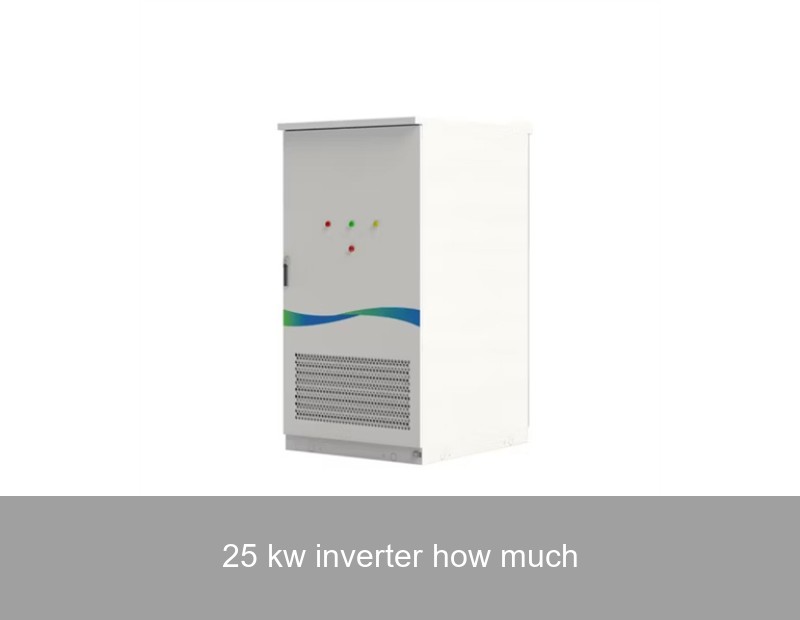
Image: A modern hybrid inverter, the core of a smart energy system. (Source: Unsplash)
2. Features and "Smart" Capabilities
Modern inverters are energy managers. Consider these value-adding features:
| Feature | Impact on Price & Value |
|---|---|
| Advanced Monitoring | Real-time, app-based tracking of energy production and consumption can add cost but is invaluable for optimizing usage. |
| Grid Services Readiness | Inverters that can support grid stability (like frequency response) may cost more but represent cutting-edge functionality. |
| Efficiency Rating | A 97% vs. a 99% peak efficiency inverter might have a price difference, but the more efficient unit will harvest more energy over its lifetime, paying back the gap. |
| Warranty & Support | A 10-year standard warranty vs. a 25-year extendable warranty reflects the manufacturer's confidence and affects long-term cost of ownership. |
3. Installation and "Soft" Costs
The inverter's sticker price is just one component. Professional installation, electrical upgrades, permits, and system design are significant. A cheaper inverter might be harder or more expensive to install, negating the initial savings. According to the National Renewable Energy Laboratory (NREL), soft costs can account for over 50% of a residential solar system's total price.
Real-World Case Study: The ROI of a Quality 2.5kW System
Let's look at a real example from Germany, a leader in residential solar adoption. The Müller family in Bavaria had a south-facing roof with occasional afternoon shading from a large tree. They initially received a quote for a basic 2.5kW string inverter system.
Phenomenon: The string inverter's output dipped significantly when shade hit one section of panels.
Data: Their first-year production was 15% below projections. They were losing roughly €120 per year in unrealized energy.
Case: After consulting with a new installer, they upgraded to a system using Highjoule's Harmony MI Series Microinverters. The per-panel optimization eliminated the shading loss.
Insight: The microinverter system had a 20% higher upfront cost. However, the increased energy yield meant the payback period was only 1.5 years longer. Over the system's 25+ year life, the Highjoule system is projected to generate over €4,000 more electricity, a clear financial win. The panel-level monitoring also helped them quickly identify and resolve a rare wiring issue, preventing further losses.
Highjoule's Smart Solutions for Home Energy Independence
At Highjoule, we believe an inverter should be an investment in resilience, not just a component. For homeowners asking "2.5 kW inverter how much?", we guide the conversation toward long-term value. Our Residential Energy Hub (REH) Series is specifically designed for systems in the 2.5kW to 10kW range.
This isn't just an inverter; it's an integrated energy management system. The REH is a hybrid inverter, meaning it's built from the ground up to pair with Highjoule's CellMatrix™ lithium-ion battery storage. This allows you to:
- Store Excess Solar: Use your solar energy at night, not just when the sun shines.
- Increase Self-Consumption: Dramatically reduce your reliance on the grid, sometimes by up to 80% or more.
- Provide Backup Power: Keep essential loads running during grid outages—a feature becoming increasingly valuable. The REH's seamless switching ensures your lights stay on.
While the initial investment for a Highjoule REH hybrid system is higher than a basic string inverter, the functionality is incomparable. You're not just buying a converter; you're buying control, security, and a foundation for a truly smart home energy ecosystem. Our systems are designed with the future grid in mind, ensuring compatibility with evolving energy markets.
Image: Visualizing energy flow in a home with solar and battery storage. (Conceptual diagram)
Making the Right Choice for Your Home
So, how do you navigate this decision? Start with an energy audit. Understand your consumption patterns. Do you have an electric vehicle or plan to get one? Is backup power important for your location? Answering these questions will tell you if you need a simple inverter or an intelligent energy hub.
Always get multiple quotes, but compare the specifications and long-term projections, not just the bottom line. Ask about the inverter's peak and weighted efficiency, its operating temperature range, and the details of its warranty and monitoring software.
Given your energy goals, what feature—maximizing production, ensuring backup power, or future-proofing for a battery—would make the higher initial cost of an advanced system worthwhile for you?
 Inquiry
 Online Chat