


Solar System in Bangladesh: A Beacon of Hope and a Blueprint for the Future
Imagine a country where millions have gained access to electricity not through massive, centralized power plants, but from the sun. This is the reality unfolding in Bangladesh, home to one of the world's most successful solar system deployment stories. For nations and communities worldwide looking to achieve energy security and sustainability, the Bangladeshi journey offers invaluable lessons. It's a powerful case study in how distributed renewable energy, particularly solar, can transform lives and economies. As a global leader in advanced energy storage, Highjoule sees this evolution as a critical proof point: solar energy's true potential is unlocked when paired with intelligent storage and management systems.
Table of Contents
- The Phenomenon: From Energy Poverty to Solar Pioneer
- The Data: Quantifying a Solar Revolution
- A Closer Look: The Solar Home System (SHS) Success Story
- The Next Challenge: Beyond Basic Access to Reliable Power
- The Critical Solution: Integrating Advanced Solar and Storage
- How Highjoule Empowers the Next Phase of Solar Growth
- The Future: Scaling Up for Commercial and Industrial Needs
The Phenomenon: From Energy Poverty to Solar Pioneer
Just over a decade ago, Bangladesh faced a severe energy access crisis. Vast rural areas were off the national grid, relying on expensive and polluting kerosene lamps. The need for a rapid, decentralized solution was urgent. The government, alongside international development partners, championed a groundbreaking program focused on solar home systems (SHS). This initiative wasn't about building huge solar farms; it was about putting a small, affordable photovoltaic panel and battery system on the roof of every home that needed it. The result? A quiet revolution that has illuminated millions of households and propelled Bangladesh to the forefront of the global solar conversation.
The Data: Quantifying a Solar Revolution
The numbers behind Bangladesh's solar ascent are staggering and speak to a meticulously executed plan:
- Over 6 million Solar Home Systems installed, benefiting more than 20 million people.
- Contribution of over 900 MW to the country's generation capacity from renewable sources, with SHS being a major contributor.
- A dramatic reduction in kerosene use, estimated to cut CO2 emissions by millions of tons annually.
- Creation of a vast green jobs ecosystem, from technicians to sales agents, largely in rural areas.
This data, from sources like the World Bank and Bangladesh's own Infrastructure Development Company Limited (IDCOL), underscores a scalable model for rural electrification.

Image: Solar home systems have transformed energy access in rural Bangladesh. (Source: Unsplash, representative image)
A Closer Look: The Solar Home System (SHS) Success Story
Let's zoom in on a real-world impact. Consider a village in the Rajshahi district. Before 2015, household activities ceased at dusk. Children struggled to study, small businesses couldn't operate after dark, and community safety was a concern. The installation of 50- to 150-watt SHS units, typically comprising a panel, a lead-acid battery, charge controller, and LED lights, changed everything.
Phenomenon: Limited productive hours and stunted economic activity due to lack of electricity.
Data: A study by the International Finance Corporation (IFC) found that SHS access increased household study hours by 33% and enabled new home-based micro-enterprises.
Case: A village seamstress could now use an electric sewing machine at night, doubling her output. A small shop could refrigerate drinks and stay open longer. The community installed a solar-powered streetlight at a central junction.
Insight: The initial phase proved that solar technology is not just about light; it's a catalyst for education, gender equality, economic upliftment, and social cohesion.
The Next Challenge: Beyond Basic Access to Reliable Power
While the SHS program is a monumental success, it represents Phase 1. As the economy grows and aspirations rise, so do energy demands. The limitations of small, off-grid systems become apparent:
- Limited Capacity: Basic SHS units cannot power energy-intensive appliances like water pumps, grain mills, or large cooling systems essential for agriculture and small industries.
- Intermittency: Without sufficient storage, power is only available when the sun shines or is limited by the battery's small capacity.
- System Lifespan: Traditional lead-acid batteries in these systems degrade quickly, especially in hot climates, requiring frequent and costly replacements.
This is the critical juncture Bangladesh and many emerging markets face: transitioning from basic solar access to reliable, productive solar power.
The Critical Solution: Integrating Advanced Solar and Storage
The answer lies in the next generation of solar systems: hybrid systems that combine larger-scale solar generation with advanced, intelligent battery storage. Think of it as an evolution from a basic cell phone to a smartphone. The core function is the same, but the capability, intelligence, and utility are exponentially greater.
An advanced solar-plus-storage system does more than just store energy. It manages it intelligently. It can prioritize power for critical loads, integrate with a backup generator or a weak grid, and provide stable, clean power 24/7. This is no longer just about household lighting; it's about powering irrigation for higher crop yields, running machinery for rural factories, keeping vaccines cold in health clinics, and supporting the digital infrastructure of modern communities.

Image: Advanced Battery Energy Storage Systems (BESS) are key for reliable, round-the-clock solar power. (Source: Unsplash, representative image)
How Highjoule Empowers the Next Phase of Solar Growth
This is precisely where Highjoule's expertise becomes vital. For nearly two decades, we have been designing and deploying intelligent energy storage solutions for the most demanding applications worldwide. The challenges faced by growing businesses and communities in Bangladesh—need for reliability, resilience, and cost-effective operation—are what our systems are built to solve.
For the Bangladeshi market, moving beyond basic SHS, Highjoule's product portfolio offers the perfect technological leap:
- Highjoule HPS Series (Hybrid Power Systems): These all-in-one units are ideal for commercial shops, telecom towers, and larger homes. They seamlessly integrate solar input, grid/generator connection, and advanced lithium-ion battery storage with a sophisticated inverter/controller. They ensure power is always available, clean, and optimized for cost savings.
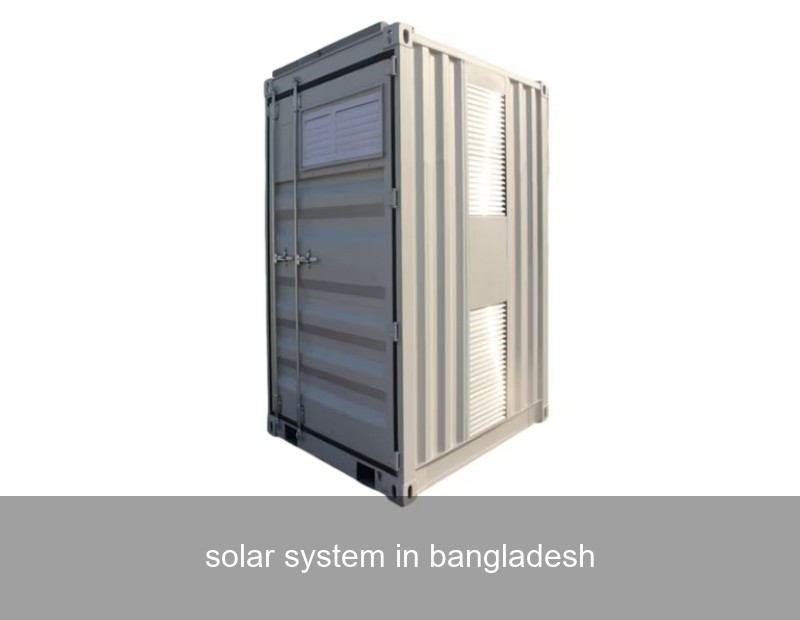
- Highjoule C&I BESS (Commercial & Industrial Battery Energy Storage Systems): For larger applications like textile mills, food processing units, or agricultural cooperatives, our containerized or modular BESS solutions can be paired with megawatt-scale solar arrays. They provide peak shaving (reducing demand charges), backup power, and enable a higher penetration of solar energy into operations.
- Highjoule Energy Management Software (EMS): The true brain behind the hardware. Our EMS allows system owners and operators to monitor performance, control energy flow, predict maintenance, and maximize financial return from their solar investment, all from a simple dashboard.
By integrating a Highjoule system, a Bangladeshi garment factory can run its sewing floors on solar power during the day, use stored energy during peak tariff hours in the evening, and have guaranteed backup during grid outages—turning energy from a cost center into a strategic asset.
The Future: Scaling Up for Commercial and Industrial Needs
The vision for solar in Bangladesh is expanding. The government's target is to generate 40% of its power from renewable sources by 2041. This will require a significant shift from off-grid home systems to large-scale grid-connected solar parks and rooftop installations on commercial and industrial (C&I) buildings. Here, the role of storage is even more critical to stabilize the grid and ensure the generated solar power is usable when needed most.
Highjoule is already partnering with developers and EPC companies in regions with similar profiles to bring this grid-scale stability and C&I resilience to life. Our systems are designed for the harsh climatic conditions of South Asia, ensuring longevity and performance where it matters most.
The story of the solar system in Bangladesh is still being written. The first chapter was about light. The next chapter is about power—reliable, intelligent, and transformative power that fuels industries, cools agricultural produce, and drives sustainable development. The question for businesses and utilities in Bangladesh and beyond is no longer *if* they should adopt solar, but *how* they can build the most resilient and intelligent solar-powered future. What will your first step be to integrate not just solar panels, but a complete smart energy ecosystem for your needs?
 Inquiry
 Online Chat