


Demystifying the 10 kVA On-Grid Solar System Price: A Smart Investment Guide
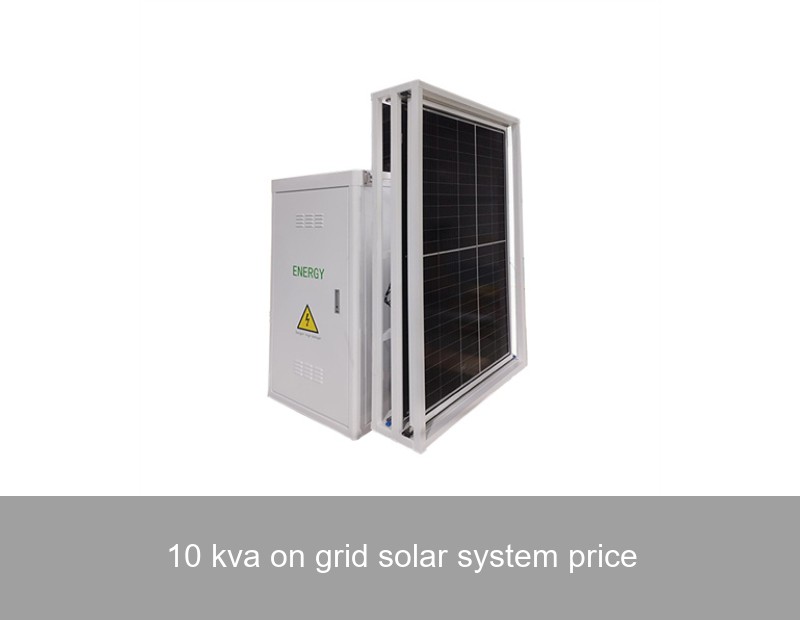
If you're a homeowner or business owner in Europe or the US looking to take control of your energy bills and reduce your carbon footprint, you've likely encountered the term "10 kVA on-grid solar system." It's a popular and powerful choice, but the first question that comes to mind is invariably about cost. The quoted price for a 10 kVA solar system can seem like a confusing puzzle, with figures varying wildly. Why is that? As a product technology expert at Highjoule, a global leader in advanced energy storage since 2005, I'm here to guide you through the real factors behind the price tag. This isn't just about hardware; it's about investing in a reliable, intelligent, and sustainable energy solution for your property.
Table of Contents
- The Real Breakdown of a 10 kVA On-Grid Solar System Price
- Key Factors That Make Your Price Unique
- Looking Beyond Panels: The Critical Role of Inverters & Smart Tech
- A Real-World Case: A German Bakery's Journey to Energy Independence
- How Highjoule's Smart Solutions Enhance Your 10 kVA System
- Understanding Your Return on Investment (ROI)
The Real Breakdown of a 10 kVA On-Grid Solar System Price
Let's cut through the noise. In 2024, a complete, professionally installed 10 kVA (approximately 10 kW) on-grid solar system in markets like Germany or California typically ranges from $15,000 to $25,000 USD (or €14,000 to €23,000) before incentives. This wide range isn't a sales tactic; it's a reflection of the system's quality and components. Think of it like buying a car—the base model and the premium model serve the same core function but offer vastly different performance, comfort, and long-term value.
A transparent quote should itemize several core cost centers:
- Solar Panels (PV Modules): 25-35% of the cost. Efficiency (from 19% to over 22%) and brand reputation play a huge role.
- Inverter(s): 15-25% of the cost. This is the brain of your system. A 10 kVA system often uses a single powerful inverter or multiple "string" inverters.
- Mounting System & Hardware: 10-15% of the cost. This must be engineered for your specific roof type (tiled, metal, flat) and local weather conditions.
- Electrical Components & Safety Gear: 10-15% of the cost. This includes cabling, isolators, and crucial grid-protection devices.
- Installation Labor & Engineering: 20-30% of the cost. This covers system design, permits, grid connection approval, and the physical installation by certified technicians.

Image: Professional installation is a key part of system cost and longevity. (Photo by Vivint Solar on Unsplash)
Key Factors That Make Your Price Unique
Your final price is personalized. Here’s what tailors it:
- Your Location: Labor costs, permit fees, and local market competition differ between, say, Texas and Italy. The amount of sunlight (irradiance) also affects the panel quantity needed for 10 kVA output.
- Roof Complexity: A simple, south-facing, large roof is far easier and cheaper to install on than a roof with multiple chimneys, skylights, or a complex angled design.
- Component Tier: Are you choosing premium, high-efficiency monocrystalline panels from a tier-one manufacturer, or more standard options? Is the inverter a basic model or one with advanced grid-support functions and a 15-year warranty?
- Grid Connection Process: In some regions, grid interconnection studies or transformer upgrades can add to the cost.
Looking Beyond Panels: The Critical Role of Inverters & Smart Tech
Many focus solely on panel price, but the inverter is where the magic—and much of the value—happens. A 10 kVA on-grid inverter converts the DC power from your panels into AC power for your home and the grid. But not all inverters are created equal. Modern "smart" inverters offer features that maximize your investment:
- Maximum Power Point Tracking (MPPT) Efficiency: A superior MPPT algorithm can harvest 2-5% more energy from the same panels, especially in cloudy or variable conditions.
- Real-Time Monitoring: The ability to track every kilowatt-hour produced and consumed via a smartphone app is no longer a luxury; it's essential for understanding your energy habits and system health.
- Grid Services & Future-Proofing: In advanced markets like the US and Europe, utilities are starting to require inverters that can help stabilize the grid (Voltage/Watt support, frequency regulation). Investing in a smart inverter now prepares you for this future.
A Real-World Case: A German Bakery's Journey to Energy Independence
Let's look at a concrete example. In 2022, a family-run bakery in Bavaria, Germany, was facing annual electricity costs of over €11,000, with energy-intensive ovens and refrigeration running day and night. They installed a 10.2 kVA on-grid solar system on their large warehouse roof.
| Component | Details |
|---|---|
| System Size | 10.2 kWp (28 high-efficiency panels) |
| Key Investment | Premium hybrid-ready inverter with detailed monitoring |
| Total Installed Cost | €21,500 (before incentives) |
| German EEG Incentive | Reduced net cost by approximately €4,000 |
| Annual Energy Production | ~10,800 kWh |
| Annual Savings (Year 1) | €3,240 (at €0.30/kWh) |
| Payback Period | Estimated 5.4 years |
The owner noted: "The 10 kVA on-grid solar system price was a significant decision, but the monthly savings are immediate. The smart monitoring showed we were using 40% of our solar power directly, and that visibility helped us shift some cleaning cycles to daylight hours, increasing our self-consumption to 55%. The system is performing above projections." This case highlights how the right system, paired with intelligent energy management, transforms a capital expense into a high-return asset.
How Highjoule's Smart Solutions Enhance Your 10 kVA System
While Highjoule is renowned for its cutting-edge battery storage, our expertise directly benefits any on-grid solar installation. A standard 10 kVA on-grid system exports excess power to the grid, often at a lower price than you buy it for. This is where the conversation evolves. Our Highjoule Energy Router can be integrated with your new or existing solar system. It's not just an inverter; it's an intelligent energy manager that optimizes every watt.
For a 10 kVA solar setup, pairing it with a Highjoule system means:
- Maximized Self-Consumption: Intelligently direct solar power to priority loads in real-time, reducing grid import.
- Seamless Future Battery Addition: Our platform is built for integration. When you're ready to add storage—like our Highjoule Cube series—to capture excess solar for use at night, the upgrade is plug-and-play, protecting your initial investment.
- Grid Interaction & Resilience: Our systems are designed with advanced grid-support functions, making compliance with future regulations straightforward and even allowing for potential revenue streams from grid services.

Image: Intelligent energy storage can be added later to maximize a solar investment. (Photo by Andreas Gücklhorn on Unsplash)
Understanding Your Return on Investment (ROI)
The true measure of the 10 kVA on-grid solar system price is its long-term return. With generous incentives like the US federal tax credit (30% until 2032) (source: U.S. Department of Energy) and various European national grants, the net cost is substantially lower. In sunnier parts of the US, a 10 kW system can pay for itself in 6-8 years. In Europe, with higher electricity prices, payback can be even faster. After the payback period, you effectively have 15+ years of nearly free electricity, acting as a hedge against rising utility rates. According to the National Renewable Energy Laboratory (NREL), solar system costs have dropped by over 70% in the last decade, but the value of energy independence has soared.
Your Next Smart Energy Step
So, when you evaluate a quote for a 10 kVA on-grid solar system, look beyond the bottom line. Are you buying a commodity kit of parts, or are you investing in a tailored, intelligent energy ecosystem designed for performance and longevity? The right partner will analyze your energy bills, model your roof's potential, and explain how each component choice affects your 20-year energy future. At Highjoule, we believe the best system is one that works intelligently for you today and adapts to your needs tomorrow.
What specific energy consumption pattern in your home or business are you most eager to solve with solar power?
 Inquiry
 Online Chat