


How Much Can a WiseGrid Energy System Save Your Business?
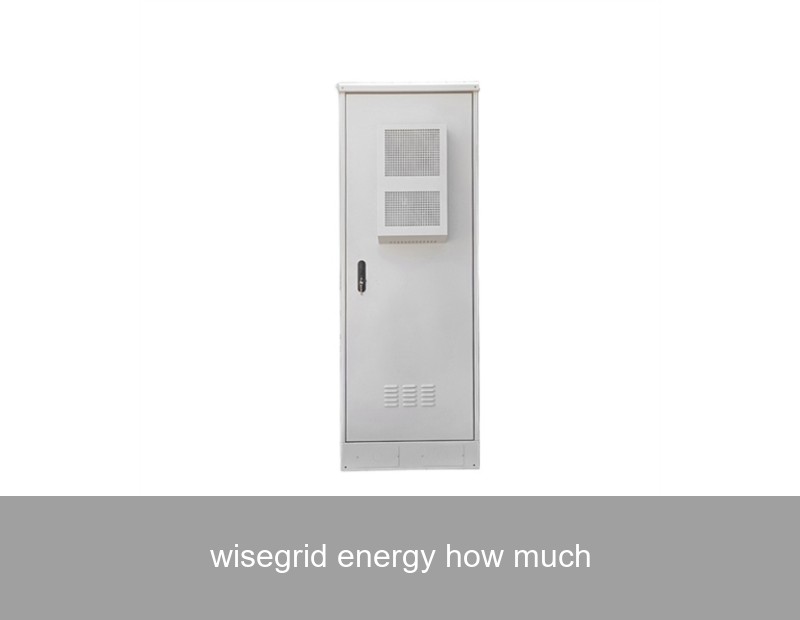
As energy costs continue their volatile climb across Europe and North America, one question is dominating boardroom discussions from manufacturing plants to retail chains: how much can a smart energy management system truly save us? The concept of the "WiseGrid" – an intelligent, integrated network of generation, storage, and consumption – is no longer just a futuristic ideal. It's a practical, financial imperative. But moving from curiosity to commitment requires clear numbers. Let's break down the real costs, savings, and value of implementing a WiseGrid energy solution for your commercial or industrial operation.
The Rising Cost of Inaction: More Than Just Kilowatt-Hours
You see it on your monthly utility bill—a line item that seems to only move in one direction: up. But the financial risk of traditional grid dependence is deeper. For businesses, "energy cost" now includes:
- Demand Charges: Peak usage spikes can create punishing fees, often constituting 30-50% of a commercial bill.
- Grid Instability: Power quality issues or outages halt production, leading to revenue loss and wasted materials.
- Carbon Compliance Costs: Regulations like the EU's Emissions Trading System (ETS) are turning carbon into a direct expense.
Passively accepting these costs is a choice—and an expensive one. A WiseGrid flips the script, transforming energy from a volatile overhead into a managed, strategic asset.
WiseGrid Components & Cost Breakdown: What Are You Investing In?
So, "how much" starts with understanding what a system comprises. A comprehensive WiseGrid solution isn't a single product; it's a synchronized ecosystem.
| Component | Primary Function | Cost Influence & ROI Driver |
|---|---|---|
| Solar PV Generation | On-site clean energy production | Reduces energy purchased from the grid; long-term fixed-price energy. |
| Battery Energy Storage System (BESS) | Stores energy for use when needed | Arbitrages time-of-use rates, slashes demand charges, provides backup. |
| Advanced Energy Management System (EMS) | The "brain" that optimizes the flow | Maximizes savings by making intelligent, real-time decisions. |
| Integration & Controls | Connects to existing infrastructure | Ensures system works with your facility's unique electrical layout. |

As a global leader since 2005, Highjoule specializes in integrating these components into a seamless, intelligent whole. Our H-Series Commercial BESS, for instance, is engineered for high-cycle daily use, making it perfect for demand charge management. Paired with our Neuron EMS platform, it doesn't just store energy—it strategizes its release for maximum financial return.
Case Study: A German Automotive Parts Manufacturer
Let's move from theory to hard data. A mid-sized manufacturer in Bavaria faced an average monthly demand charge of €15,000 and volatile spot prices for electricity. Their goal: stabilize costs and ensure uninterrupted production lines.
The Highjoule WiseGrid Solution: A 500 kW solar canopy was installed over their employee parking lot, coupled with a 750 kWh Highjoule H-Series battery storage system, all managed by the Neuron EMS.
The Results (First 12 Months):
- Demand Charge Reduction: 40% average reduction, saving approximately €72,000 annually.
- Grid Energy Consumption: Reduced by 60% during peak hours.
- ROI Timeline: Projected full system payback in under 5 years, based on energy savings and available EU funding mechanisms.
- Resilience: The system provides critical backup for sensitive CNC machinery, preventing an estimated €250,000 in potential downtime losses during two brief grid disturbances.
This case shows the "how much" is not just a monthly saving, but a combination of direct savings, risk mitigation, and added operational resilience.
Value Beyond the Bill: Resilience and Sustainability
While the financial ROI is critical, a WiseGrid's value extends further. For many businesses, the ability to operate through a grid outage is priceless. A Highjoule system can island critical loads, keeping safety systems, refrigeration, or key production lines online. This isn't just convenience; it's business continuity insurance.
Furthermore, a demonstrable reduction in carbon footprint strengthens your brand and complies with tightening regulations. It's an investment in both market positioning and regulatory foresight. You can explore the latest grid reliability data for the U.S. at the U.S. Energy Information Administration.
How Highjoule Implements Your Tailored WiseGrid
At Highjoule, we understand that "how much" depends entirely on "how you operate." We don't sell generic boxes; we deliver tailored power solutions. Our process is consultative:
- Energy Health Assessment: We analyze 12+ months of your utility data to pinpoint savings opportunities.
- Technology Agnostic Design: We design a system using optimally matched components—including our own high-efficiency storage and controls—to meet your specific financial and operational goals.
- Seamless Integration & Support: Our engineers handle the complex integration, and our Neuron platform offers remote monitoring and proactive management for the system's lifetime.

Calculating Your Potential Savings: The First Step is a Conversation
Asking "how much does a WiseGrid energy system cost?" is the right question, but it needs a companion: "How much can it save and protect for *my* business?"
The variables are many—your location's utility rate structure, your consumption patterns, available space, local incentives, and your resilience needs. For example, businesses in California facing high PG&E rates or in the UK navigating dynamic grid constraints will see a vastly different financial model than those in regions with stable, low-cost power (though resilience remains a universal value).
Ready to Translate Your Energy Challenges into a Savings Plan?
The most accurate answer to "how much" comes from a personalized analysis. What if your next board meeting could feature a clear roadmap to reducing energy costs by 30% or more while future-proofing your operations? Let's start that conversation. What's the single biggest energy challenge you'd like to solve this year?
 Inquiry
 Online Chat