


Windsol Energy Solutions: A Comprehensive Guide to Hybrid Wind-Solar Systems
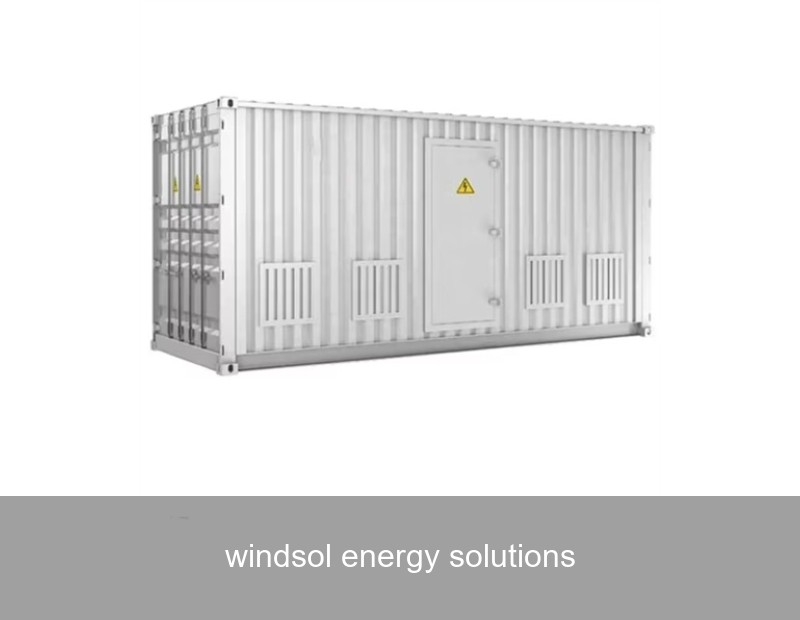
Have you ever looked at a windy, sunny field and thought, "What if we could harness both?" That's the powerful idea behind Windsol energy solutions. This integrated approach combines wind turbines and solar photovoltaic (PV) panels to create a more reliable, efficient, and consistent renewable energy system. For businesses, communities, and forward-thinking homeowners, understanding Windsol is key to unlocking true energy independence. As a global leader in advanced energy storage, Highjoule has witnessed firsthand how pairing intelligent battery systems with these hybrid generation sources transforms potential into persistent, clean power. Let's explore how this synergy works and why it's becoming the blueprint for the future.
Table of Contents
- The Intermittency Challenge: Sun and Wind Don't Always Play Nice
- What Are Windsol Energy Solutions? The Best of Both Worlds
- By the Numbers: The Compelling Data Behind Hybrid Systems
- Case Study: A German Dairy Farm's Journey to Energy Autonomy
- The Critical Role of Advanced Energy Storage
- How Highjoule's Technology Elevates Windsol Systems
- The Future of Integrated Renewable Energy
The Intermittency Challenge: Sun and Wind Don't Always Play Nice
Renewable energy has a scheduling problem. Solar panels peak at midday but go offline at night. Wind turbines can generate power around the clock, but the wind is famously fickle—there can be calm days and gusty nights. This intermittency is the single biggest hurdle for grids and off-grid systems relying on a single source. It creates instability, necessitates backup fossil fuel plants, and can lead to wasted energy when production exceeds demand. The question isn't just about generating green energy; it's about generating it reliably and predictably. This fundamental challenge is what Windsol energy solutions are designed to solve.
What Are Windsol Energy Solutions? The Best of Both Worlds
At its core, a Windsol system is a hybrid renewable energy setup that intelligently combines wind and solar generation, often coupled with an energy storage system (ESS). The logic is beautifully simple: solar and wind resources often complement each other seasonally and diurnally.
- Seasonal Complement: In many regions, solar irradiance is highest in summer, while wind resources are stronger in winter.
- Daily Complement: Solar produces during daylight hours. Wind can blow at any time, often picking up in the evening when solar output drops.
By combining both, you smooth out the generation curve, reducing the gaps in supply and creating a more consistent overall output. Think of it as diversifying your energy portfolio—you're not putting all your eggs in one weather-dependent basket.

Image Source: Unsplash - A visual representation of co-located wind and solar generation.
By the Numbers: The Compelling Data Behind Hybrid Systems
The theory is sound, but what does the data say? Studies and real-world deployments show significant advantages. According to the National Renewable Energy Laboratory (NREL), hybridizing generation sources can reduce the overall capacity requirement for storage needed to achieve a high renewable penetration. In practical terms, you need a smaller battery to achieve the same level of reliability compared to a wind-only or solar-only system.
| System Type | Average Capacity Factor* | Key Advantage |
|---|---|---|
| Solar-Only | 15-25% | Peak daytime production |
| Wind-Only | 25-50% | Night & seasonal production |
| Hybrid Windsol | 40-70%+ | Smoothed, consistent output year-round |
*Capacity Factor: The ratio of actual energy output over time to potential output if running at full nameplate capacity continuously. Source: NREL & IEA data composites.
Case Study: A German Dairy Farm's Journey to Energy Autonomy
Let's make this concrete. Consider a medium-sized dairy farm in Lower Saxony, Germany. The farm had high, constant energy demands for cooling, milking machines, and general operations. Their initial 100 kW solar installation covered about 60% of their summer needs but left them reliant on the grid, especially in winter.
In 2022, they implemented a Windsol energy solution, adding a 50 kW mid-scale wind turbine. The results were transformative:
- Generation: Annual renewable self-consumption rose from 60% to 92%.
- Reliability: Winter energy imports from the grid were reduced by over 80%.
- Economics: The payback period for the hybrid system was calculated to be 3 years shorter than for solar alone, thanks to higher utilization of grid feed-in tariffs and avoided peak-time electricity costs.
The key to maximizing these gains? They integrated a Highjoule HI Series commercial battery system. This battery acts as the central hub, storing excess solar power from midday and wind power from nighttime gusts, then dispatching it precisely when the farm's milking parlor kicks into high gear in the early morning and evening—times when neither sun nor wind might be at peak production alone.
The Critical Role of Advanced Energy Storage
This brings us to the unsung hero of any effective Windsol system: intelligent energy storage. A battery is more than just a bucket for electrons. In a hybrid system, its role becomes strategic:
- Energy Time-Shifting: Stores surplus energy from windy/sunny periods for use during lulls.
- Power Smoothing: Mitigates short-term fluctuations in wind speed or passing clouds, providing grid-stable power.
- System Optimization: An intelligent battery management system (BMS) decides in real-time whether to store wind power, solar power, or both, based on weather forecasts and consumption patterns.
Without this layer of intelligence and storage, a Windsol system cannot fully realize its potential for true 24/7 clean power. The battery is the conductor that harmonizes the solar and wind orchestra.
Image Source: Unsplash - Representative image of a modern industrial battery storage system.
How Highjoule's Technology Elevates Windsol Systems
This is where Highjoule's nearly two decades of expertise becomes pivotal. Our products are engineered specifically for the demands of hybrid renewable integration. For a robust Windsol energy solution, we provide the crucial backbone:
- HI Series Commercial & Industrial ESS: Featuring industry-leading cycle life and depth of discharge, these systems are built for the daily charge/discharge cycles a Windsol system demands. Their modular design allows farms, factories, or microgrids to scale storage as their needs grow.
- Adaptive Energy Management System (A-EMS): This is the brain. Highjoule's A-EMS doesn't just react; it predicts. By integrating live weather data (sun irradiance, wind speed forecasts) with real-time energy pricing and consumption patterns, it optimally dispatches power from solar, wind, and battery storage. It ensures every kilowatt-hour is used in the most economical and efficient way possible.
- Grid Services Integration: For grid-connected systems, Highjoule's technology can enable participation in demand response or frequency regulation markets, turning your Windsol investment into an additional revenue stream by providing stability services to the wider grid.
In essence, Highjoule transforms a combined wind and solar setup from a simple generator into a smart, resilient, and revenue-aware power asset.
The Future of Integrated Renewable Energy
The trajectory is clear. As the world moves beyond single-source renewables, integrated systems like Windsol will become the standard for commercial, industrial, and community-scale projects. The International Renewable Energy Agency (IRENA) highlights system integration and smart electrification as core pillars of the deep energy transition. The future grid will be built on diversity—diversity of generation, backed by intelligent storage and software.
So, as you contemplate your organization's or community's energy resilience, ask yourself not just "solar or wind?" but "how can we synergize both for a result greater than the sum of its parts?" What specific energy load profile could a tailored Windsol system, powered by intelligent storage, make not just greener, but also more reliable and cost-effective for you?
 Inquiry
 Online Chat