


Demystifying Wind Turbine for Home Price: A Practical Guide for 2024
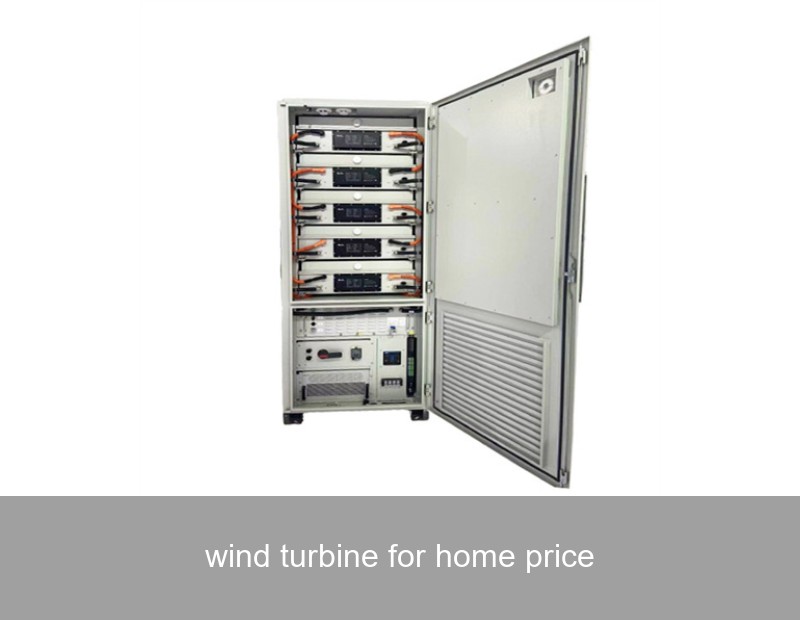
So, you're intrigued by the idea of generating your own clean power, watching those elegant blades spin, and reducing your reliance on the grid. The concept of a wind turbine for home is compelling, but the first question that inevitably arises is: "What's the real price tag?" It's a smart question. Unlike a simple appliance purchase, a home wind turbine is an investment in your property and energy future. The wind turbine for home price isn't a single number; it's a spectrum influenced by technology, location, and your ultimate energy goals. Let's unpack the true cost, from the turbine itself to the system that makes it truly valuable, and explore how modern energy storage is transforming this equation.
Table of Contents
The Real Price Breakdown: More Than Just the Turbine
When discussing wind turbine for home price, it's crucial to look at the total installed cost. Think of it like buying a car—the sticker price is just the beginning. A complete, grid-connected residential wind energy system typically includes:
- The Turbine & Tower: This is the most visible cost. Small wind turbines (1-10 kW capacity) can range from $3,000 to $50,000+ for the unit itself, with larger, more efficient models commanding higher prices.
- Installation & Foundation: Site preparation, crane rental, permits, and professional installation are significant. This can easily add 20-30% to the turbine cost, sometimes more for complex sites.
- Balance of System (BOS): Inverters (to convert DC to AC), controllers, wiring, and a metering system are essential components.
- Grid Connection Fees: Your utility may charge for interconnection studies and equipment.
- Maintenance: While minimal, budgeting for periodic inspections and potential part replacements is prudent.
A realistic total for a professionally installed, quality 5-10 kW system often falls between $30,000 and $70,000 before incentives. However, this figure only tells half the story of modern home energy independence.
Key Factors Influencing Your Home Wind Turbine Cost
Why such a wide range? Several variables dramatically affect the final wind turbine for home price:
- Average Wind Speed: This is the #1 factor. A site with 12 mph average wind can generate nearly 80% more power than a site with 10 mph wind. More power means a faster return on investment, potentially justifying a larger initial outlay. You can check historical wind data for your area via resources like the U.S. Department of Energy's WINDExchange.
- Tower Height: Wind speeds increase with height. A turbine on an 80-foot tower will access significantly stronger, less turbulent wind than one on a 30-foot tower, leading to better energy production.
- System Size & Quality: Larger, more durable turbines from reputable manufacturers cost more upfront but often offer better longevity, warranties, and performance.
- Local Regulations & Permits: Zoning laws, noise ordinances, and permitting processes vary widely and can add cost and time.
- Available Incentives: In the U.S., the federal Investment Tax Credit (ITC) can cover 30% of the total system cost. Many states and utilities offer additional rebates. In Europe, feed-in tariffs or grants may be available, such as those in Germany or the UK.
The Game Changer: Pairing Wind with Intelligent Storage
Here's a critical insight many first-time buyers miss: the wind doesn't blow on demand. You might generate excess power at 2 AM when demand is low, but need electricity on a calm afternoon. This mismatch limits the value of a standalone turbine. The true modern solution integrates wind generation with a sophisticated battery energy storage system (BESS).
This is where companies like Highjoule redefine the value proposition. By adding a storage system, you can:
- Maximize Self-Consumption: Store your surplus wind energy for use when the wind is calm, dramatically increasing your energy independence.
- Enhance Grid Stability: Intelligent systems can provide backup power during outages and even support the grid.
- Improve Financial Returns: In areas with time-of-use rates, you can avoid buying expensive peak-hour electricity from the grid.
Highjoule, a global leader in advanced energy storage since 2005, specializes in this exact synergy. Our H-Joule Nexus series for residential and commercial applications is designed to seamlessly integrate with renewable sources like wind turbines. The system's smart energy management software doesn't just store power; it learns your consumption patterns and optimizes when to charge from the wind, when to discharge, and when to interact with the grid, ensuring every kilowatt-hour you generate is used in the most economical way possible.

Image Source: Unsplash - A home wind turbine's value is unlocked when paired with intelligent storage.
A Real-World Case Study: The Scottish Farmstead
Let's move from theory to practice with a tangible example. Consider a working farm in the Scottish Highlands, an area with excellent wind resources but also grid vulnerability. The goal was to achieve 90%+ energy independence for the farmhouse and outbuildings.
The System:
- A 6 kW durable, horizontal-axis wind turbine.
- A Highjoule H-Joule Nexus 20 kWh lithium-ion battery storage system.
- Smart inverter and energy management platform.
| Metric | Result |
|---|---|
| Total Installed Cost (Pre-Incentive) | £48,000 |
| UK Smart Export Guarantee & Grant | -£12,000 |
| Net System Cost | £36,000 |
| Annual Wind Generation | ~14,000 kWh |
| Annual Grid Import Reduction | 85% |
| Estimated Payback Period | 8-10 years |
| Key Benefit Realized | Reliable power during frequent winter grid disruptions. |
This case, documented in a report by the Energy Communities initiative, highlights that the value isn't just in bill savings. The resilience provided by the Highjoule storage system, ensuring continuous operation for critical farm equipment and home heating during storms, was deemed equally valuable by the owners. The wind turbine for home price became an investment in business continuity and peace of mind.
Making It Work for You: Steps to a Smart Investment
If you're serious about exploring a home wind turbine, follow this logical pathway:
- Assess Your Resource: Use tools or consult a professional for a site survey. A minimum average wind speed of 5-6 meters/second (11-13 mph) is often recommended for viability.
- Audit Your Energy Use: Reduce your consumption first. Energy efficiency is the cheapest "fuel." This may allow you to install a smaller, less expensive turbine.
- Get Professional Quotes: Seek out certified installers who can provide a turnkey proposal, including turbine, tower, installation, and storage integration.
- Model the Financials: Factor in all incentives. Calculate your simple payback period (Net System Cost / Annual Energy Savings). Consider financing options.
- Plan for the Ecosystem: Think beyond the turbine. How will you store and manage the energy? A holistic solution from a provider like Highjoule, which offers both storage hardware and intelligent energy management software, can future-proof your investment and maximize ROI.

Image Source: Unsplash - Professional assessment ensures your system is designed for your specific site and needs.
Where Highjoule Fits In
At Highjoule, we view the wind turbine as a powerful component within a broader intelligent energy system. Our expertise lies in creating the storage and control backbone that makes renewable energy reliable and economical. For a homeowner investing in a wind turbine, pairing it with a Highjoule system transforms it from an intermittent generator into a 24/7 personal power plant. We provide solutions that scale from residential to large commercial and microgrid applications, ensuring that wherever you are on your energy journey, you have a partner focused on efficiency and sustainability.
So, as you ponder the initial wind turbine for home price, we leave you with this question to discuss with your family or business partners: Is the true value of your energy investment measured only in today's dollar savings, or in the long-term resilience, independence, and stability a smart, integrated system can provide for decades to come?
 Inquiry
 Online Chat