


Wind Energy Storage Batteries: The Key to Unlocking a Reliable Renewable Future
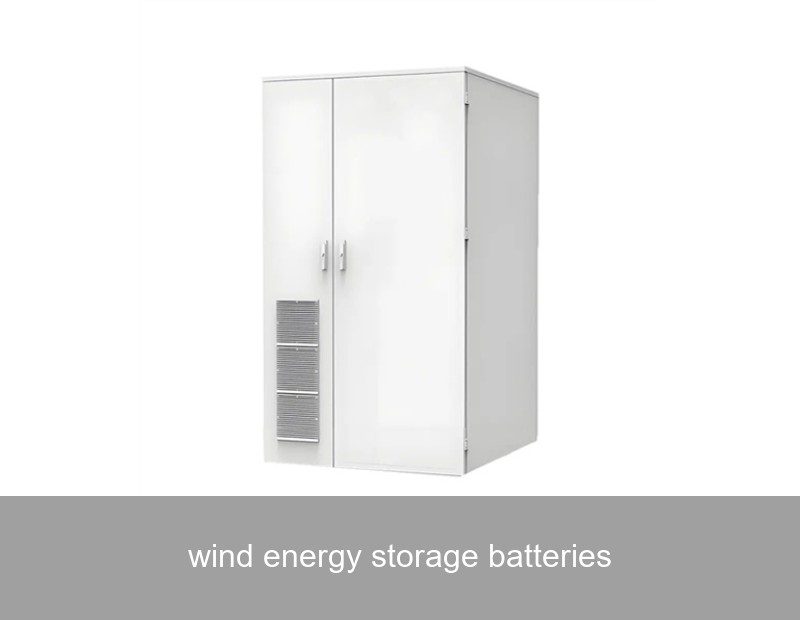
Imagine a powerful wind farm generating massive amounts of clean electricity. Now, imagine that a significant portion of that energy goes to waste simply because the grid can't use it all at the moment it's produced. This isn't a hypothetical scenario; it's a common challenge in our transition to renewables. The solution? Wind energy storage batteries. These systems are not just an add-on but a fundamental component that transforms intermittent wind power into a dependable, dispatchable energy source. For businesses, communities, and grid operators, pairing wind farms with advanced storage is no longer a luxury—it's a strategic necessity for energy security and sustainability. Companies like Highjoule are at the forefront of this integration, providing the intelligent battery storage solutions that make wind power truly reliable.
Table of Contents
- The Intermittency Challenge: Why Wind Needs a Partner
- How Wind Energy Storage Batteries Work: More Than Just a Bank
- Key Technologies Powering the Shift
- Case Study: Stabilizing the Grid in Texas
- Future Horizons and Your Next Step
The Intermittency Challenge: Why Wind Needs a Partner
Wind energy is fantastic—until the wind stops blowing. This variability creates a mismatch between energy supply and consumer demand. On exceptionally windy days, grids can become overloaded, leading to curtailment, where wind farms are paid to switch off to prevent grid damage. In 2022 alone, the United States curtailed over 5% of its total wind generation, enough to power hundreds of thousands of homes. This represents a massive economic and environmental loss. Conversely, during peak demand periods on calm days, grid operators must fire up fossil-fuel-powered "peaker" plants, undermining the carbon reduction goals of wind energy.

Image Source: Unsplash - A modern wind farm with integrated storage infrastructure.
The core issue is that electricity must be used the instant it's generated. Traditional grids lack a "buffer." This is where wind energy storage batteries come in, acting as a shock absorber and a reservoir, smoothing out the bumps in wind's output and ensuring the clean power generated is never wasted.
How Wind Energy Storage Batteries Work: More Than Just a Bank
Think of a battery storage system paired with a wind farm as a sophisticated energy manager. It doesn't just store and release electricity; it makes millisecond-level decisions to optimize value and grid stability.
- Charging Phase: When wind generation exceeds demand (e.g., at night), the excess electricity charges the battery system instead of being curtailed.
- Discharging Phase: When demand rises and wind speeds drop, the battery system discharges its stored energy back to the grid seamlessly.
- Grid Services: Beyond simple arbitrage, modern systems provide critical services like frequency regulation, voltage support, and black start capabilities, acting as a stabilizing force for the entire grid.
This process turns a variable resource into a firm, predictable one. A study by the National Renewable Energy Laboratory (NREL) found that adding storage to wind and solar projects can increase their value to the grid by up to 40%, depending on market structure.
Key Technologies Powering the Shift
Not all batteries are created equal for large-scale wind integration. The choice of technology involves balancing energy density, power output, lifespan, and cost.
| Technology | Best For | Advantages | Considerations |
|---|---|---|---|
| Lithium-Ion (NMC, LFP) | Frequency regulation, peak shaving, daily cycling | High energy density, fast response, declining cost | Thermal management needs, supply chain considerations |
| Flow Batteries (Vanadium) | Long-duration storage (4+ hours), capacity firming | Long lifespan, decoupled power/energy, non-flammable | Lower energy density, higher upfront cost |
Lithium Iron Phosphate (LFP) chemistry, in particular, has gained tremendous traction for grid-scale projects due to its safety, long cycle life, and cobalt-free design. The technology selection is highly project-specific, requiring expert analysis of wind patterns, grid interconnection requirements, and revenue streams.
The Highjoule Advantage: Intelligent Storage for Wind Integration
This is where Highjoule's expertise becomes critical. Since 2005, we've moved beyond simply providing battery containers. We deliver integrated, intelligent energy storage systems (ESS) designed specifically for the rigors of renewable integration. For wind farm developers and operators, our GridSynergyTM Platform is the brain of the operation. It uses advanced forecasting algorithms to predict wind output and grid demand, then autonomously optimizes battery operation to maximize revenue—whether through energy arbitrage, capacity markets, or ancillary services. Our systems, built with robust LFP or tailored alternative chemistries, come with full lifecycle support, ensuring your wind-plus-storage project is resilient, profitable, and sustainable for decades.

Image Source: Unsplash - Representation of advanced energy management system control room.
Case Study: Stabilizing the Grid in ERCOT, Texas
Let's look at a real-world application. The ERCOT grid in Texas has one of the world's highest penetrations of wind energy. This success brings the challenge of rapid grid frequency fluctuations during sudden changes in wind generation.
The Project: A 200 MW wind farm in West Texas partnered with Highjoule to integrate a 50 MW / 100 MWh battery energy storage system (BESS) using our GridSynergy Platform.
The Challenge: Mitigate wind curtailment, provide fast frequency response (FFR) to grid emergencies, and generate additional revenue.
The Highjoule Solution: Our system was configured to continuously monitor grid frequency. During a notable grid disturbance in 2023, when frequency dropped sharply due to unexpected generation loss, the Highjoule BESS responded within 100 milliseconds, injecting 50 MW of power to help stabilize the grid and prevent potential cascading outages. This incident was documented in an DOE report on grid storage growth.
The Results:
- Grid Stability: Provided critical inertial response, a service traditionally only possible with fossil-fuel turbines.
- Economic Gain: Reduced annual wind curtailment by an estimated 18%, while revenue from FFR and energy trading added a significant new income stream.
- Reliability: The wind farm is now viewed by the grid operator as a more reliable and valuable asset.
This case exemplifies how wind energy storage batteries are solving tangible grid problems today.
Future Horizons and Your Next Step
The synergy between wind and storage is accelerating. We're moving towards "hybrid power plants" where wind, solar, and storage are co-developed and controlled as a single, unified asset. Innovations in AI-driven energy management and declining storage costs, as tracked by sources like BloombergNEF, are making these projects the new standard.
For a wind farm operator, a municipal utility in Europe, or an industrial energy consumer, the question is no longer if to consider storage, but how and when. The business case strengthens with every grid congestion event and every fluctuation in energy prices.
What specific challenge is your wind project or energy portfolio facing—curtailment, grid connection constraints, or the need to meet corporate sustainability targets with firm clean power? The conversation around wind energy storage batteries is ready to move from theory to your specific blueprint.
 Inquiry
 Online Chat