


"Volt-Wise" Power: How Much Can You Really Save and Generate?
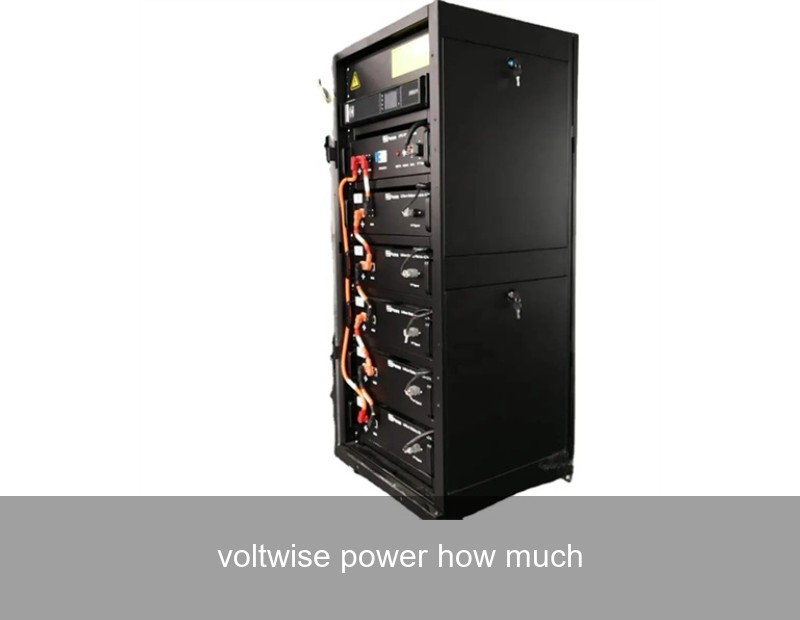
Let's be honest. When you hear "energy management," you probably think of your monthly bill, that daunting total at the bottom. But what if we told you that focusing solely on how much you pay is like navigating a complex journey with only a destination in mind—no map, no fuel gauge, no understanding of the terrain. The real question for modern businesses and homeowners isn't just "how much does power cost?" but rather, "Voltwise, how much power am I using, wasting, and could I be generating?" This shift from being kilowatt-hour-aware to being "volt-wise" is the key to unlocking unprecedented efficiency, resilience, and savings.
The Real Cost of Ignoring Power: A Data-Driven Reality Check
The phenomenon is universal: energy is often treated as a fixed, opaque overhead cost. You get the bill, you pay it. But beneath the surface, inefficiencies are silently draining your resources. Consider this: the U.S. Department of Energy estimates that commercial buildings waste up to 30% of the energy they consume due to operational inefficiencies. In the EU, the figure is similarly stark, with a significant portion of industrial energy use not directly contributing to output.
This waste isn't just about lights left on. It's about voltage sags and swells that strain equipment. It's about running heavy machinery during peak tariff periods when electricity is most expensive. It's about a solar array that produces power but has nowhere to store it for use in the evening. The financial impact is clear. For a medium-sized enterprise, that 30% waste can translate to tens or even hundreds of thousands of euros or dollars annually—capital that could be reinvested.

Image Source: Unsplash - A modern facility integrating solar, the first step to becoming volt-wise.
Case Study: A Berlin Bakery's "Volt-Wise" Transformation
Let's make this concrete with a real-world example. "Brot & Mehr," a mid-sized artisanal bakery in Berlin with three locations, faced a common challenge. Their ovens, refrigeration, and HVAC systems led to high energy costs, with sharp demand spikes during early morning baking hours. Their existing solar panels covered only daytime office use, missing the crucial baking load.
Their goal was clear: become "volt-wise." They needed to understand how much power each process used, shift what they could, store their solar energy, and protect sensitive equipment from grid fluctuations.
Here’s what they implemented, supported by International Energy Agency (IEA) principles on sectoral integration:
- Smart Monitoring: They first installed granular energy meters to track usage per circuit (ovens vs. refrigeration).
- Solar Expansion & Battery Storage: They expanded their rooftop PV and integrated a Highjoule HiveStack Commercial Battery System. This 100 kWh system stored excess midday solar energy.
- Intelligent Load Management: Using Highjoule's EnergyOS™ platform, the bakery programmed the battery to discharge during their 4 AM - 7 AM baking peak, avoiding expensive grid power. The platform also slightly pre-chilled cold rooms overnight when energy was cheaper.
| Metric | Before | After | Change |
|---|---|---|---|
| Monthly Energy Bill (Avg.) | €3,850 | €2,200 | -43% |
| Peak Demand Charge | €900/month | €380/month | -58% |
| Solar Self-Consumption | 35% | 92% | +163% increase |
| Grid Dependency During Peak | 100% | 15% | -85% |
The result? A payback period of under 5 years, significant protection from future energy price volatility, and a powerful marketing story about sustainable production. They now know, voltwise, exactly how much power they need, use, and generate.
Calculating Your "Volt-Wise" Power Potential
So, how much can you save? While every case is unique, you can start with a simple framework. Ask yourself:
- Peak vs. Off-Peak: What is the cost difference per kWh in your region (check your utility bill or U.S. DOE / European Commission sites)? How much load can you shift?
- Solar Suitability: Do you have roof or land space? Tools like the EU's PVGIS can estimate generation potential.
- Storage Sizing: This hinges on your daily "load shifting" need (kWh to move from peak to off-peak) and desired backup power (critical loads only?).
For a quick estimate: If your peak demand charge is reduced by 50 kW thanks to battery discharge, and your demand charge rate is $15/kW, that's $750 saved per month on that line item alone.
Highjoule's "Volt-Wise" Solutions: From Insight to Impact
This is where Highjoule transforms the "volt-wise" concept from theory into tangible results. We don't just sell hardware; we deliver intelligent energy ecosystems.
- Highjoule HiveStack BESS: Our modular battery energy storage systems are the physical heart of the solution. Scalable from 30 kWh for large homes to multi-megawatt installations for industry, they feature advanced lithium-iron-phosphate (LFP) chemistry for safety and longevity.
- EnergyOS™ Platform: This is the "volt-wise" brain. It integrates data from your meters, solar inverters, grid signals, and weather forecasts. Using AI, it automatically optimizes energy flow—charging batteries when power is cheap/abundant, discharging during peaks, and ensuring maximal self-consumption of solar. You get a clear dashboard showing, in real-time, how much you're saving, generating, and storing.
- Highjoule Sentinel: For commercial clients, this add-on module provides power quality management, smoothing voltage fluctuations to protect sensitive manufacturing equipment, further reducing maintenance costs and downtime.

Image Source: Unsplash - A modern home battery installation, enabling volt-wise power management.
Thinking Beyond the Meter: The "Volt-Wise" Mindset
Ultimately, being volt-wise is a strategic mindset. It's about viewing energy not as a cost center but as a manageable, optimizable asset. It's about resilience—keeping your business running or your home powered during an outage. And it's fundamentally about sustainability, maximizing your use of clean, self-generated power.
The journey starts with a single, powerful question. Not just "what's my bill?" but "voltwise, how much control over my energy destiny am I leaving on the table?"
What is the one energy-intensive process in your home or business that, if you could time-shift or support with storage, would make the most immediate impact on your bottom line and energy independence?
 Inquiry
 Online Chat