


Unlocking Urban Potential: The Rise of the Vertical Energy Storage System
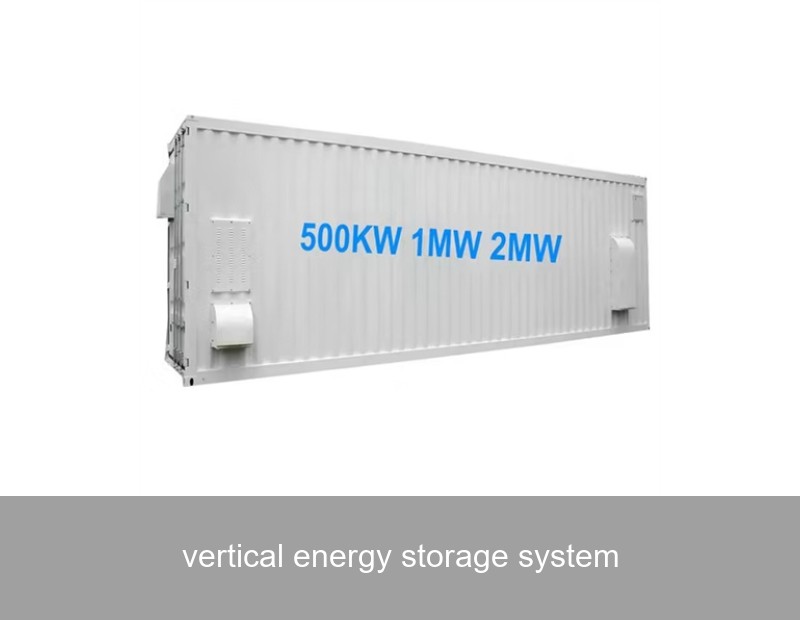
Imagine a city skyline, not just of towering buildings, but of self-sustaining energy hubs. As urban spaces become denser and the demand for clean, reliable power soars, a critical question emerges: where do we put the batteries? The answer is reshaping our approach to urban and commercial power: the Vertical Energy Storage System. Unlike sprawling, ground-mounted battery farms, these innovative systems are designed to go up, not out, making them a perfect fit for space-constrained environments. For businesses, factories, and communities in Europe and the US facing grid constraints and ambitious sustainability goals, this isn't just a technical novelty—it's a practical revolution in energy management.
Table of Contents
- The Space Crunch: Why Horizontal is No Longer Enough
- What Exactly is a Vertical Energy Storage System?
- By the Numbers: The Tangible Advantages of Going Vertical
- Case Study: A Berlin Logistics Hub's Vertical Transformation
- Highjoule's Smart Vertical Solutions: Engineered for Urban Resilience
- The Future of Urban Energy is Stacked
The Space Crunch: Why Horizontal is No Longer Enough
Let's face it, real estate is expensive, especially in prime commercial and industrial zones. A traditional, containerized battery energy storage system (BESS) can occupy a significant footprint—land that could be used for production, parking, or expansion. Furthermore, urban planning regulations and community concerns about large-scale installations can create lengthy approval processes. The phenomenon is clear: the linear, horizontal model of energy storage hits a wall in dense environments. This spatial challenge is a major bottleneck for integrating renewable sources like rooftop solar, as the generated power needs a nearby, dispatchable home.
What Exactly is a Vertical Energy Storage System?
Think of it as high-density shelving for energy. A Vertical Energy Storage System is a modular, stackable battery storage solution engineered with a small physical footprint but a tall profile. Key components are intelligently arranged in a cabinet or enclosure that is designed for safe, secure vertical scaling.
- Modular Battery Racks: Individual battery modules are housed in racks that stack securely on top of each other, like building blocks.
- Integrated Power Conversion System (PCS): Often housed within the same vertical structure, this manages AC/DC conversion.
- Centralized Thermal Management: A critical feature, using advanced, quiet climate control to ensure even temperature distribution from top to bottom.
- Unified Control & Safety Platform: A single brain monitors every module in the stack, ensuring performance, safety, and seamless grid interaction.

Image Source: Unsplash - Representative image of a modern battery cabinet system.
By the Numbers: The Tangible Advantages of Going Vertical
The benefits extend far beyond just saving square footage. Let's break down the data-driven advantages:
| Metric | Traditional Horizontal BESS | Vertical Energy Storage System |
|---|---|---|
| Footprint Efficiency | Can require 15-25 sq.m per MWh | Can reduce footprint by 40-60% for equivalent capacity |
| Deployment Speed | Longer site preparation, complex cabling | Pre-fabricated, modular design can cut installation time by ~30% |
| Scalability | Often requires new containers/pads | Scale capacity on the same footprint by adding vertical modules |
| Urban Integration | Low; often placed on outskirts | High; can be sited in parking garages, building basements, or tight industrial yards |
According to a report by the U.S. Department of Energy, maximizing energy density per square meter is a key research priority for urban and community resilience, directly aligning with the vertical system's value proposition.
Case Study: A Berlin Logistics Hub's Vertical Transformation
Let's look at a real-world application. A major logistics company in Berlin operated a fleet of electric forklifts and automated guided vehicles (AGVs) in its 24/7 warehouse. Their rooftop solar array produced excess energy during the day, but night operations relied on the grid, facing high time-of-use tariffs. They needed storage but had only a narrow, unused alleyway between two buildings—a space utterly unsuitable for a standard container.
The Solution: The company deployed a 500 kWh / 250 kW vertical energy storage system. The tall, slim cabinets fit perfectly into the 4-meter wide space. The system was charged by midday solar excess and strategically discharged during evening peak hours to power logistics operations.
- Space Saved: Utilized a previously wasted alley, saving an estimated 180 sq.m of functional warehouse space.
- Cost Reduction: Achieved a 22% reduction in monthly energy costs through peak shaving and solar self-consumption optimization.
- Resilience Gained: Provided 4 hours of backup power for critical sorting systems, avoiding operational downtime during grid fluctuations.
This case exemplifies how vertical thinking turns a spatial constraint into a strategic energy asset.
Highjoule's Smart Vertical Solutions: Engineered for Urban Resilience
At Highjoule, we've been at the forefront of this architectural shift in energy storage. Our VertiStack™ Series is specifically engineered to deliver high performance where space is at a premium. Drawing on nearly two decades of experience since 2005, we understand that a vertical system isn't just about stacking batteries; it's about integrated intelligence.
Our VertiStack cabinets feature:
- Patented Thermal Synergy Design: A vertical airflow circuit ensures no module operates hotter than another, maximizing lifespan and safety—a common challenge in tall stacks.
- Highjoule Energy OS: Our proprietary software doesn't just manage the battery; it orchestrates it with your solar, grid connection, and load demands. It makes real-time decisions to maximize economic return, whether participating in demand response programs in the US or balancing microgrids in Europe.
- Factory-Integrated Safety: Each unit comes with multi-layer protection (electrical, thermal, structural) pre-tested, reducing on-site risk and commissioning time.

Image Source: Unsplash - Representative image of an engineer servicing advanced battery systems.
For commercial and industrial clients, our service goes beyond hardware. We provide full cycle analysis and financial modeling to project ROI, assist with grid interconnection paperwork, and offer remote monitoring and performance guarantees. We make the vertical journey seamless.
The Critical Considerations: Safety and Integration
It's fair to ask: "Is stacking all this energy vertically safe?" This is the paramount concern. Reputable systems like Highjoule's are designed with this core principle. They incorporate:
- Advanced Battery Management Systems (BMS) with module-level monitoring.
- Passive and active fire suppression systems integrated into the cabinet.
- Robust structural engineering for seismic and stability compliance, crucial for both California and EU regulations. Resources like the NFPA standards provide critical safety benchmarks that inform our designs.
The Future of Urban Energy is Stacked
The transition to renewable energy is fundamentally an urban challenge. The vertical energy storage system represents a maturation of battery technology—one that adapts to human geography, not the other way around. It enables factories to become power plants, warehouses to achieve 24/7 green operations, and urban districts to create resilient microgrids. As grid demands evolve and grid-scale storage grows, distributed vertical systems will form the intelligent, responsive layer at the point of consumption.
So, as you look at your facility's energy blueprint, what unused vertical space could be transformed into your most strategic energy asset?
Is there a narrow corridor, a tall warehouse corner, or a parking garage wall on your property that could be the foundation for your energy independence and cost savings? Let's explore the potential together.
 Inquiry
 Online Chat