


Ventilated Cabinet for Electronics: The Unsung Hero of System Reliability and Efficiency
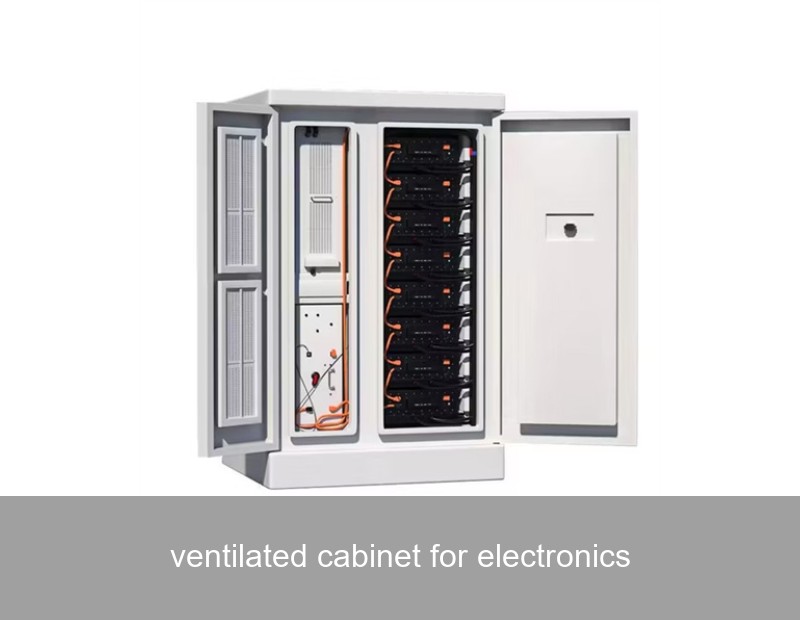
you've invested in state-of-the-art power electronics, sophisticated inverters, or a crucial battery storage system. The technology is cutting-edge, the software is smart, but there's a silent, insidious threat lurking within the enclosure—heat. For engineers, facility managers, and renewable energy project developers, ensuring the longevity and peak performance of sensitive electronics isn't just about the components themselves; it's about the environment you house them in. This is where the ventilated cabinet for electronics transitions from a simple metal box to a critical piece of engineering infrastructure. In this article, we'll explore why proper thermal management is non-negotiable, how ventilated cabinets work, and their pivotal role in modern energy systems, drawing on real data from the field.
The Silent Threat: Why Electronics Overheat
It's a fundamental law of physics: electronics generate heat during operation. From servers and PLCs to solar inverters and battery management systems (BMS), every watt of power processed dissipates thermal energy. The problem? This heat is a primary enemy of electronic components. According to a classic rule of thumb cited by organizations like NASA, for every 10°C (18°F) increase in operating temperature above a component's rated limit, its lifespan can be halved. This isn't just about catastrophic failure; it's about gradual degradation leading to reduced efficiency, increased downtime, and costly premature replacements.

Image Source: Unsplash (Representative image of electronics in an enclosure)
In the context of renewable energy and storage, the stakes are even higher. A solar inverter operating at elevated temperatures can lose conversion efficiency, literally wasting precious generated kilowatt-hours. For battery energy storage systems (BESS), temperature uniformity and control are directly linked to safety, cycle life, and overall capacity.
What is a Ventilated Cabinet for Electronics?
So, what's the solution? A ventilated cabinet for electronics is a purpose-built enclosure designed to manage internal temperature through controlled airflow. Unlike a sealed cabinet, which relies on conduction and radiation, a ventilated cabinet actively uses fans, vents, and sometimes filters to exchange hot internal air with cooler ambient air. It's a form of convective cooling that provides a cost-effective and reliable method for dissipating heat from medium-power-density applications.
Think of it as giving your critical electronics a constant, fresh breath of air. The core principle is simple: intake cool air at the bottom or sides, let it absorb heat from the components, and exhaust the warm air from the top. This simple cycle, when properly engineered, prevents hot spots and maintains components within their ideal thermal operating window.
Key Components of an Effective Ventilated Cabinet
Not all ventilated cabinets are created equal. A well-designed system integrates several key elements:
- Strategic Ventilation Openings: Perforated or louvered panels, often with mesh or filters (IP rated for dust and water ingress protection), placed to create an optimal airflow path.
- Axial or Centrifugal Fans: These are the workhorses that move the air. Selection is based on required airflow (CFM), static pressure, noise level, and energy efficiency.
- Internal Layout & Air Baffles: The arrangement of components inside the cabinet must not obstruct airflow. Baffles or ducts can be used to direct air precisely over the hottest components, like power transistors or inverter modules.
- Thermal Management Control System: This is the brain. Simple thermostats or more advanced PLC-based controls can modulate fan speed based on internal temperature, saving energy and reducing wear when full cooling isn't needed.
- Robust Construction: The cabinet itself must be made of durable, often corrosion-resistant materials (like aluminum or galvanized steel with powder coating) to withstand industrial, outdoor, or coastal environments common in energy projects.
Real-World Case: A European Data Center's Cooling Challenge
Let's look at a concrete example. A mid-sized colocation data center in Germany was experiencing frequent throttling of its edge computing servers housed in standard cabinets. The facility's ambient cooling was adequate, but the server racks themselves were creating intense microclimates. The problem was diagnosed as insufficient extraction of hot air, leading to inlet air temperatures at the top servers being 15°C higher than at the bottom—a classic "hot aisle" containment failure.
The solution was to retrofit specialized, high-flow ventilated cabinets for electronics with directed exhaust systems. The results were measurable within a month:
| Metric | Before Retrofit | After Retrofit |
|---|---|---|
| Max Server Inlet Temp | 32°C | 24°C |
| Server Performance Throttling Events | 40-50 per day | 0-2 per day |
| Estimated Energy Overhead for Component Cooling | ~12% | ~5% |
| PUE (Power Usage Effectiveness) for that Hall | 1.65 | 1.48 |
This case, documented in a U.S. Department of Energy report on data center efficiency, highlights that the right cabinet-level cooling isn't just about protecting hardware; it's about achieving tangible operational efficiency and cost savings.
The Critical Link: Ventilated Cabinets in Battery Energy Storage Systems (BESS)
This brings us to a core application area for Highjoule. In a Battery Energy Storage System (BESS), the power conversion system (PCS)—which includes the inverter, transformer, and control electronics—is a massive heat source. Housing this equipment in a properly engineered ventilated cabinet for electronics is paramount.
Why? Because the performance of the PCS directly impacts the entire system's ROI. An overheated inverter operates less efficiently, meaning more energy is lost as heat during the charge/discharge cycle. Furthermore, consistent cooling extends the lifespan of capacitors and other sensitive components, reducing total cost of ownership. Highjoule's system design philosophy always integrates thermal management as a first-order consideration, not an afterthought. Our PCS cabinets are designed with computational fluid dynamics (CFD) modeling to ensure uniform airflow, adequate CFM, and filtration suitable for the project's location, be it a dusty desert solar farm or a humid coastal microgrid.

Image Source: Unsplash (Representative image of a BESS installation)
The Highjoule Approach: Intelligent Thermal Management for Energy Assets
At Highjoule, we understand that a cabinet is more than an enclosure. Since 2005, we've evolved from providing advanced battery storage to delivering fully integrated, intelligent power solutions. Our expertise in thermal management for electronics is embedded in our product DNA.
For commercial and industrial (C&I) energy storage applications, our HJ Cube and HJ Powerhouse series feature integrated power electronics cabinets with smart, variable-speed ventilation systems. These systems don't just run at full blast constantly. They are monitored by our proprietary energy management system (EMS), which adjusts cooling based on real-time load, ambient temperature, and even electricity pricing—reducing auxiliary power consumption and maximizing net energy output.
For larger microgrid and utility-scale projects, we design custom ventilated enclosures that house not only the PCS but also switchgear, transformers, and communication hubs. These solutions are built to withstand harsh environments, featuring corrosion-resistant coatings, IP54 or higher rated filters to keep out particulates, and redundant fan systems for critical applications. Our goal is to ensure that the "brain" and "muscle" of your energy asset—the electronics—operate in a safe, stable, and efficient climate for decades.
Choosing the Right Ventilated Cabinet: A Practical Guide
When specifying a ventilated cabinet for your power electronics project, consider this checklist:
- Heat Load Calculation: What is the total heat dissipation (in watts) of all internal equipment? This is your starting point.
- Ambient Conditions: What is the maximum external temperature and particulate level (dust, salt mist) at the installation site?
- IP Rating Requirement: Does the environment demand protection against water jets (IP65) or just dust and dripping water (IP54)?
- Acoustic Constraints: Is the installation near offices or residences, requiring low-noise fans or acoustic dampening?
- Control Integration: Should the cooling system be a standalone loop, or integrate with the facility's broader Building Management System (BMS) or, in Highjoule's case, our intelligent EMS for optimized performance?
Getting these factors right from the design phase prevents costly field modifications and ensures system reliability.
Looking Ahead: The Future of Cooling
As power densities continue to rise, simple fan-based ventilation may reach its limits for some high-power applications. The industry is exploring liquid-cooled cabinets and direct-to-chip cooling. However, for the vast majority of commercial, industrial, and renewable energy applications, the ventilated cabinet for electronics remains the most robust, cost-effective, and maintenance-friendly solution. The innovation lies in making these systems smarter and more integrated with the overall energy ecosystem.
At Highjoule, we're continuously refining our designs, leveraging data from thousands of deployed systems to improve airflow patterns, fan efficiency, and predictive maintenance algorithms for our thermal management systems. The question is no longer if you need to cool your critical power electronics, but how intelligently you can do it to unlock the full value of your energy investment.
What thermal management challenges are you facing in your current or planned energy project, and how might a smarter approach to cabinet design solve them?
 Inquiry
 Online Chat