


Utility Scale Battery Energy Storage Systems: The Cornerstone of a Modern Grid
Imagine a power grid that's as dynamic as the weather, as responsive as a tap, and as reliable as the sunrise. This isn't a futuristic dream; it's the reality being built today, and at its heart are utility scale battery energy storage systems (BESS). These massive battery installations are transforming how we generate, distribute, and consume electricity, moving us decisively away from the rigid, fossil-fuel-dependent grids of the past. For grid operators, energy traders, and communities worldwide, understanding this technology is no longer optional—it's essential for resilience, sustainability, and economic efficiency. As a leader in this field since 2005, Highjoule has been at the forefront, engineering intelligent storage solutions that make this new grid possible.
Table of Contents
- The Grid Challenge: Why We Can't Just Flip a Switch
- What is a Utility Scale BESS? More Than Just a Big Battery
- Key Applications: The Multitasking Marvels of the Grid
- Case Study: Grid Stability in the Lone Star State
- Highjoule's Role: Engineering Confidence into Every Megawatt
- Future Horizons and Your Next Step
The Grid Challenge: Why We Can't Just Flip a Switch
For over a century, the fundamental rule of the electricity grid was simple: supply must instantly match demand. Power plants—coal, gas, nuclear—would ramp up or down to follow our collective usage, from the morning rush to the quiet of night. This balancing act was complex but manageable with predictable, dispatchable generation. Enter the renewable revolution. Solar and wind power are clean and abundant, but they're also variable. The sun sets, the wind calms. This intermittency creates a rollercoaster of supply that traditional grids weren't designed to handle. The result? Potential instability, curtailment of clean energy (literally turning off wind farms because there's too much power), and continued reliance on gas "peaker" plants that are expensive and polluting. This is the critical problem utility-scale storage is designed to solve.
What is a Utility Scale BESS? More Than Just a Big Battery
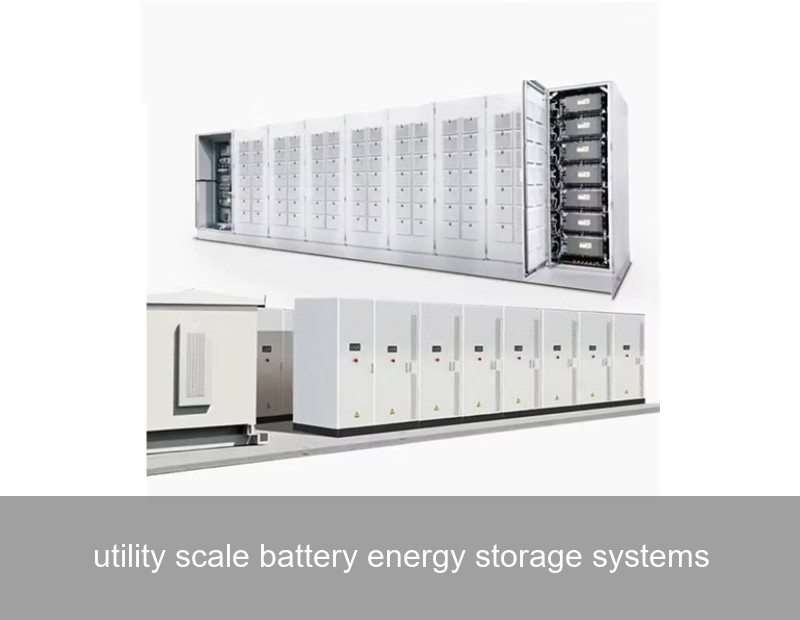
When we talk about utility scale battery energy storage systems, we're referring to interconnected assemblies of battery modules, power conversion systems (PCS), and advanced management software that can store and discharge tens to hundreds of megawatts (MW) of power. Think of them as the grid's "shock absorbers" and "time-shift" devices. But it's crucial to understand they are sophisticated plants, not simple batteries. A true utility BESS, like those engineered by Highjoule, integrates three core layers:
- Energy Storage Layer: Typically using lithium-ion phosphate (LFP) chemistry for its safety, longevity, and performance, this is the physical bank where energy is stored.
- Power Conversion & Grid Integration Layer: This includes inverters and transformers that convert battery DC power to grid AC power and ensure seamless, stable connection to high-voltage networks.
- Intelligence Layer: The brain of the operation. Advanced energy management software (EMS) and AI-driven controls decide when to charge, when to discharge, and at what rate, optimizing for grid services, market prices, or asset health.

Image Source: Unsplash - Representative image of a utility-scale BESS site.
Key Applications: The Multitasking Marvels of the Grid
The real power of a utility BESS lies in its versatility. A single system can perform multiple revenue-generating or cost-saving functions, a concept known as value stacking. Let's break down the primary applications:
| Application | How It Works | Grid Benefit |
|---|---|---|
| Renewables Integration & Time-Shift | Stores excess solar/wind energy during peak production and discharges it during evening peaks or low-wind periods. | Reduces curtailment, flattens the "duck curve," enables higher renewable penetration. |
| Frequency Regulation | Responds in milliseconds to tiny fluctuations in grid frequency (e.g., 60 Hz in the US), injecting or absorbing power to stabilize it. | Maintains grid reliability far faster and more accurately than traditional generators. |
| Peaker Replacement & Capacity Deferral | Discharges during periods of highest demand (e.g., hot summer afternoons), avoiding the need to fire up inefficient peaker plants. | Lowers emissions, reduces energy costs during peak times, defers costly grid upgrades. |
| Black Start & Resilience | Provides a burst of power to restart offline generators or critical infrastructure after a blackout. | Enhances grid resilience and reduces outage recovery time dramatically. |
The Data and Business Case: Numbers Don't Lie
The growth trajectory speaks for itself. According to the U.S. Energy Information Administration (EIA), the United States alone plans to add significant battery storage capacity in the coming years, with the majority being utility-scale. In Europe, driven by ambitious decarbonization goals and the energy security imperative, the market is expanding rapidly. The financial logic is compelling. Beyond capital costs, the operational savings and revenue potential are substantial. A well-sited and optimally operated BESS can generate revenue from multiple streams: energy arbitrage (buying low, selling high), frequency regulation markets, and capacity payments. The Levelized Cost of Storage (LCOS) has fallen dramatically, making batteries competitive with conventional alternatives.
Case Study: Grid Stability in the Lone Star State
Let's look at a real-world example that highlights the critical role of utility BESS. The Electric Reliability Council of Texas (ERCOT) grid, known for its independence and high renewable penetration, faces extreme weather events and demand spikes. In recent years, several large-scale BESS projects have come online to enhance stability.
One notable project is a 100 MW / 200 MWh system in West Texas, co-located with a wind farm. Here's what it achieved:
- Problem: Wind generation was often high at night when demand was low, leading to price collapses and curtailment risk. Meanwhile, evening demand peaks required other resources.
- Solution: The BESS charges overnight using cheap, abundant wind power. It then discharges during the late afternoon and evening peak demand period (4 PM - 8 PM).
- Result: The system provides critical peak capacity, reduces strain on transmission lines, and allows more wind energy to be utilized effectively. During a grid stress event in 2023, this and similar assets provided crucial instantaneous frequency response, helping to prevent emergency load shedding. Financially, it capitalizes on the significant spread between low off-peak and high on-peak energy prices.
This case exemplifies the multi-benefit model: integrating renewables, providing peaking capacity, and earning market revenue—all while bolstering grid reliability.
Highjoule's Role: Engineering Confidence into Every Megawatt
At Highjoule, we don't just supply battery containers; we deliver fully integrated, performance-guaranteed storage solutions. With nearly two decades of experience, our approach is rooted in deep system integration and long-term partnership. For utility and large-scale commercial clients, our H-Series Utility Platform is engineered for mission-critical duty.
What sets our systems apart is the Highjoule Neuron™ Energy Management Platform. This AI-driven software doesn't just control the battery; it continuously analyzes market signals, weather forecasts, grid conditions, and asset health to make optimal, revenue-maximizing decisions every second of the day. We pair this intelligence with our proprietary, containerized LFP battery systems, designed for safety (with integrated gas detection and fire suppression) and longevity, backed by a robust performance warranty.

Image Source: Unsplash - Representative image of advanced energy management software interface.
Our services extend beyond delivery. We offer comprehensive feasibility studies, financial modeling, grid interconnection support, and long-term operations and maintenance (O&M) to ensure your storage asset performs at its peak throughout its entire lifecycle. We understand that a utility-scale BESS is a major financial and operational decision, and we build the technology and partnership to justify that confidence.
Future Horizons and Your Next Step
The evolution of utility scale battery energy storage systems is accelerating. We're looking at advancements in battery chemistries like sodium-ion for even lower costs, and the integration of storage with green hydrogen production for seasonal energy shifting. The grid is becoming a network of intelligent, distributed resources, and large-scale storage is its central nervous system.
This brings us to a pivotal question for every grid operator, energy developer, and community leader: As you map your path to grid resilience and net-zero operations, have you quantified the specific value—in stability, sustainability, and savings—that a strategically sited and intelligently operated utility BESS could bring to your portfolio? The opportunity to redefine your energy infrastructure is here.
 Inquiry
 Online Chat