


United Solar Polysilicon Sohar: Powering a Sustainable Future with High-Purity Silicon
In the quest for a cleaner energy future, the journey of a solar panel begins long before it reaches your rooftop. It starts with a remarkable material: polysilicon. The United Solar Polysilicon Sohar plant in Oman stands as a pivotal source of this high-purity silicon, a critical ingredient for efficient photovoltaic (PV) cells. But what happens after the sun's energy is captured? This is where advanced energy storage systems become the unsung hero, ensuring that solar power is available 24/7. As a global leader, Highjoule bridges this gap, transforming raw solar potential into reliable, intelligent power for homes, businesses, and communities.
Table of Contents
- What is Polysilicon and Why Does Purity Matter?
- The Strategic Significance of Sohar: A Supply Chain Cornerstone
- Beyond the Wafer: From Solar Generation to Smart Storage
- Case Study: Stabilizing a European Microgrid
- Highjoule's Role in the Solar-Plus-Storage Ecosystem
- The Future Outlook for Solar and Storage
What is Polysilicon and Why Does Purity Matter?
Think of polysilicon as the "refined flour" of the solar industry. It's produced from quartz sand, which is purified into a metallurgical-grade silicon and then further processed through energy-intensive methods like the Siemens process. The result? Ultra-pure, polycrystalline silicon. The purity level, often measured in "nines" (e.g., 99.9999% pure), is directly linked to the efficiency of the final solar cell. Higher purity means fewer impurities that can disrupt the flow of electrons, leading to panels that convert more sunlight into electricity. Facilities like United Solar Polysilicon Sohar are crucial in supplying this high-quality material to PV manufacturers worldwide, forming the bedrock of the global energy transition.
The Strategic Significance of Sohar: A Supply Chain Cornerstone
The location of the Sohar plant in Oman is no accident. It offers strategic advantages that resonate across Europe and the United States:
- Geographic Diversification: It reduces over-reliance on any single region for polysilicon, enhancing supply chain resilience for Western markets.
- Energy-Intensive Production: Oman's access to affordable energy supports the power-hungry polysilicon production process, potentially lowering the carbon footprint of the initial material.
- Logistical Hub: The Sohar Port provides efficient shipping routes to both European and Asian manufacturing centers.
This stable supply of quality polysilicon enables the production of more efficient and affordable solar panels, accelerating deployment. But here's a question we often get at Highjoule: "My business is installing solar, but we still face grid instability and high evening energy costs. Why?" The answer lies in the next critical piece of the puzzle.
Beyond the Wafer: From Solar Generation to Smart Storage
Here's the fundamental challenge: solar generation is intermittent. The sun doesn't shine at night, and clouds can cause variability. This creates a mismatch between when energy is produced and when it's needed most. This is precisely where companies like Highjoule enter the narrative. While United Solar Polysilicon Sohar provides the essential raw material for capture, Highjoule provides the essential technology for control and utilization.
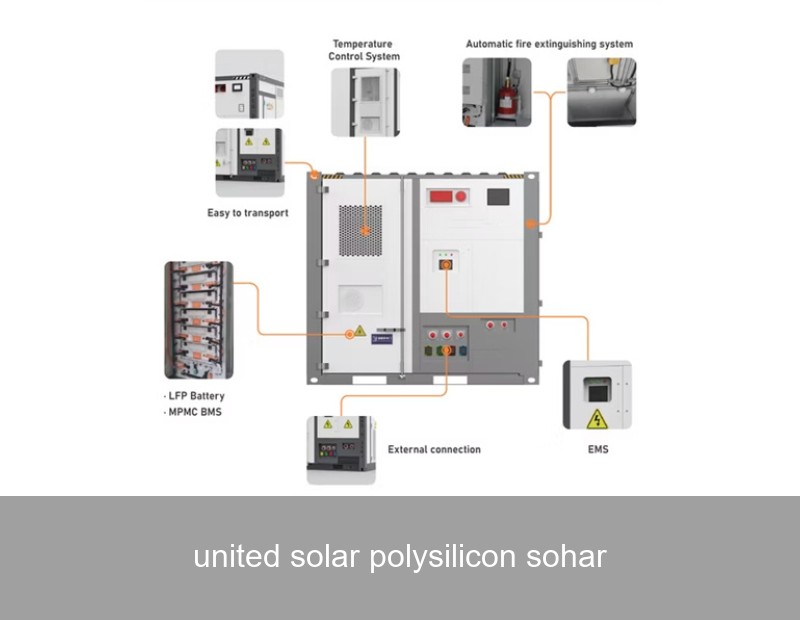
Our advanced Battery Energy Storage Systems (BESS) are the perfect complement to solar arrays. They store excess solar energy produced during peak sunlight hours and discharge it when needed—during evening demand peaks, power outages, or when grid electricity is most expensive. This "solar-plus-storage" configuration transforms a solar installation from a simple energy source into a resilient, intelligent, and cost-optimizing power asset.

Image Source: Unsplash (A solar farm integrated with a battery storage unit, representing the synergy between generation and storage.)
Case Study: Stabilizing a European Microgrid
Let's look at a real-world example from Germany. A mid-sized industrial park with a 2 MW rooftop solar system faced two issues: 1) They were curtailing (wasting) up to 30% of their solar production on sunny weekends when factory demand was low, and 2) They were vulnerable to brief grid fluctuations that disrupted sensitive manufacturing equipment.
The Solution: Highjoule deployed a containerized IntelliBESS 500 system with a capacity of 1 MWh. Integrated with our AI-driven GridSynergy platform, the system was programmed for dual purposes: energy time-shifting and frequency regulation.
The Data-Driven Results (12-month period):
| Metric | Before Highjoule BESS | After Highjoule BESS |
|---|---|---|
| Solar Self-Consumption | 68% | Increased to 94% |
| Grid Energy Costs | €185,000/year | Reduced by €62,000/year |
| Grid Service Revenue | €0 | €15,000 (from frequency regulation) |
| Production Downtime | ~8 hours/year | 0 hours/year |
This case demonstrates that the value chain doesn't end with the solar panel. By adding intelligent storage, the client maximized their return on investment in solar assets (powered by high-quality polysilicon) and achieved new levels of resilience and revenue. You can explore more on microgrid stability from the National Renewable Energy Laboratory (NREL).
Highjoule's Role in the Solar-Plus-Storage Ecosystem
Highjoule acts as the enabling force that unlocks the full potential of solar investments. Our products and services are designed for seamless integration:
- For Commercial & Industrial (C&I) Clients: Our scalable IntelliBESS series provides peak shaving, backup power, and demand charge management. Our software ensures the system automatically chooses the most economical operation mode.
- For Utilities and Microgrids: Our large-scale UtilityBESS solutions support grid stability, renewable integration, and defer costly infrastructure upgrades. The German case study is a prime example of this application.
- For Residential Communities: The HomePower stack offers a sleek, safe, and intelligent storage solution that allows homeowners to maximize self-consumption of rooftop solar power.
From the high-purity silicon from United Solar Polysilicon Sohar to the intelligent battery management algorithms from Highjoule, it's a complete technological symphony. For a deeper understanding of polysilicon's role, the International Energy Agency (IEA) offers comprehensive analysis on global PV supply chains.

Image Source: Unsplash (Representative image of an engineer monitoring a modern battery energy storage system.)
The Future Outlook for Solar and Storage
The trajectory is clear. As solar technology, fueled by quality materials, continues to drop in cost, the imperative for storage grows. We are moving towards energy systems where the combination of ubiquitous solar generation and distributed, intelligent storage forms a decentralized, robust, and clean grid. Innovations in battery chemistry, like lithium iron phosphate (LFP) which Highjoule utilizes for its safety and longevity, and smarter grid-interactive software will drive this future.
The story that begins with a polycrystalline ingot in Sohar culminates in reliable, dispatchable, and sustainable power for a factory in Germany, a school in California, or a neighborhood in Spain. It's a powerful reminder that every component in the value chain, from raw material to finished system, is vital.
Is your organization leveraging its solar investment to its fullest potential, or are you leaving value and resilience on the table? We invite you to connect with Highjoule's energy experts to model your specific solar-plus-storage scenario and discover your potential for savings and security.
 Inquiry
 Online Chat