


UK Grid Battery: How Much Does It Cost and Why Is It Crucial?
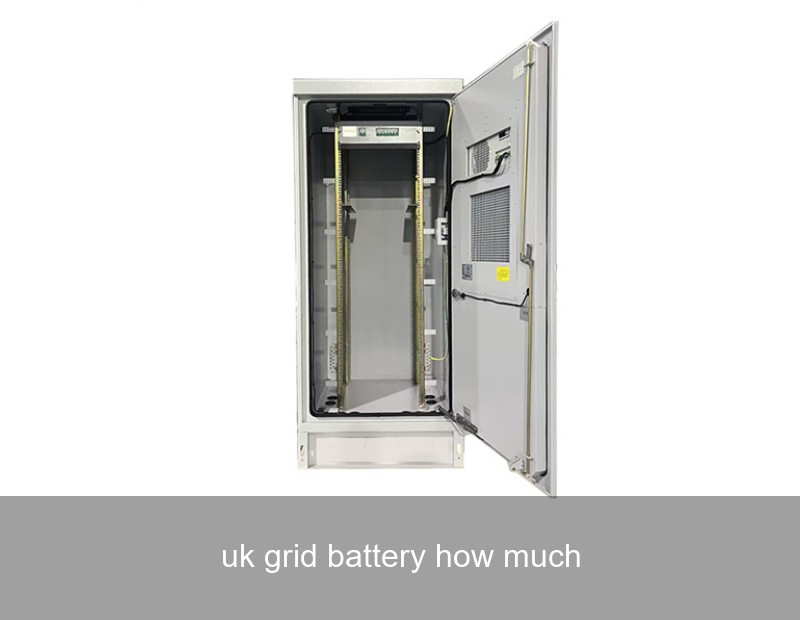
If you're involved in the UK's energy sector, managing a commercial site, or simply curious about the nation's power future, you've likely asked the question: "UK grid battery how much?" The answer, however, is more than just a price tag. It's a gateway to understanding how battery energy storage systems (BESS) are transforming the UK's electricity grid, balancing renewable energy, and creating new revenue streams. This article breaks down the costs, the value, and the real-world impact of connecting a battery to the UK's dynamic grid.
Table of Contents
The Price Puzzle: It's Not Just About the Hardware
So, let's address the core question directly. For a grid-scale battery storage system in the UK, capital expenditure (CAPEX) typically ranges from £250,000 to £400,000 per megawatt (MW) for a 1-2 hour duration system. This means a 10MW/20MWh system could have a total project cost between £2.5 million and £4 million. But please, don't fixate on that number alone. Why? Because the true metric is not just the upfront "how much," but the lifetime value and return on investment (ROI).
Think of it like buying a car. The sticker price is one thing, but the fuel efficiency, maintenance costs, and potential to generate income (like using it for ride-sharing) determine its real worth. A grid battery is an asset that participates in multiple energy markets. Its financial performance depends on sophisticated software and market strategy as much as on the quality of its lithium-ion cells.

This cost includes the battery containers, power conversion systems (PCS), transformers, civil works, grid connection, and software platform. Crucially, it also hinges on project scale, technology choice, and supply chain dynamics. With the UK aiming for a net-zero grid, the demand for flexibility is skyrocketing, making battery storage a critical piece of infrastructure.
The Value Stack: Where Your Battery Earns Its Keep
A battery connected to the UK grid isn't just a cost center; it's a versatile revenue generator. This is known as "value stacking," and it's the key to understanding the business case. Your battery can earn income from several streams simultaneously:
- Frequency Response Services (e.g., Dynamic Containment, Regulation): The National Grid ESO pays for rapid injections or absorption of power to keep the grid's frequency stable at 50Hz. This is often the most lucrative initial revenue stream for new batteries.
- Wholesale Energy Arbitrage: Buying electricity when it's cheap (often when wind generation is high) and selling it when prices are high (peak demand periods).
- Capacity Market: Providing a guaranteed source of power for future winter periods, earning a steady income for being available.
- Balancing Mechanism (BM) & Ancillary Services: Participating directly in the National Grid's real-time balancing of supply and demand.
According to a report by Cornwall Insight, the revenue potential for a 2-hour duration battery in the UK can be significant, though it fluctuates with market conditions and the battery's operational strategy. Maximizing this stack requires an intelligent, AI-driven energy management system (EMS).
Case Study: A 20MW UK Battery in Action
Let's move from theory to practice. Consider a real-world scenario of a 20MW/40MHz battery storage system in the East of England, connected to a distribution network.
| Metric | Detail |
|---|---|
| Project Size | 20MW / 40MWh (2-hour duration) |
| Location | Eastern England, near wind farms |
| Key Revenue Streams | Dynamic Containment, Wholesale Arbitrage, Capacity Market |
| Estimated CAPEX (at time of build) | ~£7 million |
| Annual Revenue Estimate | £2 million - £3 million (highly market-dependent) |
| Core Challenge | Optimizing dispatch across multiple, sometimes competing, revenue streams in real-time. |
This project's success wasn't guaranteed by hardware alone. Its profitability depended on a sophisticated EMS that could make millisecond-level decisions: should the battery respond to a frequency event now, or hold charge for a predicted price spike in two hours? The system's ability to "stack" these value streams effectively determined its payback period and long-term ROI. This is where partnering with an expert technology provider becomes non-negotiable.
Key Cost Factors for a UK Grid Battery Project
To accurately answer "how much," you must consider these variables:
- System Scale & Duration: Cost per MW typically decreases with scale. Duration (1hr, 2hr, 4hr) directly impacts the required MWh of storage and thus cost.
- Technology & Chemistry: Lithium Iron Phosphate (LFP) is now the dominant, safer chemistry for grid storage. Suppliers like Highjoule use top-tier, UL-certified LFP cells for longevity and safety.
- Grid Connection & Land: A "shallow" connection is cheaper, but a "deep" connection allowing full export/import capability is more valuable. Land cost and planning permission are also key.
- Balance of Plant (BoP) & EPC: Civil works, electrical infrastructure, and the quality of Engineering, Procurement, and Construction management.
- Software & Intelligence: The EMS is the brain. A cheap, inflexible system can leave significant revenue on the table.
- Ongoing O&M: Operational and maintenance costs, including performance guarantees, are a critical part of the lifetime cost.

How Highjoule Delivers Intelligent UK Battery Storage Solutions
This is where Highjoule's expertise becomes pivotal. As a global provider founded in 2005, we don't just sell battery containers; we deliver optimized, revenue-generating assets. For the UK market, our approach directly addresses the "how much" question by maximizing the value side of the equation.
Our H-Joule GridMax BESS is an integrated solution featuring industry-leading LFP battery technology, high-efficiency PCS, and our proprietary NeuroGrid AI Platform. NeuroGrid isn't just a monitoring tool; it's a predictive, autonomous trading and dispatch engine. It continuously analyzes market data from National Grid ESO and wholesale markets, making real-time decisions to maximize your portfolio's revenue across all available value streams.
We manage the complexity—from initial grid connection studies and system design to commissioning and ongoing performance optimization. By choosing a partner like Highjoule, you're investing in a system engineered for the specific demands of the UK's balancing mechanisms and frequency markets, ensuring your capital expenditure translates into a robust, future-proofed financial asset.
The Future Outlook for UK Battery Storage
The UK's energy transition is accelerating. With the government's ambition for a fully decarbonised power system by 2035, the role of flexibility will only grow. We're moving towards a world of two-way power flows, where electric vehicles, smart homes, and distributed generation all interact with the grid. Batteries are the essential buffer and facilitator of this new energy landscape.
Future revenue streams are emerging, such as providing local constraint management for Distribution Network Operators (DNOs) and participating in virtual power plants (VPPs). The question is evolving from "UK grid battery how much?" to "How much value can my battery capture in the evolving market?" and "Is my system intelligent enough to adapt?"

Given the complexity of value stacking and the rapid evolution of the UK energy market, what specific challenge in your commercial or industrial operation—whether it's peak shaving, securing a new revenue line, or achieving sustainability targets—do you believe a smart battery storage system could solve most effectively?
 Inquiry
 Online Chat