


Understanding the Different Types of Solar Power System for Your Energy Needs
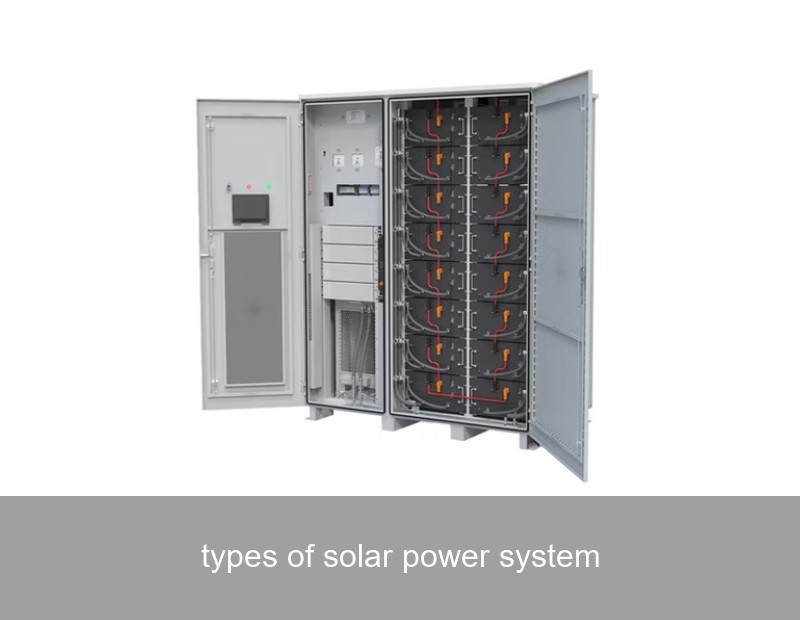
Have you ever looked at the solar panels on a neighbor's roof and wondered, "Could that work for me?" Or perhaps you're a business owner feeling the pinch of rising electricity costs and grid instability. You're not alone. The journey to solar energy often starts with a simple question, but it quickly leads to a crucial one: which of the types of solar power system is the right fit? The answer isn't one-size-fits-all. From keeping the lights on during a blackout to achieving complete energy independence, the system you choose defines your energy future. Let's demystify the options.
Table of Contents
- The Solar Trinity: Three Core System Types
- On-Grid Systems: Tied to the Utility
- Off-Grid Systems: Total Energy Freedom
- Hybrid Systems: The Best of Both Worlds
- Choosing Your System: A Data-Driven Guide
- Case Study: A European Agri-Business Powers Up
- The Highjoule Advantage: Smart Storage for Any System
The Solar Trinity: Three Core System Types
At its heart, every solar installation is built around one of three configurations. Your choice depends primarily on your relationship with the main electrical grid and your need for backup power.
- On-Grid (Grid-Tied): Connected to the public utility grid. No battery storage.
- Off-Grid (Standalone): Completely independent from the utility grid. Requires battery storage.
- Hybrid (Grid-Tied with Battery Backup): Connected to the grid but includes battery storage for backup and optimization.
Think of it like water supply: On-grid is like having a city water connection. Off-grid is like having your own well and water tower. Hybrid is having a city connection and a water tower for shortages.
On-Grid Systems: Tied to the Utility
This is the most common type, especially in areas with reliable grids and favorable net metering policies. Solar panels generate DC electricity, an inverter converts it to AC for your home, and any excess is fed back to the grid.
How It Works & Key Components
- Solar Panels: Capture sunlight.
- Grid-Tie Inverter: Converts DC to AC and synchronizes with the grid's frequency.
- Bi-Directional Meter: Tracks energy you import from and export to the grid.
Pros: Lower upfront cost (no batteries), high efficiency, can earn credits for excess power.
Cons: No power during grid outages—your inverter shuts off for safety. Reliant on grid policies like net metering, which are changing in many regions (SEIA on Net Metering).
Off-Grid Systems: Total Energy Freedom
For remote cabins, agricultural operations, or anyone seeking complete independence, off-grid is the answer. It requires meticulous energy planning, as you are your own utility.
The Critical Role of Energy Storage
Batteries are the heart of an off-grid system. They store surplus solar energy generated during the day for use at night and during poor weather. Sizing your battery bank correctly is non-negotiable.
| Component | Role in Off-Grid System |
|---|---|
| Solar Array | Primary energy generator. |
| Charge Controller | Protects batteries from overcharging. |
| Battery Bank | Stores energy; the system's lifeline. |
| Inverter/Charger | Converts DC to AC & manages battery charging. |
| Backup Generator (often) | Provides power during extended low-sun periods. |
Pros: Energy independence, immune to grid outages and price hikes.
Cons: High upfront cost, requires lifestyle/load management, ongoing battery maintenance.

Off-grid systems provide complete independence. (Photo by American Public Power Association on Unsplash)
Hybrid Systems: The Best of Both Worlds
Why choose? Hybrid systems, the fastest-growing segment, combine grid connection with intelligent battery storage. This isn't just about backup; it's about intelligent energy management.
A modern hybrid inverter, like those in Highjoule's HPS Series, can dynamically decide the best energy flow: power your home directly from solar, charge the batteries with excess solar, discharge batteries during peak grid rate periods, or draw from the grid when necessary. This "energy arbitrage" can significantly reduce bills.
The Smart Hub: Hybrid Inverters
- Multi-Mode Operation: Seamlessly switches between grid-tie, off-grid, and backup modes.
- Peak Shaving: Uses stored battery power to avoid drawing expensive grid power during peak hours.
- Essential Loads Backup: Keeps critical circuits running during an outage, automatically and instantly.
Choosing Your System: A Data-Driven Guide
Your ideal system depends on hard data and personal priorities. Ask yourself these questions:
- Grid Reliability & Outages: How often does your power go out? Is it a nuisance or a threat to business/home operations?
- Electricity Rate Structure: Do you have time-of-use rates where power is costly at peak times? (U.S. Dept. of Energy on Time-Based Rates)
- Financial Incentives: Are there rebates for solar-plus-storage vs. solar alone?
- Energy Goals: Is your goal maximum bill savings, carbon reduction, or unwavering reliability?
Case Study: A European Agri-Business Powers Up
Let's look at a real-world example from Southern Spain. "Finca Verde," a 50-hectare organic citrus farm, faced two problems: high operational costs from running irrigation pumps and unpredictable grid voltage affecting sensitive equipment.
Solution: They installed a 120 kW solar array coupled with a 240 kWh Highjoule HES Commercial battery storage system in a hybrid configuration.
- Grid Energy Cost Reduction: 78% decrease by running pumps directly from solar/batteries.
- Power Quality: The battery system provided voltage stabilization, protecting machinery.
- ROI: Projected payback period of 5.2 years, thanks to energy savings and avoided downtime.
- Sustainability: Achieved 85% self-consumption of renewable energy.
This case shows how a hybrid system solves both economic and technical problems beyond simple backup.
The Highjoule Advantage: Smart Storage for Any System
Whether you're leaning towards a robust hybrid setup or a fully independent off-grid solution, the intelligence and durability of your energy storage system are paramount. This is where Highjoule's 18+ years of expertise power your decision.
Our HES (Highjoule Energy Stack) solutions, built with long-cycle life lithium iron phosphate (LFP) cells, are engineered for the demands of daily cycling in residential and commercial applications. They integrate seamlessly with leading solar inverters and are managed by our Helios Energy OS, a platform that optimizes every kilowatt-hour for cost, comfort, and resilience.
For businesses and microgrids, our HCS Containerized Megawatt-scale Systems offer utility-grade storage in a plug-and-play format, ideal for peak shaving, demand charge management, and grid services.
Choosing a solar power system is a significant step. The right partner ensures that step is confident and future-proof. (NREL Report on Solar+Storage Costs & Markets).
Ready to Define Your Energy Future?
We've explored the map—the different paths your solar journey can take. But the landscape is personal. What does energy resilience look like for your home or business? Is it the peace of mind that your refrigerators stay on, the certainty that your production line won't halt, or the satisfaction of maximizing your self-consumption of clean power?
What's the one critical load you couldn't afford to lose during an outage, and how might that priority shape the type of solar power system you choose?
 Inquiry
 Online Chat