


Twinwood Solar Indonesia: A Blueprint for Global Renewable Energy Success
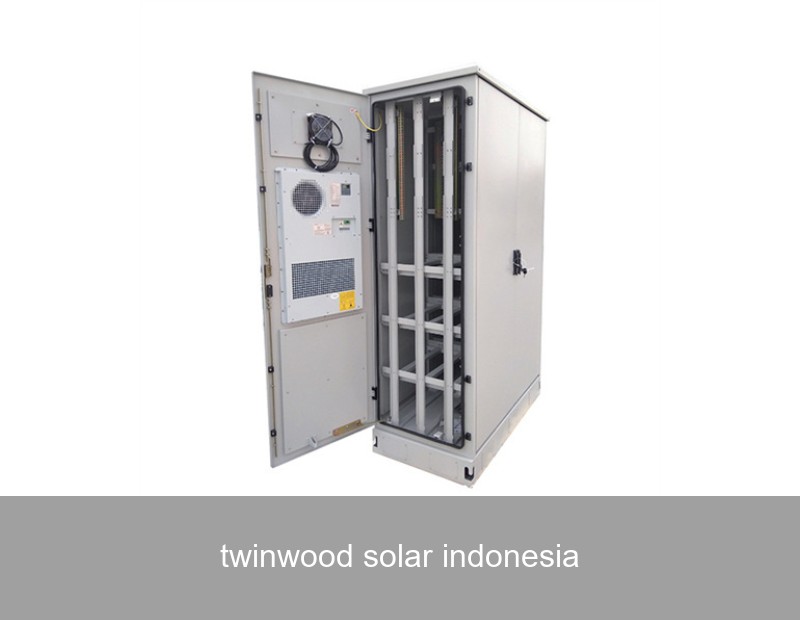
Imagine a sprawling industrial complex in Indonesia, where the tropical sun is both a blessing and a challenge. This is the story of Twinwood Solar Indonesia, a project that has become a talking point for energy managers and sustainability experts from Europe to the United States. Why? Because it brilliantly highlights a universal truth in today's renewable energy transition: generating clean power is only half the battle. The real game-changer lies in what you do with that power once the sun sets or clouds roll in. For businesses and communities worldwide, the success of initiatives like Twinwood Solar Indonesia underscores the critical, and often overlooked, role of advanced energy storage systems in achieving true energy independence and economic efficiency.
The Data: A Global Solar Dilemma
The phenomenon observed in Indonesia is not unique. Across sunny regions in Southern Europe, California, or Texas, a similar pattern emerges. Solar photovoltaic (PV) installations generate abundant, cheap power during midday, often creating a surplus that can strain grids or go to waste. According to the International Energy Agency (IEA), the variability of solar and wind power is the most significant barrier to their deep integration into electricity systems. This "duck curve" – a term popularized in California – shows a steep drop in net grid demand during sunny afternoons, followed by a rapid evening ramp-up as solar generation plummets and demand peaks. Without a solution, this leads to:
- Curtailment: Wasted solar energy because the grid cannot absorb it.
- Grid Instability: Voltage and frequency fluctuations that can damage equipment.
- Missed Savings: Businesses still relying on expensive grid power during peak evening hours.
This is the precise challenge that large-scale solar projects, akin to the Twinwood Solar initiative, face and must solve to deliver on their promise.

Image Source: Unsplash - A large-scale solar farm, similar to projects that require integrated storage solutions.
Case Study: The Twinwood Solar Solution
Let’s delve into the specifics. The Twinwood Solar project in Indonesia was designed to power a major manufacturing facility. With over 20 MWp of solar capacity, it could theoretically cover a significant portion of the plant's daytime energy needs. However, the facility operated on a 24/7 schedule, with high, consistent demand well into the night. Initial projections showed a disappointing result: only about 35% of the plant's total daily energy consumption could be met directly by solar due to this day-night mismatch.
The solution was to integrate a Battery Energy Storage System (BESS). By deploying a 10 MWh BESS, the project transformed its economics and reliability. Here’s what happened:
| Metric | Before BESS | After BESS Integration |
|---|---|---|
| Solar Self-Consumption | 35% | Over 85% |
| Grid Dependency at Peak Hours | High | Reduced by ~70% |
| Energy Cost Savings (Annual) | Significant only at midday | Optimized across all tariff periods |
| Grid Service Potential | None | Frequency regulation, peak shaving |
The BESS acted as a "time machine" for solar energy, storing the midday surplus and dispatching it during the expensive evening peak. This not only maximized the return on the solar investment but also provided the grid with much-needed stability services. The success of this model is a replicable blueprint for industrial and commercial entities worldwide.
Beyond Panels: The Intelligent Storage Imperative
The lesson from Twinwood Solar Indonesia is clear: solar generation and energy storage are not separate technologies but two halves of a complete system. An intelligent BESS does more than just store and release energy. Modern systems, like those developed by Highjoule, incorporate sophisticated energy management software that makes real-time decisions based on:
- Electricity price forecasts
- Load consumption patterns
- Weather predictions for solar/wind generation
- Grid stability requirements
This intelligence turns a passive battery bank into an active financial and operational asset. For a business in Germany participating in a dynamic electricity market, or a microgrid operator in California, this software-driven optimization is the key to unlocking the full value of renewables.

Image Source: Unsplash - A modern Battery Energy Storage System (BESS) unit, highlighting its clean integration.
Highjoule: Powering Global Ambitions with Intelligent Storage
At Highjoule, we've been at the forefront of this energy storage revolution since 2005. We understand that a project in Indonesia, a factory in Italy, and a housing development in Arizona, while geographically diverse, share a common goal: to achieve reliable, cost-effective, and sustainable energy independence. Our product suites are engineered for this global challenge.
For Commercial & Industrial (C&I) clients, our H-Series modular BESS is the ideal counterpart to large-scale solar installations. Its scalable design, from 100 kWh to multi-MWh configurations, allows it to be tailored for projects of any size, much like the Twinwood solution. With industry-leading cycle life and safety features like our proprietary thermal management system, it ensures a stable energy supply and protects your operational bottom line.
For Residential and Small Commercial applications, particularly in markets like the U.S. and Europe with high grid tariffs and incentives, our EchoHome system integrates seamlessly with rooftop solar. It allows homeowners to maximize self-consumption, provide backup power during outages, and even participate in virtual power plant programs, all managed through an intuitive app.
Furthermore, our GridMax platform is designed for utility-scale and microgrid applications, providing grid-forming capabilities and advanced grid services that help stabilize networks with high renewable penetration—a growing concern for grid operators globally, as noted by the U.S. Department of Energy's Solar Futures Study.
The Future Energy Landscape: Your Next Move
The narrative set by Twinwood Solar Indonesia is just the beginning. As battery technology continues to advance and software intelligence becomes more predictive, the synergy between generation and storage will only deepen. The question for any business leader, facility manager, or homeowner investing in solar is no longer "if" but "how" to integrate storage.
What specific energy cost structure or sustainability target is driving your organization to consider the next step in its energy journey?
 Inquiry
 Online Chat