


Thuisbatterij Buitenopstelling: A Safe and Smart Guide to Outdoor Home Battery Placement
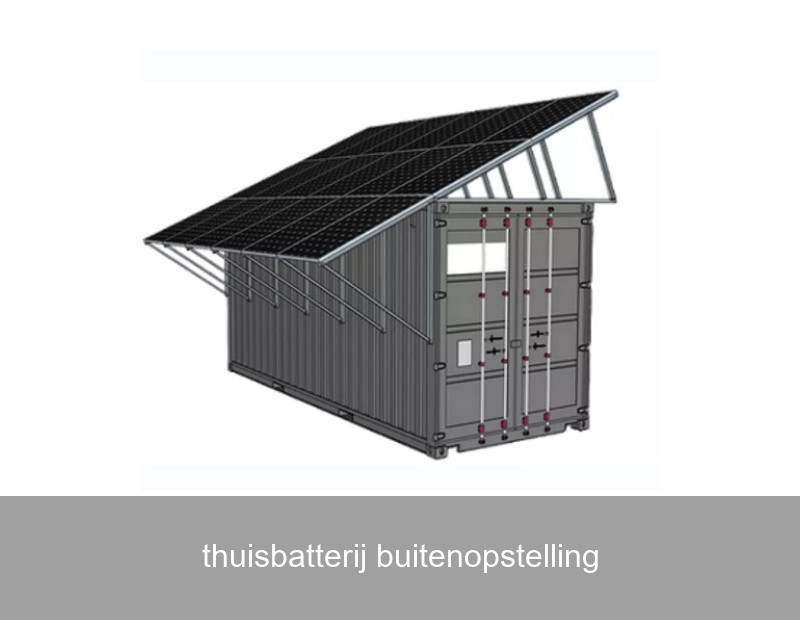
Thinking about a home battery but worried about losing precious indoor space? You're not alone. Across Europe and the US, a growing trend is emerging: the thuisbatterij buitenopstelling (home battery outdoor installation). This shift isn't just about saving square meters; it's about optimizing safety, accessibility, and system performance. But is placing a sophisticated energy storage unit outside your home a viable option? Let's explore the why, how, and what you need to know to make an informed decision for your renewable energy journey.
Why Consider an Outdoor Home Battery Setup?
The primary driver is simple: space. Modern homes, especially in urban and suburban areas, often have limited garage or utility room space. An outdoor installation frees up this valuable indoor area. Furthermore, safety perceptions play a role. Some homeowners feel more comfortable having the battery system situated outside, even though modern indoor-certified units are exceptionally safe.
But the benefits go deeper. Outdoor placement often simplifies the installation process, particularly for retrofit projects, by reducing the cable run from solar panels and avoiding complex interior wall penetrations. It also allows for better natural ventilation, which can contribute to system efficiency. However, this decision cannot be an afterthought. It requires a product specifically designed for this purpose.
The Data Behind the Trend
Market analysis indicates a rising preference for flexible installation options. A study by the SolarPower Europe highlighted that installer convenience and homeowner flexibility are among the top five decision factors for energy storage adoption. An outdoor-rated battery system directly addresses these needs, offering more deployment scenarios for installers and more choices for homeowners.
Key Considerations for Outdoor Battery Placement
Placing a battery outdoors isn't as simple as moving an indoor unit into the garden. Specific, non-negotiable features are required for safety, longevity, and performance.
- Ingress Protection (IP) Rating: This is crucial. A true outdoor battery must have a high IP rating (e.g., IP65 or higher), signifying complete protection against dust and powerful water jets from any direction.
- Temperature Tolerance & Climate Control: Batteries are sensitive to extreme temperatures. An outdoor unit needs an integrated, robust thermal management system that actively heats and cools the battery cells to maintain optimal operating conditions, whether in a freezing Scandinavian winter or a hot Arizona summer.
- Mechanical Robustness: The enclosure must withstand physical impacts, UV radiation (which degrades plastics), and corrosion.
- Safety Certifications: Look for certifications that explicitly include outdoor installation. Generic indoor certifications are not sufficient.
Real-World Case Study: The Dutch Family Home
Let's look at a concrete example from the Netherlands, a market with high solar penetration and space-conscious housing.
The Situation: A family in Utrecht had a 7 kWp solar array on their roof but faced significant grid feed-in limitations. They wanted to maximize self-consumption but had no suitable indoor space in their renovated home. Their garden shed was also ruled out due to lack of proper ventilation and security.
The Solution: They opted for a thuisbatterij buitenopstelling using an outdoor-rated energy storage system. The unit was installed on a concrete pad against a north-facing wall (for minimal direct sun exposure) in their backyard.
| Metric | Before Battery | After Outdoor Battery Installation |
|---|---|---|
| Self-Consumption of Solar Energy | 35% | 85% |
| Electricity Bill Savings | €40/month (from solar only) | €95/month |
| Grid Energy Draw During Peak Hours | High | Reduced by 90% |
The system operated flawlessly through rain, frost, and summer heat, demonstrating that with the right technology, an outdoor installation is not just possible but highly effective. The family also regained their utility room, a valuable intangible benefit.

Image Source: Unsplash (Representative image of clean outdoor installation)
The Highjoule Approach: Engineered for the Elements
At Highjoule, we've anticipated this need for installation flexibility. Our HES-Compact Outdoor Series is engineered from the ground up for reliable thuisbatterij buitenopstelling. Born from over 15 years of experience in demanding commercial and industrial storage, we've built resilience into every component.
Our solution features a rugged IP66-rated enclosure, ensuring total protection against harsh weather. Inside, an intelligent liquid-cooled thermal management system maintains the lithium ferro-phosphate (LFP) battery cells at their ideal temperature year-round, optimizing both performance and lifespan. Unlike simple air-cooled units, our system quietly and efficiently handles temperature extremes, from -20°C to 50°C ambient.
But a durable box isn't enough. Integration is key. The HES-Compact seamlessly connects with most major solar inverters and is managed by our Highjoule Energy OS. This smart platform allows you to monitor production, consumption, and storage in real-time via a user-friendly app, and can be configured for advanced strategies like time-of-use arbitrage or backup power readiness. For homeowners, this means you get a truly "set-and-forget" system that works tirelessly, rain or shine, to maximize your energy independence.
Image Source: Unsplash (Representative image of robust outdoor electrical equipment)
Making the Right Decision for Your Home
So, is an outdoor battery right for you? Ask yourself and your installer these questions:
- Location: Do I have a suitable shaded, secure, and accessible spot on an exterior wall or solid foundation?
- Product Suitability: Is the battery system I'm considering explicitly certified and warrantied for outdoor use? (Check the data sheet for IP rating and operating temperature range).
- Local Climate: What are the record high and low temperatures for my area? Will the battery's internal climate control handle them?
- Aesthetics & Regulations: Are there any local homeowner association (HOA) rules or municipal codes governing external equipment placement?
Consulting with a certified installer who has experience with outdoor setups is essential. They can conduct a site assessment and recommend the optimal configuration. For more on general battery safety standards, you can refer to resources from the U.S. Department of Energy.
Your Energy, Your Space
The dream of energy independence shouldn't be limited by the floor plan of your home. The thuisbatterij buitenopstelling represents a significant step forward in making storage accessible, safe, and convenient for every homeowner. With technology specifically designed to conquer the outdoors, you can now place your energy resilience exactly where it makes the most sense for your life.
What's the biggest obstacle in your home that's preventing you from exploring a battery storage system, and how could a flexible installation option change that?
 Inquiry
 Online Chat