


How to Thrive as a Solar Supplier in a Competitive Energy Market
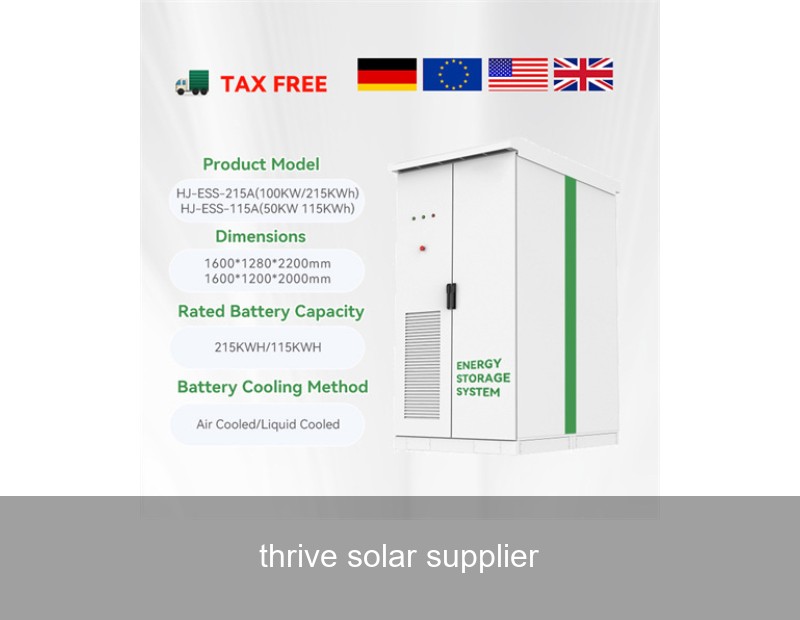
As a solar supplier, you're at the forefront of the energy transition. But let's be honest: the landscape is getting more crowded. Homeowners and businesses are no longer just asking, "Should I get solar?" Their question has evolved to, "How can I get the most resilient, intelligent, and cost-effective energy system?" To truly thrive as a solar supplier in today's markets—especially in Europe and the U.S.—you need to offer more than just panels. The key to differentiation lies in providing complete, intelligent energy solutions that turn sunlight into a reliable 24/7 power source. This is where the concept of the thrive solar supplier is born: one who empowers customers with control, savings, and independence.
Table of Contents
The Phenomenon: The Evolving Customer Demand
Remember when selling solar was primarily about offsetting grid electricity costs with a simple payback calculation? Those days are fading fast. Today, your customers are driven by a more complex mix of motivations:
- Energy Security: Increased grid instability and extreme weather events have made backup power a top priority, not a luxury.
- Financial Maximization: With changing net metering policies (like NEM 3.0 in California) and volatile time-of-use rates, customers want to store cheap solar energy for expensive peak periods.
- Sustainability Goals: Businesses and homeowners alike seek to maximize self-consumption of renewable energy, reducing their carbon footprint around the clock.
This shift means the traditional solar-only proposal often leaves customer needs—and your potential profit—on the table. The customer who inquires about solar is, in reality, a prospect for a sophisticated energy management system. Recognizing this is the first step to becoming a thrive solar supplier.

Credit: Photo by Vivint Solar on Unsplash. The modern solar installation includes storage, a key component for suppliers to thrive.
The Data: Why Storage is the Non-Negotiable Add-On
The numbers speak volumes about this market evolution. According to the Solar Energy Industries Association (SEIA), while solar continues to grow, the attachment rate for storage is the real headline. In the U.S., the residential solar-plus-storage market saw another record year, with a significant portion of new residential solar systems being paired with batteries. In Europe, driven by high energy prices and a strong push for independence, the energy storage market is projected to grow exponentially.
Consider this simple table comparing a standard solar offering versus a solar-plus-storage solution:
| Customer Benefit | Solar-Only System | Solar + Storage System (e.g., Highjoule) |
|---|---|---|
| Electricity Bill Savings | Good (daytime offset) | Excellent (24/7 optimization & peak shaving) |
| Backup Power During Outages | None | Full-home/business backup for hours or days |
| Grid Independence & Resilience | Low | High |
| ROI in Changing Policy Environments | Decreasing in some regions | Protected and enhanced |
As you can see, adding storage isn't just an upsell; it's fundamentally a more complete and future-proof solution. It directly addresses the core anxieties and aspirations of the modern energy consumer.
The Case Study: A U.S. Agri-Business Transforms Operations
Let's look at a real-world example from California's Central Valley. A mid-sized almond farm was facing a triple threat: skyrocketing peak-demand charges from irrigation pumps, unreliable grid power affecting cold storage, and a desire to meet corporate sustainability targets.
Their previous solar supplier had offered a large PV array, but it didn't solve the evening and early morning power needs. Then, they partnered with a local installer who positioned themselves as a thrive solar supplier by integrating a Highjoule industrial battery energy storage system (BESS) with the existing solar.
- Solution: A 500 kW / 1 MWh Highjoule H-I Series BESS was integrated with their 800 kW solar array.
- Result: The system was programmed for intelligent load shifting. Solar energy stored during the day was dispatched during peak rate periods (4-9 PM) to power irrigation and cooling. It also provides seamless backup for critical refrigeration.
- Data-Driven Outcome: The farm reduced its peak demand charges by over 40%, achieved an additional 25% reduction in overall energy costs beyond solar alone, and secured backup power for its essential operations. The payback period for the storage addition was under 5 years thanks to these combined savings.
This case isn't unique. It illustrates the transformative value a supplier can deliver by thinking beyond the panel. The installer didn't just sell hardware; they sold energy security, predictable costs, and operational resilience.
The Highjoule Advantage: Your Partner to Thrive
So, how do you, as a solar supplier, reliably deliver these outcomes? You partner with a technology leader who understands the entire ecosystem. This is where Highjoule comes in. Since 2005, we've been dedicated to one mission: providing intelligent, efficient, and sustainable power solutions.
As your partner, Highjoule equips you with the tools to become a true energy solutions provider:
- For Residential Clients: Our H-R Series home energy storage systems are sleek, scalable, and feature advanced lithium iron phosphate (LFP) chemistry for safety and longevity. Coupled with our intuitive energy management software, your customers can monitor and control their home's energy flow from a single app, maximizing self-consumption and peace of mind.
- For Commercial & Industrial (C&I) Clients: The H-I Series modular battery storage systems are engineered for demanding applications. They offer peak shaving, demand charge management, and backup power for businesses, schools, and factories. Our systems integrate seamlessly with existing solar and grid connections.
- For Microgrids & Large-Scale Projects: Highjoule's containerized H-M Series solutions provide turnkey, grid-forming storage for communities, utilities, and remote installations, enabling true energy independence.
Our technology is only part of the story. We provide comprehensive support, including technical training, sales enablement tools, and design software, ensuring your team is confident and capable in presenting and installing these advanced systems.

Credit: Photo by American Public Power Association on Unsplash. Industrial-scale storage, like Highjoule's H-I Series, is key for C&I solutions.
The Solution: Integrating Storage into Your Core Offering
Becoming a thrive solar supplier requires a strategic shift. Here’s a practical ladder to follow:
- Educate Your Team: Move from "solar sales" to "energy consultant." Understand the financial and resilience benefits of storage inside and out.
- Reframe the Conversation: Start every customer discussion with energy goals, not system size. Ask, "What is your biggest concern about your electricity: cost, outages, or environmental impact?"
- Lead with a Complete Solution: Make solar+storage your default proposal. Use tools like Highjoule's design suite to quickly model scenarios showing enhanced savings and ROI.
- Leverage Policy Trends: Become an expert on local incentives for storage (e.g., federal ITC in the U.S., various EU member state programs). This makes the technology more accessible.
- Build a Reliable Partnership: Align with a storage provider like Highjoule that offers robust product warranties, reliable performance, and partner support. This protects your reputation and ensures customer satisfaction.
The Future: Your Next Step to Thriving
The energy market is moving at a breakneck pace. Suppliers who cling to the old model of selling kilowatts of PV will find themselves commoditized. Those who embrace the role of trusted energy advisor, providing intelligent systems that harness, store, and manage power, will own the future.
The question isn't whether to add storage to your portfolio, but how quickly and effectively you can do it. Your customers are ready for a more resilient, intelligent, and sustainable energy life. Are you ready to provide it and truly thrive?
What's the first barrier you need to overcome to make energy storage a standard part of your proposals?
 Inquiry
 Online Chat