


Choosing the Right TD2307 MPPT Supplier: A Guide for Reliable Solar Power
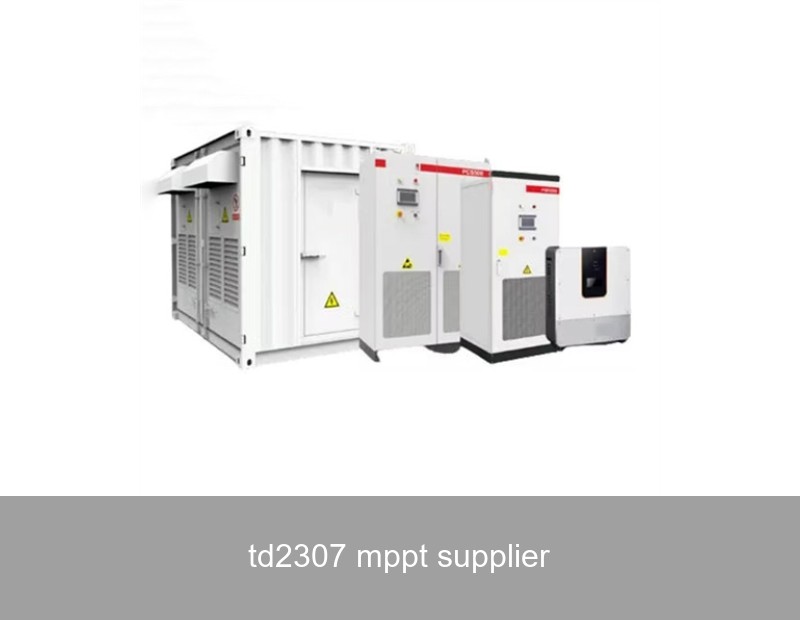
If you're involved in a solar project, you know the heart of its efficiency isn't just the panels—it's the technology that harvests every possible watt. The Maximum Power Point Tracking (MPPT) charge controller is that critical brain. And when specifications like "TD2307 MPPT" come up, it signals a search for a specific, high-performance component. But the real question isn't just about the part number; it's about finding a TD2307 MPPT supplier that offers reliability, technical support, and a product that integrates seamlessly into your broader energy system. This choice can mean the difference between a system that merely works and one that excels for decades.
Table of Contents
What is a TD2307 MPPT Controller?
Let's demystify the term. "TD2307" typically refers to a specific model or series of MPPT charge controllers, often characterized by a 230V nominal input and robust current handling (e.g., 70A or higher). These are not your average residential units; they are workhorses designed for commercial, industrial, or large-scale off-grid applications. Their primary job? To continuously adjust the electrical operating point of the solar array, ensuring it delivers the maximum available power under varying weather conditions, much like a smart transmission for sunlight.

Why does this matter? A high-quality MPPT can boost energy harvest by up to 30% compared to older technologies. When you're sourcing a component like this, you're not just buying a metal box with circuits; you're investing in the long-term yield of the entire photovoltaic installation.
The Hidden Challenges in Sourcing MPPT Components
The market is flooded with suppliers, but not all are created equal. Here’s the reality many project managers face:
- Specification Gaps: A datasheet might claim "TD2307 MPPT," but real-world performance in low-light or high-temperature conditions can vary wildly between manufacturers.
- Support Black Holes: What happens when you need firmware updates, have a configuration issue, or face an unexpected fault? A supplier with only a sales email is a major project risk.
- Integration Headaches: The controller must communicate flawlessly with inverters, battery management systems (BMS), and monitoring platforms. Proprietary or poorly documented protocols can derail system intelligence.
These challenges highlight that your choice of supplier is a strategic decision impacting operational expenditure (OpEx) and return on investment (ROI).
Key Criteria for Selecting Your MPPT Supplier
To navigate this landscape, focus on these pillars:
| Criteria | Why It Matters | Questions to Ask a Supplier |
|---|---|---|
| Technical Provenance & Certifications | Ensures safety, reliability, and grid compliance (e.g., UL, CE, IEC standards). | Can you provide full certification documents and test reports for this model? |
| Efficiency Curve Data | Peak efficiency is one thing; high efficiency across a wide voltage/load range is what delivers daily yield. | Can you share detailed efficiency maps across the full input voltage range? |
| Software & Monitoring Ecosystem | Remote management, diagnostics, and data logging are essential for modern asset management. | What software platform is included? Is it web-based? Does it offer API access for third-party integration? |
| Warranty & Local Support | A long warranty backed by local technicians or partners minimizes downtime risk. | What is the warranty term and process? Do you have technical support in my region? |
Case Study: Efficiency Gains in a Bavarian Agri-Solar Project
Let's look at a real-world example. A 2022 agrivoltaic project in Bavaria, Germany, combined raspberry cultivation with a 550 kWp overhead solar array. The initial design specified generic MPPT controllers. However, the engineering firm switched to a recommended supplier providing high-grade, algorithm-advanced MPPTs for the challenging partial-shading environment created by the crop structures.
The Data-Driven Result: Post-installation monitoring over one year showed a 5.8% higher specific yield (kWh/kWp) compared to a nearby reference plant using standard controllers. This translated to an additional €4,200 in annual revenue. The supplier’s robust monitoring platform also allowed the operators to pinpoint underperforming strings instantly, a feature the cheaper alternatives lacked. This case underscores that the supplier's technological depth directly impacts financial outcomes. You can explore more on the growth of agrivoltaics from authoritative sources like the National Renewable Energy Laboratory (NREL).
Beyond the Component: The System Integration Advantage
This is where the narrative shifts from buying a component to partnering for a solution. As a global leader founded in 2005, Highjoule approaches this from a system-level perspective. While we engineer and supply top-tier MPPT charge controllers suitable for demanding specifications, our true value lies in their integration into our complete, intelligent energy storage systems.
For a project seeking a reliable TD2307 MPPT supplier, Highjoule offers more than just the unit. We provide:
- Seamless Compatibility: Our MPPT controllers are pre-optimized to communicate with Highjoule's lithium-ion battery racks and hybrid inverters, creating a unified, high-efficiency power ecosystem.
- Intelligent Energy Management: The controller is a node in our GridCompass™ OS, which intelligently dispatches solar energy between immediate use, battery storage, and grid interaction based on weather forecasts and tariff structures.
- Single-Point Accountability: Instead of managing multiple vendors for batteries, inverters, and controllers, you have one expert partner responsible for the entire system's performance and support.

This holistic approach is crucial for commercial and industrial (C&I) applications where energy resilience and cost predictability are paramount. For deeper insights into grid stability needs, refer to the U.S. Department of Energy's Grid Modernization initiative.
Making the Informed Choice for Your Project
So, how do you proceed? Start by auditing your supplier's capabilities against the system's total lifecycle needs. Is their MPPT a standalone commodity, or is it a designed component of a smarter energy infrastructure? The difference will play out in your system's performance logs for the next 20 years.
We encourage you to look beyond the datasheet. What has been your biggest challenge when integrating critical components like MPPTs into a larger renewable energy system, and how did a supplier's support—or lack thereof—change the project's trajectory?
 Inquiry
 Online Chat