


Your Guide to Finding a Reliable Supplier of Solar Fast Charging Solutions
You've decided to embrace the future. Your commercial fleet, public EV charging hub, or remote industrial site needs a power boost that's both rapid and sustainable. The demand is clear: solar fast charging. But as you search for a supplier of solar fast charging systems, you're met with a dizzying array of technical jargon and bold promises. How do you cut through the noise and find a partner who delivers not just hardware, but a truly integrated, reliable, and future-proof solution? This article will guide you through the critical considerations, backed by data and real-world examples, to ensure your investment powers progress for years to come.
Table of Contents
- The Urgency: Why "Fast" and "Solar" Are No Longer Optional
- Beyond the Panels: What a True Supplier of Solar Fast Charging Must Deliver
- The Data Reality: Grid Constraints and Solar Potential
- Case Study: A European Logistics Hub's Transformation
- The Highjoule Approach: Intelligent Integration for Unmatched Reliability
- Future-Proofing Your Investment: Key Questions for Your Supplier
The Urgency: Why "Fast" and "Solar" Are No Longer Optional
The transition to electric mobility and off-grid power isn't gradual anymore; it's accelerating. Consider this: The International Energy Agency (IEA) reports that global electric car sales soared to nearly 14 million in 2023, and to support this, public fast charging points need to expand nearly tenfold by 2035[1]. Simultaneously, businesses face mounting pressure from stakeholders and regulations to decarbonize operations. Simply plugging multiple fast chargers into the existing grid is often not feasible—it's like adding several high-powered hair dryers to an old home circuit; it will likely trip the breaker, or lead to exorbitant demand charges from your utility company.
This is where the synergy of solar fast charging becomes a game-changer. It addresses the twin challenges of speed and sustainability. But the pitfall for many projects is treating the solar array, the battery storage, and the fast charger as separate components sourced from different vendors. This fragmented approach is a recipe for compatibility issues, operational headaches, and suboptimal performance.

Image Source: Unsplash (Representative image of solar-powered EV charging)
Beyond the Panels: What a True Supplier of Solar Fast Charging Must Deliver
A true supplier of solar fast charging infrastructure is not just a panel distributor or a charger manufacturer. They are a system architect. Here’s what a comprehensive solution encompasses:
- The Energy Source: High-efficiency photovoltaic (PV) panels to capture maximum sunlight.
- The Brain: An advanced energy management system (EMS) that intelligently decides, in real-time, whether to draw power from the solar panels, the battery, or the grid.
- The Power Bank: A high-cycle, durable battery energy storage system (BESS) to store excess solar energy for use during peak charging times or at night.
- The Delivery Point: DC fast chargers (DCFC) that can handle high-power inputs and communicate seamlessly with the EMS.
- The Guarantee: Long-term service, monitoring, and performance guarantees that ensure the system operates at peak efficiency for its entire lifespan.
The Data Reality: Grid Constraints and Solar Potential
Let's talk numbers. A single 150 kW fast charger can draw as much power as 50 average American homes simultaneously. For a site with four such chargers, the grid connection upgrade cost can easily exceed $100,000. Now, integrate a properly sized solar-plus-storage system. Data from the National Renewable Energy Laboratory (NREL) shows that commercial solar PV systems can consistently offset 40-80% of a site's electricity load, depending on location and design[2]. When paired with storage, this can reduce grid dependency during peak periods by over 90%, slashing demand charges—which often make up 30-70% of a commercial electricity bill.
| Challenge | Grid-Only Fast Charging | Integrated Solar Fast Charging with BESS |
|---|---|---|
| Grid Upgrade Cost | Very High | Minimal to None |
| Peak Demand Charges | Extremely High | Dramatically Reduced |
| Carbon Footprint | Depends on Grid Mix | Near-Zero Operation |
| Power Reliability | Grid-Dependent | Resilient, Can Operate During Outages |
Case Study: A European Logistics Hub's Transformation
Consider the challenge faced by a major logistics company at its distribution hub in southern Germany. They needed to electrify their 20-vehicle delivery fleet with overnight depot charging, but their grid connection was at capacity. A traditional upgrade would take 18 months and cost over €250,000.
They partnered with a supplier of solar fast charging solutions that provided a turnkey system: a 250 kW rooftop solar array, a 500 kWh Highjoule H-Stack commercial battery storage unit, and an intelligent EMS managing ten 50 kW depot chargers. The results were transformative:
- Grid Upgrade Avoided: Zero cost for grid reinforcement.
- Energy Cost Savings: 65% reduction in electricity costs for fleet operations, achieved through solar self-consumption and peak shaving.
- ROI: Project payback achieved in under 5 years, thanks to incentives and operational savings.
- Resilience: The site can now maintain critical sorting operations for 6 hours during a grid outage.
This case underscores that the right supplier delivers an outcome—energy independence and cost predictability—not just a collection of parts.
The Highjoule Approach: Intelligent Integration for Unmatched Reliability
At Highjoule, with nearly two decades of experience as a global leader in advanced energy storage, we understand that being a trusted supplier of solar fast charging systems means mastering integration. Our solutions are built around our proprietary H-Series battery systems and the Highjoule Energy Operating System (HEOS).
Think of HEOS as the master conductor of your energy orchestra. It doesn't just react; it predicts. Using weather forecasts and usage patterns, it pre-charges the battery with solar energy before your fleet's charging window, ensuring the cheapest, greenest electrons are used. For commercial and industrial clients, this level of control is non-negotiable. Our systems are designed for the rigorous demands of 24/7 operation, providing the peace of mind that comes with a solution backed by robust engineering and global service support.

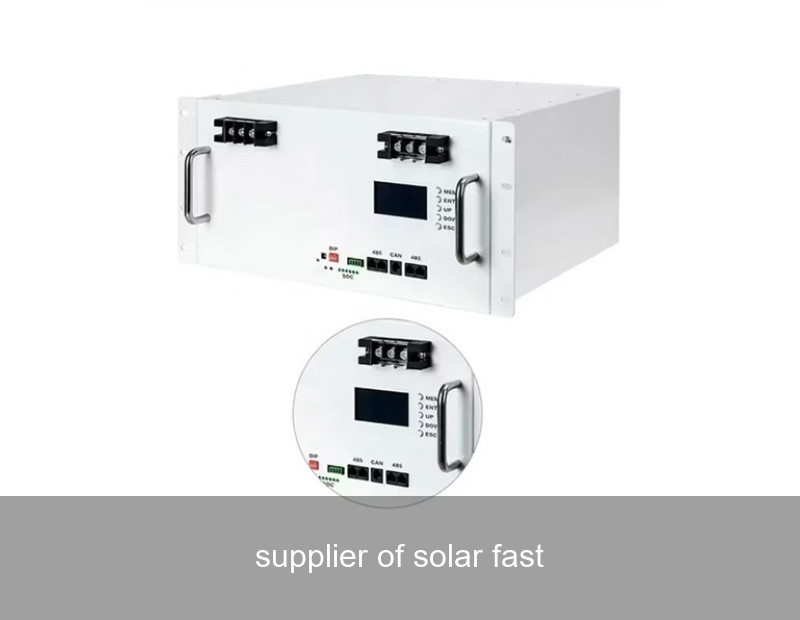
Image Source: Unsplash (Representative image of industrial battery storage system)
Future-Proofing Your Investment: Key Questions for Your Supplier
As you evaluate potential partners, move beyond spec sheets. Engage them in a technical dialogue. Here are essential questions to ask:
- System Intelligence: "How does your energy management system optimize for cost vs. carbon footprint, and can I set those preferences?"
- Hardware Longevity: "What is the warranted degradation rate of your batteries after 10 years, and how is the system designed for easy future expansion?"
- Grid Services: "Can this system participate in grid balancing programs (like frequency response) to generate additional revenue?"
- Total Cost of Ownership: "Can you provide a detailed lifecycle analysis, including projected maintenance and performance over 15 years?"
Your chosen supplier of solar fast charging technology should answer these with clarity and confidence, demonstrating a deep understanding of both the technology and your business objectives.
The journey to seamless, sustainable power is not about buying the fastest charger or the cheapest panels. It's about forging a partnership with an innovator who can weave these components into a resilient, intelligent, and profitable energy asset. With the right system, your charging hub or industrial site doesn't just consume power—it manages and even sells it, becoming a cornerstone of the new energy landscape.
What is the single biggest energy constraint currently holding back the expansion of your operations, and have you calculated the true cost of solving it with a conventional grid upgrade versus an integrated solar-storage-fast charge solution?
 Inquiry
 Online Chat