


Finding the Right Supplier of Solar Panel Systems: Your Guide to True Energy Independence
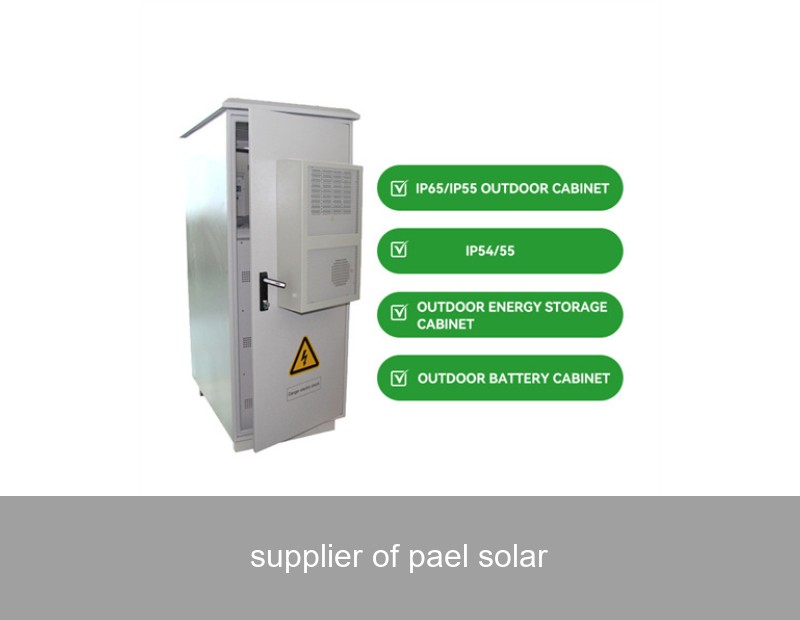
So, you've decided to harness the sun's power. It's a brilliant move. You're likely researching suppliers of solar panels, comparing technical specs and prices. But here's a question many don't ask upfront: What happens when the sun goes down, or when your panels produce more than you can instantly use? The truth is, selecting a supplier of solar panel equipment is just the first step. The real key to unlocking maximum value and resilience lies in choosing a partner who provides a complete, intelligent energy system. Let's explore what that truly means.
The Phenomenon: The Solar Boom and Its Hidden Challenge
Across Europe and the U.S., rooftops and fields are gleaming with photovoltaic (PV) modules. The drive for sustainability, coupled with rising electricity costs and supportive policies, has made solar a mainstream choice. However, a common phenomenon is emerging: system owners see impressive generation figures on their monitors, yet their grid dependence and electricity bills haven't dropped as dramatically as projected. Why? Because solar generation is intermittent. It peaks midday, often not aligning with evening energy demand peaks in homes or round-the-clock operations in businesses. This mismatch means exporting excess power to the grid at low rates and importing expensive power at night. The panel alone isn't the complete solution.
Image Source: Unsplash (Free to use under the Unsplash License)
The Data: Why Your Solar Investment Might Be Underperforming
Let's look at the numbers. According to the U.S. Department of Energy, solar can reliably meet daytime loads. However, a study by the Fraunhofer Institute for Solar Energy Systems highlights that without storage, a typical residential PV system in Germany might achieve only 30-40% self-consumption of the solar energy it produces. The rest is fed into the grid. For commercial and industrial (C&I) users with flat demand profiles, this curtails potential savings. This data reveals a critical insight: maximizing the return on your solar investment isn't just about the efficiency rating of the panel; it's about the utilization rate of the energy it produces. This is where the role of your supplier of solar panel systems evolves from equipment provider to energy solutions architect.
The Core Components of a Modern Solar Solution
- The Solar Panels (PV Modules): The primary energy harvesters. Quality dictates long-term yield.
- The Inverter(s): The brain of the PV system, converting DC to AC power. Advanced inverters enable grid services.
- The Battery Energy Storage System (BESS): The game-changer. It stores excess daytime production for use at night or during peak tariff periods, dramatically increasing self-consumption.
- The Energy Management System (EMS): The central intelligence. It optimizes energy flow between panels, batteries, building loads, and the grid based on weather forecasts, usage patterns, and electricity prices.
Case Study: A German Manufacturing Plant's Journey with Highjoule
Consider "Mittelstand Machining GmbH," a mid-sized automotive parts manufacturer in Bavaria. In 2021, they contracted a standard supplier of solar panels for a 500 kW rooftop array. While generation was good, their finance director noticed a persistent issue: high demand charges from short-term grid power draws during cloudy periods and machine start-ups.
In 2023, they partnered with Highjoule to retrofit a solution. We didn't just look at their panels; we analyzed their load profile, tariff structure, and operational goals. The implemented solution included:
| Component | Highjoule Solution | Business Impact |
|---|---|---|
| Existing PV Array | Integrated and monitored via Highjoule EMS | Preserved existing asset value |
| New Addition | Highjoule H2-Cube Industrial BESS (800 kWh capacity) | Stored midday solar surplus |
| System Intelligence | Highjoule Apex EMS with peak-shaving algorithms | Automatically dispatched battery power to cap grid draw |
- Self-Consumption of Solar Energy: Increased from 35% to over 85%.
- Peak Demand Charges: Reduced by 60%.
- Overall Energy Costs: Lowered by an additional 40% post-PV installation.
- ROI on BESS Addition: Achieved in under 5 years, with a system lifespan exceeding 15 years.
This case shows that the right partner looks beyond the initial installation to optimize the entire energy lifecycle.
Expert Insight: The Highjoule Integrated System Approach
At Highjoule, with nearly two decades of experience since 2005, we've learned that the most successful projects are those where we act not just as a supplier of solar panel components, but as a long-term provider of holistic energy security. Our philosophy is built on integration and intelligence.
Our product ecosystem is designed to work seamlessly together. For residential clients, our EverHome series combines high-efficiency panels with our compact CellStorm lithium iron phosphate (LiFePO4) batteries and an intuitive energy manager. For commercial and industrial clients, our H2-Cube modular storage system and Apex EMS platform can integrate with both new and existing solar arrays from various manufacturers. This flexibility is crucial because your energy needs will evolve.
Image Source: Unsplash (Free to use under the Unsplash License)
What truly differentiates us is our software. The Highjoule EMS uses predictive analytics to make decisions: Should it store energy now for the evening peak? Should it sell a small amount back to the grid if prices are exceptionally high? This turns a static solar installation into a dynamic, revenue-optimizing asset.
Choosing Your Solar Partner: Key Questions to Ask
When evaluating a supplier of solar panel systems, move the conversation from price-per-watt to long-term value. Ask these questions:
- "Can you provide a detailed analysis of my expected self-consumption rate and how to improve it?"
- "Do you offer integrated storage solutions, and are they compatible with future expansion?"
- "What energy management intelligence comes with the system? Can I see and control my energy flows in real-time?"
- "What is your company's track record in maintaining and supporting systems over a 20+ year lifespan?"
Looking Ahead: The Future of Intelligent Solar Energy
The next frontier is the interconnected microgrid. Imagine your solar+storage system not only powering your home or business but also communicating with your neighbors' systems and the local grid to provide stability during outages or periods of high demand. Technologies like vehicle-to-grid (V2G) will further integrate electric vehicles as mobile storage units. Choosing a supplier of solar panel technology that is innovating in these areas, like Highjoule with our grid-interactive ready systems, positions you at the forefront of this energy transition.
So, as you embark on your project, we leave you with this thought: Is your goal simply to install solar panels, or is it to achieve genuine, resilient, and cost-effective energy independence? The answer to that question will guide you to the right partner for your journey.
 Inquiry
 Online Chat