


Finding the Right Supplier of Off-Grid Set for Reliable, Independent Power
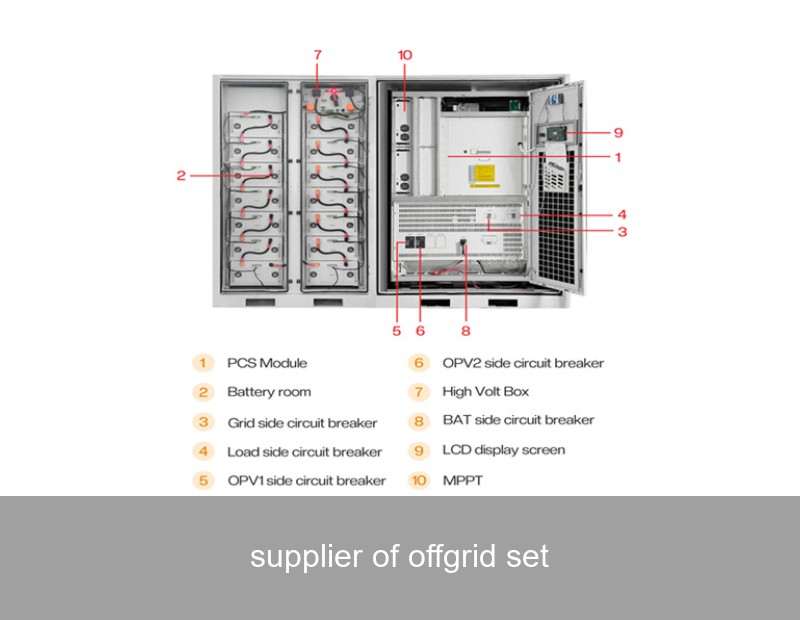
Imagine your business, farm, or remote home, completely free from the grid's unpredictability. The concept of off-grid power is evolving from a niche choice to a robust, mainstream solution for energy independence. But the journey begins with a critical decision: selecting the right supplier of off-grid set. This choice determines not just your initial setup, but the long-term reliability, efficiency, and cost-effectiveness of your entire energy ecosystem. As a global leader in advanced energy storage, Highjoule has been engineering intelligent off-grid solutions since 2005. In this guide, we'll navigate the key considerations, backed by data and real-world applications, to help you make an informed partnership for your energy freedom.
Table of Contents
What is an Off-Grid Set? Beyond the Basic Components
An off-grid set, or off-grid system, is a self-contained power plant. It generates, stores, and manages electricity independently of the national utility grid. While the core components are well-known—solar panels, batteries, an inverter, and often a backup generator—the true value lies in their seamless integration and intelligent management. A premium supplier of off-grid set doesn't just provide boxes of hardware; they deliver a finely tuned system where every component communicates and optimizes performance in real-time.
Think of it like a symphony. Individual instruments (components) can play alone, but it's the conductor (the system's brain) that harmonizes them into a powerful, reliable performance. This intelligence is what separates a basic setup from a resilient, long-term power solution.
Key Considerations When Choosing a Supplier of Off-Grid Set
Selecting your supplier is a strategic decision. Here are the critical factors to evaluate, moving from basic to advanced.
1. System Design & Engineering Expertise
Does the supplier offer customized design based on your specific load profiles, location, and energy goals? Off-the-shelf kits often underperform. Look for a partner with proven engineering capabilities to model your energy consumption and design a system with the right capacity and scalability.
2. Battery Technology & Lifespan
The battery is the heart of your off-grid set. The technology choice—lead-acid, advanced lithium-ion (like LFP), or others—directly impacts cost, lifespan, safety, and usable capacity. For instance, Lithium Iron Phosphate (LFP) batteries, a core technology in Highjoule's systems, typically offer a lifespan of 6,000+ cycles and superior thermal stability compared to older lithium-ion variants. A reputable supplier of off-grid set should transparently discuss cycle life, depth of discharge (DoD), and degradation rates.
3. Integration & Smart Energy Management
Can the inverter, charger, and battery management system (BMS) communicate flawlessly? Advanced systems feature integrated energy management systems (EMS) that autonomously prioritize loads, manage generator starts/stops to minimize fuel use, and allow for remote monitoring and control. This is where efficiency gains are realized.

Image Source: Unsplash - A modern, integrated battery storage unit for off-grid applications.
4. After-Sales Support & Warranty
Off-grid systems are long-term investments. Ensure your supplier offers comprehensive warranties (often 10 years on premium batteries) and has a robust support network, especially critical for remote installations in regions like rural America or off-grid Europe. Ask about remote diagnostics and local service partners.
Case Study: Off-Grid Resilience in the European Agri-Sector
Let's look at a concrete example from Tuscany, Italy. A medium-sized winery, located on a hillside with unreliable and expensive grid connection, sought complete energy independence to power its irrigation systems, cooling units, and administrative building.
The Challenge: High seasonal energy demand (especially during harvest and fermentation), need for 24/7 reliable cooling, and a desire to reduce operational costs and carbon footprint.
The Solution: The winery partnered with Highjoule and a local installer as their supplier of off-grid set. The system was designed with:
- A 120 kWp solar PV array on winery rooftops and carports.
- A Highjoule H-Stack commercial battery storage system with 240 kWh of LFP capacity.
- A Highjoule multi-mode inverter/charger with integrated EMS.
- A legacy diesel generator integrated as a secondary, rarely-used backup.
The Results (Data-Driven Outcomes):
| Metric | Before System | After System (First Year) |
|---|---|---|
| Grid Dependency | 100% | <5% (generator backup only during prolonged bad weather) |
| Energy Costs | ~€28,000/year | ~€3,500/year (fuel & maintenance) |
| Generator Runtime | N/A (primary grid) | Reduced by over 90% | Carbon Footprint | ~42 tons CO2e/year | ~4 tons CO2e/year |
This case demonstrates how a correctly sized and intelligently managed off-grid set from a knowledgeable supplier delivers tangible economic and operational resilience. You can explore more on the growth of renewable energy in agriculture via the IEA's Renewables 2023 report.
The Highjoule Approach: Integrated Intelligence for Off-Grid Power
At Highjoule, our philosophy as a supplier of off-grid set is built on the principle of Integrated Intelligence. We don't just assemble components; we engineer ecosystems. Our product suite for the off-grid market is designed to work as a unified, smart entity.
- H-Stack Modular Battery Systems: Scalable LFP battery cabinets that can grow with your energy needs. Their modular design allows for easy serviceability and expansion, a crucial feature for evolving businesses.
- Hybrid Inverter/Chargers: Our multi-mode inverters are the brains of the operation. They seamlessly manage power flow from solar, batteries, and generators, ensuring the highest priority loads are always powered.
- Highjoule Energy OS (HEOS): This proprietary energy management software is the true differentiator. It provides real-time monitoring, predictive analytics, and remote control via a user-friendly dashboard. You can optimize for cost, efficiency, or resilience with a few clicks.
- Custom Design & Lifelong Support: From initial site assessment and digital twin modeling to installation support and 24/7 system monitoring, we partner with certified installers across Europe and the U.S. to ensure your system performs for decades.

Image Source: Unsplash - An off-grid solar and storage installation in a remote location.
This integrated approach is why our systems are trusted for critical applications, from remote telecommunications sites to microgrids for island communities. For a deeper understanding of microgrid technology, a great resource is the National Renewable Energy Laboratory's work on energy resilience.
Your Path to Energy Independence: Questions to Ask
Embarking on your off-grid journey is exciting. To find the right partner, start by asking potential suppliers these targeted questions:
- "Can you provide a detailed energy simulation and system design based on my specific historical consumption data (if available) or a thorough load audit?"
- "How does your energy management system prioritize loads during low-production periods, and can I customize these settings?"
- "What is the expected battery degradation over 10 years, and how does the warranty guarantee performance?"
- "Do you have a local network of certified installers and technicians for ongoing maintenance and support in my region?"
The right supplier of off-grid set will welcome these questions with detailed, confident answers. They will act as a consultant, not just a vendor. So, what's the first critical load you want to secure with unwavering, independent power?
 Inquiry
 Online Chat