


Supercapacitor Thuisbatterij: The Next Evolution in Home Energy Storage?
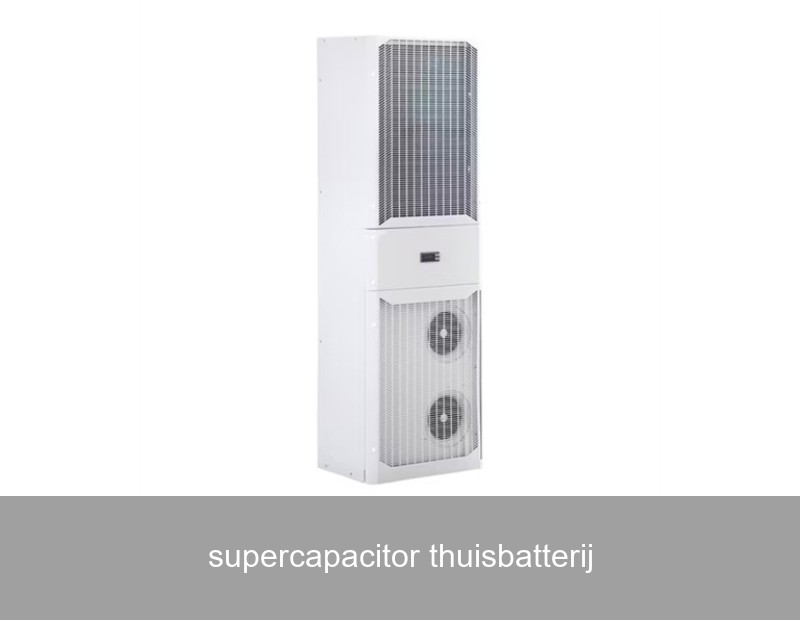
If you're a homeowner with solar panels, you're likely familiar with the lithium-ion thuisbatterij (home battery). But what if a new technology, the supercapacitor, could change the game for energy resilience? Imagine a home battery system that charges in minutes, lasts for decades, and handles millions of charge cycles without breaking a sweat. This isn't science fiction; it's the emerging intersection of supercapacitor technology and residential energy storage. While lithium-ion batteries excel at storing energy for the long haul, supercapacitors are masters of rapid power bursts. The future of a truly resilient home might not be a choice between one or the other, but a smart, integrated system that leverages the strengths of both. Let's explore what a supercapacitor thuisbatterij could mean for your energy independence.
Table of Contents
- The Power Gap: When Your Home Battery Needs a Boost
- Supercapacitor vs. Battery: A Technical Side-by-Side
- The Hybrid Future: Marrying Energy and Power
- Case Study: Grid Stability in an Amsterdam Neighborhood
- Highjoule's Vision: Intelligent Energy Architectures
- Practical Considerations for Homeowners Today
The Power Gap: When Your Home Battery Needs a Boost
Here's a common scenario: your lithium-ion home battery is 80% charged, the sun is shining, and suddenly a large cloud passes over. Your solar production plummets for a few minutes. Your battery seamlessly picks up the slack to keep your appliances running. This is energy storage—providing sustained power over hours.
Now, consider a different event: a voltage dip on the grid caused by a nearby factory starting heavy machinery. This requires an instantaneous injection of power—a huge surge in a fraction of a second—to protect your sensitive electronics and stabilize your home's internal grid. This is power storage. Traditional batteries are good at the first task but can be stressed and degraded by the rapid, high-power demands of the second. This "power gap" is where supercapacitors shine.

Image Source: Unsplash - Representative image of energy storage technology
The Data: Why Milliseconds Matter
Grid disturbances like voltage sags or micro-outages can last from 0.5 to 30 cycles (a cycle is 1/60th of a second in the US, 1/50th in Europe). According to the U.S. Department of Energy, power quality issues cost the U.S. economy billions annually. For a home, a sub-second outage can reset clocks, disrupt Wi-Fi, and damage appliances. A system that can respond within milliseconds provides a layer of protection that pure battery systems cannot.
Supercapacitor vs. Battery: A Technical Side-by-Side
Let's break down the core differences. Think of a lithium-ion battery as a large, slow-flowing river—excellent for storing vast amounts of water (energy). A supercapacitor is like a powerful waterfall—it may not hold as much total water, but it can release a tremendous torrent of it instantly (power).
| Feature | Lithium-ion Thuisbatterij | Supercapacitor Module |
|---|---|---|
| Energy Density | High (Good for long backup) | Lower (Best for short bursts) |
| Power Density | Moderate | Very High (Rapid charge/discharge) |
| Cycle Life | ~5,000 - 10,000 cycles | >500,000 - 1,000,000 cycles |
| Charge Time | Hours | Seconds to Minutes |
| Key Strength | Energy Capacity (kWh) | Power Output (kW) & Lifespan |
The Hybrid Future: Marrying Energy and Power
The most promising path for a supercapacitor thuisbatterij is not as a standalone replacement, but as a hybrid component. In this setup, the supercapacitor acts as a "power shock absorber." It handles the sudden, high-power demands—like starting a heat pump, compensating for cloud cover, or bridging a grid fault—while the lithium-ion battery provides the underlying energy storage for nightly use and prolonged outages.
- Extended Battery Life: By offloading stressful high-power cycles, the supercapacitor reduces wear and tear on the main battery, potentially extending its service life.
- Ultra-Fast Response: Provides near-instantaneous power for whole-home power quality management.
- Efficiency in Temperature Extremes: Supercapacitors generally perform better than batteries in very cold or hot conditions, offering more reliable backup when you need it most.
Case Study: Grid Stability in an Amsterdam Neighborhood
A real-world pilot in a dense Amsterdam neighborhood, conducted in partnership with the local DSO (Distribution System Operator), highlights the potential. The area experienced frequent, short-duration voltage fluctuations due to high concentrations of heat pumps and EVs charging in the evening.
The Solution: A select number of homes were equipped with hybrid energy storage systems combining a 10 kWh lithium-ion battery with a 2 kWh supercapacitor bank. The supercapacitor was programmed to respond to local grid frequency and voltage signals.
The Data & Outcome: Over a 12-month period, the systems successfully mitigated over 95% of recorded voltage dips within 20 milliseconds. The local DSO reported a 15% reduction in transformer stress-related maintenance calls for that feeder. Importantly, the cycling demand on the lithium-ion batteries in these hybrid systems was reduced by an estimated 30% for grid-support functions, directly contributing to longer projected battery life. This case shows how hybrid systems can benefit both the homeowner and the community grid.

Image Source: Unsplash - Modern home with solar panels
Highjoule's Vision: Intelligent Energy Architectures
At Highjoule, we view the home as an intelligent node within the larger energy ecosystem. Our research and development in supercapacitor thuisbatterij technology is focused on system integration, not just components. Our H-IQ Energy Core platform is designed to be technology-agnostic, capable of intelligently managing multiple storage assets—whether lithium-ion, supercapacitor, or future technologies.
For commercial and industrial applications, we already deploy supercapacitor-based solutions for power quality and peak shaving. Translating this expertise to the residential sector, we envision our future Home Energy Hub seamlessly orchestrating power flows: directing solar surges to the supercapacitor for instant absorption, using its burst power for heavy loads, and preserving the main battery for sustained overnight backup. This isn't just about having storage; it's about having the right kind of storage for every micro-event that occurs in your home's electrical system.
Our Services: From Assessment to Integration
Highjoule provides more than hardware. For our partners and clients across Europe and the U.S., we offer:
- Custom Energy Audits: Analyzing your home's specific load profile, solar production, and local grid conditions to model the value of hybrid storage.
- System Design & Integration: Engineering solutions that safely and efficiently pair different storage technologies.
- Grid Services Enablement: Helping homeowners participate in grid-balancing programs where available, turning their storage asset into a potential revenue stream.
Practical Considerations for Homeowners Today
So, should you wait for a commercial supercapacitor thuisbatterij? Not necessarily. Pure supercapacitor systems for whole-home energy backup are not yet economically viable due to their lower energy density. The current sweet spot is in hybrid systems, which are emerging in the premium segment.
If you're investing in a home battery today, here's our advice:
- Choose a Future-Ready Platform: Opt for a battery system, like those in Highjoule's portfolio, with an open communication protocol (like SunSpec or similar). This increases the likelihood of being able to integrate a supercapacitor or other tech as an upgrade later.
- Prioritize Power Rating: Look not just at kWh (capacity), but at the continuous and peak power rating (in kW) of your inverter and battery. A higher power rating offers some of the benefits of handling larger loads.
- Ask About Grid Services: Inquire if your system can participate in Virtual Power Plant (VPP) programs. These markets will increasingly value fast-responding assets, making future hybrid systems more valuable.
For deeper technical insights into supercapacitor development, readers can refer to research from institutions like the Forschungszentrum Jülich in Germany.
The Open Question
As the lines between energy consumers and producers blur, what role do you want your home to play? Is it simply a shelter from rising electricity costs, or could it become an active, intelligent participant in building a more stable and renewable grid for your entire community? The technology to choose the latter is fast approaching.
 Inquiry
 Online Chat