


Structural Battery Composites: The Future of Energy Storage is in the Building Blocks
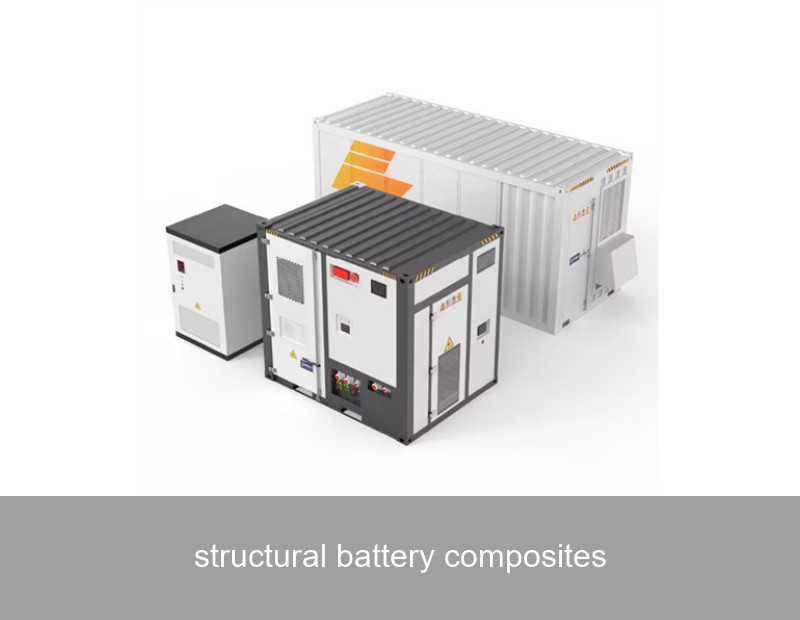
Imagine an electric vehicle where the doors, roof, and floor are the battery. Or a solar-powered house where the walls themselves store the energy they harvest. This isn't science fiction; it's the emerging reality of structural battery composites (SBCs). This revolutionary technology moves beyond simply adding a battery to a product and instead focuses on making the product itself a battery. For industries and homeowners in Europe and the US striving for ultimate efficiency and sustainability, understanding this shift is key. At Highjoule, as a leader in advanced energy storage since 2005, we are keenly watching this frontier, as it aligns perfectly with our mission to provide intelligent and integrated power solutions for a sustainable future.
Table of Contents
- What Are Structural Battery Composites?
- The Problem: The Weight and Space Penalty of Traditional Batteries
- How Do They Work? The Data Behind the Material
- A Real-World Case: The Chalmers University Prototype
- Highjoule's Role in Today's and Tomorrow's Storage Ecosystem
- Challenges and the Road to Commercialization
- What Could Your Industry Build?
What Are Structural Battery Composites?
Let's break down the term. A "composite" is a material made from two or more constituent parts with different properties—think carbon fiber, which is strong and light. A "battery" stores energy electrochemically. A structural battery composite is a material that does both simultaneously: it carries mechanical load (like a beam or panel) and stores electrical energy. It's a multifunctional material, turning passive structures into active energy assets.
The Problem: The Weight and Space Penalty of Traditional Batteries
Here's a familiar scenario, especially in transportation and portable electronics. You design a product, and then you have to find a heavy, bulky box—the battery pack—to power it. This "add-on" approach creates a fundamental inefficiency. In electric vehicles (EVs), the battery pack can constitute 20-30% of the total vehicle's weight. This "mass penalty" means you need more energy to move the battery itself, reducing range. It's a vicious cycle. Similarly, in aviation and consumer electronics, every gram and cubic centimeter counts. The promise of SBCs is to break this cycle by eliminating the dedicated battery box entirely.

Image: Carbon fiber composites are the starting point for structural batteries. Source: Unsplash (User: @lukechesser)
How Do They Work? The Data Behind the Material
So, how do you make a material that's both strong and electrochemically active? The core concept replaces non-active components in a standard lithium-ion battery with structural ones.
- Structural Electrode: Carbon fibers serve a dual role. They are the primary reinforcement in the composite (giving it strength), and they also act as the negative electrode (anode).
- Structural Electrolyte: Instead of a liquid or gel electrolyte, a solid polymer or glassy electrolyte is used. This solid layer separates the electrodes and mechanically transfers load between the carbon fibers.
- Structural Separator & Positive Electrode: The positive electrode (cathode) is often a lithium-iron-phosphate (LFP) coating on a metal foil, integrated into the composite stack.
The performance metrics are a balancing act. Researchers measure:
| Property | Goal for SBCs | Comparison to Traditional Parts |
|---|---|---|
| Energy Density | 20-50 Wh/kg (structural) | >200 Wh/kg (dedicated EV battery) |
| Stiffness | >50 GPa | ~200 GPa (aluminum alloy) |
| Multifunctional Efficiency | High (weight-saving synergy) | Low (battery is dead weight) |
The key insight isn't to match the energy density of a top-tier EV battery cell. It's to achieve good enough energy storage while providing crucial structural function, leading to massive system-level weight savings and design freedom.
A Real-World Case: The Chalmers University Prototype
Let's look at tangible progress. Researchers at Chalmers University of Technology in Sweden have developed a structural battery with promising performance data. Their composite uses carbon fiber anode, a glassy electrolyte, and an aluminum foil cathode coated with LFP.
The published results are impressive: a stiffness of 25 GPa and an energy density of 24 Wh/kg. While 24 Wh/kg seems low, consider this: if this material were used to build the body of an EV, it could potentially store enough energy to reduce the need for a separate battery pack by a significant margin. The researchers estimate that an EV using this technology in its body panels could see a total weight reduction of over 50% compared to today's EVs with dedicated battery packs. This is the system-level thinking that makes SBCs so compelling.
Highjoule's Role in Today's and Tomorrow's Storage Ecosystem
While structural battery composites represent the cutting-edge future of integrated storage, the need for robust, high-performance dedicated storage systems has never been greater. This is where Highjoule excels. Since our founding in 2005, we have specialized in designing and deploying advanced Battery Energy Storage Systems (BESS) for commercial, industrial, residential, and microgrid applications across Europe and North America.
Our IntelliGrid BESS platform, for instance, is a prime example of today's most sophisticated, containerized storage. It features:
- Advanced lithium-iron-phosphate (LFP) battery chemistry for safety and longevity.
- Integrated AI-driven energy management software for peak shaving, load shifting, and grid services.
- Scalable architecture, from a few hundred kWh to multi-MWh installations.
We see technologies like SBCs not as replacements, but as future complements. Imagine a commercial building with structural battery composites in its facade storing solar energy, seamlessly paired with a Highjoule IntelliGrid system in the basement for managing the building's overall energy flow, backup power, and grid interaction. This hybrid approach—combining passive, distributed storage with active, centralized management—could define the next generation of sustainable infrastructure.

Image: The future of energy involves integrated generation and storage. Source: Unsplash (User: @gerandklerk)
Challenges and the Road to Commercialization
The path for SBCs isn't without hurdles. Key challenges include:
- Manufacturing Complexity & Cost: Integrating electrochemical function into composite manufacturing processes (like resin infusion) is complex and currently expensive.
- Cycle Life and Safety: How does repeated mechanical stress (vibration, impacts) affect electrochemical cycle life? Safety under structural failure must be guaranteed.
- Regulatory Hurdles: New certification standards will be needed for "load-bearing batteries" in vehicles and buildings, a process that takes time.
Overcoming these will require close collaboration between material scientists, battery engineers, and product designers—a convergence that companies like Highjoule actively foster through partnerships and R&D initiatives.
What Could Your Industry Build?
The potential applications are staggering. Beyond EVs and aircraft, think about consumer electronics: a laptop casing that powers the computer. Or in renewable energy: wind turbine blades that store the energy they help create. For our European and US clients in construction, the idea of an energy-storing building material is particularly exciting as they push towards net-zero carbon targets.
The question for you, whether you're an engineer, an architect, a product designer, or a business leader, is this: If the physical components of your product could safely store energy without adding weight, what revolutionary new features, designs, or business models would that enable?
 Inquiry
 Online Chat