


Unlocking Energy Independence: How a Stackable Battery System Transforms Power Management
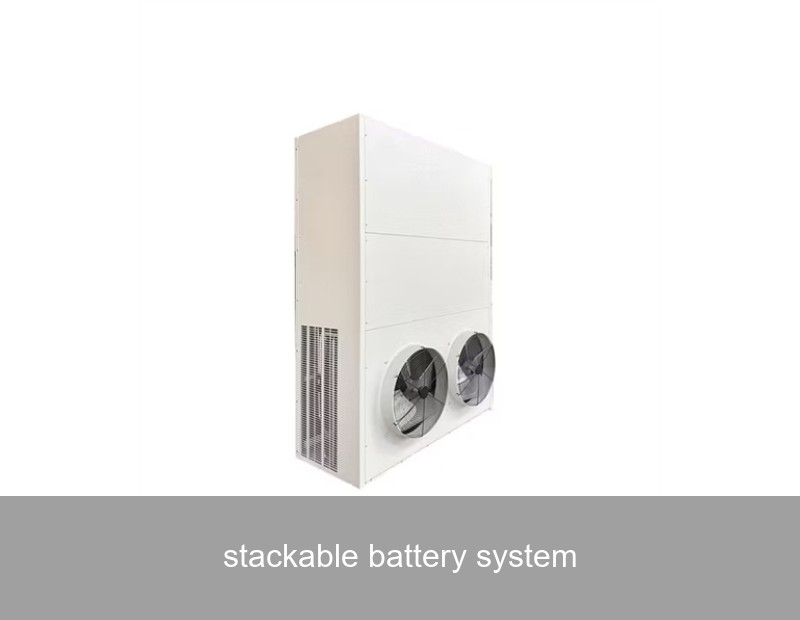
Imagine your energy storage system growing alongside your needs, module by module, like building with intelligent power blocks. This is no longer a futuristic concept but a present-day reality, thanks to the innovative stackable battery system. For homeowners, businesses, and communities across Europe and the US, this technology is redefining what it means to be energy-resilient, efficient, and in control. Unlike traditional monolithic battery units that require a complete replacement to upgrade, a stackable system offers a flexible, scalable, and cost-effective path to greater energy independence. In this article, we'll delve into how this modular approach works, its tangible benefits, and why it's becoming the cornerstone of modern renewable energy setups.
The Power of Modularity: Why Stackable Design Wins
At its core, a stackable battery system consists of individual battery modules or units that can be physically and electrically connected to increase total storage capacity. Think of it like adding bookshelves to a library; you start with what you need and expand the collection as it grows. This modular architecture addresses several critical pain points in energy storage.
The Phenomenon: The "One-Size-Fits-None" Problem
Traditional energy storage often forces a difficult choice: invest in a large, expensive system you hope to grow into, or buy a smaller, potentially inadequate one. Both options carry financial and operational risks. Under-sizing leads to unmet power needs during outages or peak times, while over-sizing locks up capital in unused capacity for years.
The Data: Scalability Equals Savings and Efficiency
Modularity directly impacts the bottom line. A report by the National Renewable Energy Laboratory (NREL) highlights that flexible, modular storage can improve the net present value of a system by optimizing the timing of investments. You avoid the high upfront cost of oversized systems and instead scale in line with your actual consumption patterns, renewable generation (like new solar panels), or budget.
- Adaptive Growth: Start with a base system and add modules as your electric vehicle fleet expands, your home addition is built, or your business operations grow.
- Enhanced Reliability: Many stackable systems feature independent module operation. If one module needs service, the others can often continue functioning, increasing overall system uptime.
- Future-Proofing: Battery technology continues to advance. A well-designed modular platform may allow for integration of newer, higher-density battery modules in the future, protecting your long-term investment.

Image Source: Unsplash (Representative image of modular energy storage)
Real-World Case Study: A German Bakery's Recipe for Resilience
Let's look at a concrete example from Bavaria, Germany. Bäckerei Schmidt (a mid-sized family bakery) faced two challenges: volatile energy costs cutting into margins and the need for an uninterrupted power supply for its refrigeration and ovens. Their initial solar PV installation covered about 40% of their daytime load, but surplus midday energy was being sold to the grid at low rates, and they had no backup power.
The Solution & Implementation:
In 2022, they installed a primary stackable battery system with a capacity of 30 kWh, integrated with their existing solar. The system was designed with a clear expansion bus. By early 2023, after adding a new electric delivery vehicle charging station, they seamlessly stacked two additional 10 kWh modules, bringing their total storage to 50 kWh.
| Metric | Before Stackable System | After Full 50 kWh System |
|---|---|---|
| Grid Energy Consumption (Peak Hours) | 85% | 15% |
| Solar Self-Consumption | 35% | Over 90% |
| Backup Power Duration (Critical Loads) | 0 hours | Up to 14 hours |
| Estimated Annual Energy Cost Savings | — | €8,200 |
The bakery now uses nearly all its solar energy on-site, charges its delivery vehicle with cheap, self-produced power at night, and has robust backup protection. The phased investment matched their cash flow, and the scalable design made the expansion a simple, weekend project. This case exemplifies the core promise of stackable technology: adaptable, economical, and resilient power.
Key Considerations for Your Stackable Battery Project
While the benefits are compelling, a successful stackable battery system installation requires careful planning. Here are the critical factors to discuss with your provider:
- System Architecture & Communication: Ensure the battery management system (BMS) is designed for seamless module integration. All modules must "talk" to each other and the inverter flawlessly.
- Inverter Compatibility: Your inverter must be capable of managing the increased capacity and charge/discharge cycles of an expanding battery bank. Hybrid or multi-mode inverters are often essential.
- Physical Space & Safety: Plan for the physical footprint of future modules. Installation must comply with local codes (like NEC 2020 in the US or relevant DIN/VDE standards in Europe) regarding spacing, ventilation, and fire containment.
- Warranty & Service: Understand how warranty terms apply to individual modules versus the entire system, and ensure the provider offers long-term support for the system's lifecycle.
The Highjoule Approach: Engineering for the Future
At Highjoule, we've been at the forefront of intelligent storage solutions since 2005. Our philosophy is that a stackable battery system shouldn't just be modular in hardware, but also in intelligence. Our H-Series Modular Energy Platform is engineered for the demands of commercial, industrial, and advanced residential applications.
What sets our platform apart is its adaptive grid intelligence. Each H-Series module is equipped with our proprietary HarmonyOS BMS, which does more than just balance cells. It allows each module to independently optimize its performance based on real-time data—from grid frequency and electricity prices to weather forecasts and your consumption patterns. When you stack modules, you're not just adding kWh; you're adding collective processing power for energy optimization. This means our systems can automatically shift strategies to maximize savings, participate in grid services where available, or ensure critical backup, all while extending the battery's lifespan. For microgrid applications, this distributed intelligence is invaluable for maintaining stability and efficiency as the network grows.

Image Source: Unsplash (Representative image of large-scale energy storage)
The Future is Stackable: What's Next for Energy Storage?
The trend is unmistakable. As noted by the International Energy Agency (IEA), innovation in storage technology and business models is crucial for integrating high shares of variable renewables. The stackable battery system model is a direct response to this need, enabling democratized, flexible, and user-centric energy assets. We are moving towards ecosystems where residential, commercial, and grid-scale storage interact, creating virtual power plants that enhance community resilience.
So, as you contemplate taking control of your energy future, ask yourself this: Does your vision for energy independence have the flexibility to evolve? What would a power solution that grows in capability as steadily and surely as your own ambitions look like for your home or business?
 Inquiry
 Online Chat