


Solaranlage für Strom und Wasser: Your Complete Guide to Integrated Energy and Water Independence
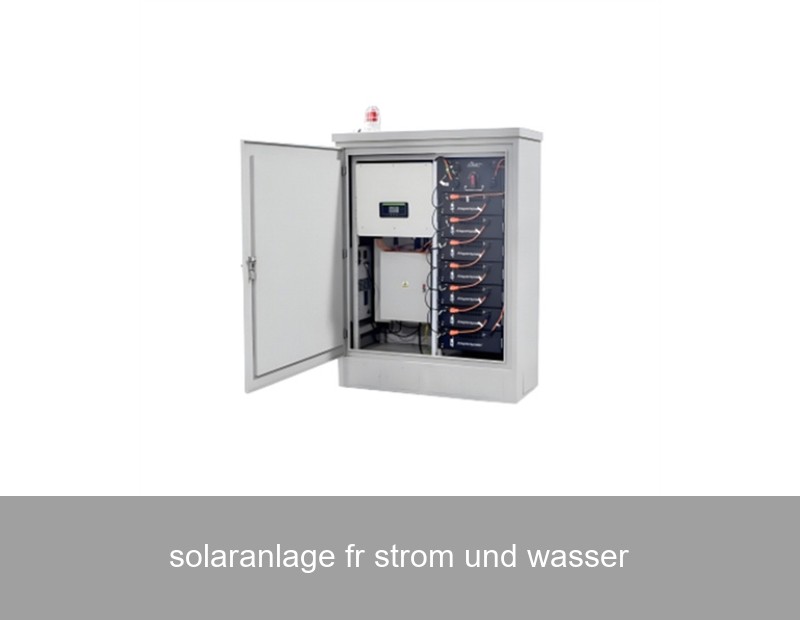
Imagine a home that not only powers your lights and appliances but also provides the water for your garden, your showers, and your daily needs—all from the same clean, abundant source: the sun. This is the promise of a Solaranlage für Strom und Wasser, a sophisticated system that combines photovoltaic (PV) electricity generation with solar thermal water production. For homeowners in Europe and the US, this integrated approach represents the pinnacle of sustainable living, offering true energy independence and significant utility savings. But how do these systems work in practice, and what does it take to make this vision a reliable, 24/7 reality? The answer often lies in one critical component: intelligent energy storage.
Table of Contents
Understanding the Dual-Purpose Solar System
Let's break down the concept. A Solaranlage für Strom und Wasser typically involves two distinct but potentially synergistic technologies:
- Photovoltaic (PV) Panels for Electricity: These are the familiar solar panels you see on rooftops. They convert sunlight directly into electricity (DC), which is then inverted to alternating current (AC) to power your home.
- Solar Thermal Collectors for Hot Water: These systems use sunlight to heat a fluid (often a water-glycol mix) within sealed tubes or panels. This heated fluid then transfers its thermal energy to your domestic hot water tank.
While you can install these systems separately, integrating them under a unified energy management strategy unlocks greater efficiency. For instance, excess electricity from your PV panels can power an efficient heat pump water heater, providing hot water even when direct solar thermal gain is low. This is where modern, smart energy management comes into play.
The Storage Imperative: Bridging Sunlight and Demand
Here's the universal challenge with solar power: the sun doesn't shine on a convenient schedule. Peak production often occurs midday when homes may be empty, while demand for both electricity and hot water spikes in the early morning and evening. Without storage, you're forced to draw expensive, often carbon-intensive power from the grid when you need it most.
This mismatch makes energy storage not just an add-on, but the central nervous system of an effective Solaranlage für Strom und Wasser. There are two primary storage types to consider:
| Storage Type | Function | Key Benefit for Dual Systems |
|---|---|---|
| Electrical Battery Storage | Stores surplus PV electricity for later use. | Powers the home and can run electric water heating at night, maximizing self-consumption of solar PV. |
| Thermal Water Storage | Stores heated water in an insulated tank. | Ensures hot water availability after sunset or during cloudy periods, decoupling heat collection from use. |
The synergy is powerful. With a sufficiently large PV array and a robust battery system, you can effectively power all your home's electrical loads, including efficient water heating, around the clock. This transforms your system from a partial supplement to a primary, resilient power source.

Image Source: Unsplash - A modern home equipped with solar panels and battery storage.
Case Study: A Bavarian Farmhouse Achieves Full Autonomy
Consider the real-world example of the Schmidt family in Upper Bavaria, Germany. Their goal was to retrofit a 150-year-old farmhouse for complete energy independence, covering space heating, electricity, and all domestic hot water needs. Their installed system included:
- A 24 kWp rooftop PV array.
- A 25 kWh solar thermal buffer storage tank.
- A ground-source heat pump for heating and backup hot water.
- A Highjoule H2 Series Hybrid Energy Storage System with 30 kWh of lithium-ion battery capacity.
The Highjoule system's intelligent energy management controller was the key integrator. It dynamically prioritizes energy flows: directing surplus solar PV first to charge the home battery, then to power the heat pump to charge the thermal storage, and finally exporting only what's left to the grid. Data from their first full year of operation is compelling:
- Energy Self-Sufficiency Rate: 92% annually (reaching 100% in sunnier months).
- Grid Electricity Purchased: Reduced by over 95% compared to the pre-retrofit baseline.
- Hot Water from Renewables: Nearly 100%, with the heat pump powered primarily by PV and battery.
"The system doesn't just save money," Mr. Schmidt noted. "It gives us peace of mind. During a regional grid outage that lasted 8 hours, our lights, refrigerator, and water heating stayed on seamlessly. The house operated like an island of stability." This case underscores that a well-designed, storage-heavy Solaranlage für Strom und Wasser is a viable path to resilience, not just savings.
Highjoule's Integrated Solutions for Energy & Water Security
As a global leader in advanced energy storage since 2005, Highjoule understands that the true value of a solar investment is unlocked by smart storage and control. Our products are designed specifically to be the perfect partner for integrated solar systems that aim to provide both electricity and hot water.
For residential and commercial applications, the Highjoule H-Series Battery Systems feature:
- Hybrid Inverter Readiness: Seamlessly integrates with leading solar PV and solar thermal system controllers, allowing for single-pane-of-glass monitoring and control of all your energy assets.
- Scalable Capacity: Modular designs from 10 kWh to over 100 kWh let you start with what you need and expand as your goals evolve.
- Intelligent Energy Management Software (EMS): Our proprietary EMS goes beyond simple battery charging. It can be configured to prioritize using solar excess for hot water production (via a relay output to a water heater) when the battery is full, ensuring no solar energy goes to waste.
- Robust Safety & Longevity: Built with UL-certified (US) and CE-marked (EU) battery cells and sophisticated thermal management for safety and a long service life, even in demanding climates.

Image Source: Unsplash - A modern home battery storage system, like Highjoule's H-Series.
For larger commercial or microgrid applications, such as agricultural operations, hotels, or small communities that require independent water pumping and treatment powered by solar, Highjoule offers custom Containerized Battery Energy Storage Systems (BESS). These provide the massive storage capacity and grid-forming capabilities needed to run critical water infrastructure entirely off-grid.
Making the Decision: Is a Combined System Right for You?
Evaluating a Solaranlage für Strom und Wasser requires a holistic look at your energy profile. Ask yourself and potential installers these key questions:
- What are my primary goals? Maximizing financial return (where feed-in tariffs are low, self-consumption is key), achieving resilience against outages, or reducing carbon footprint?
- What is my hot water demand? A large family with high demand benefits more from integrated solar thermal or PV-driven heat pumps than a single person.
- Is my home's energy efficiency optimized? Insulation and efficient appliances reduce the overall system size and cost needed for independence.
- Do I have a qualified system integrator? The complexity lies in the integration. Choose partners experienced in both solar thermal, PV, and battery storage controls.
For authoritative information on solar technology basics and benefits, you can refer to resources like the U.S. Department of Energy's Homeowner's Guide or the European Commission's PVGIS solar potential tool.
The Future is Integrated and Intelligent
The journey towards a self-sufficient home powered by a Solaranlage für Strom und Wasser is more achievable than ever. The technology is proven, and the economic case strengthens as energy prices fluctuate. The critical insight from leading installations across Europe and North America is that the system's intelligence—its ability to store, decide, and dispatch energy optimally—is what turns a collection of components into a reliable, independent utility.
Given your specific location and energy goals, what would be the first step you'd take to assess your home's potential for generating both power and hot water from the sun?
 Inquiry
 Online Chat