


The Solar Wind Hybrid Power Plant: A Synergy for Reliable, Clean Energy
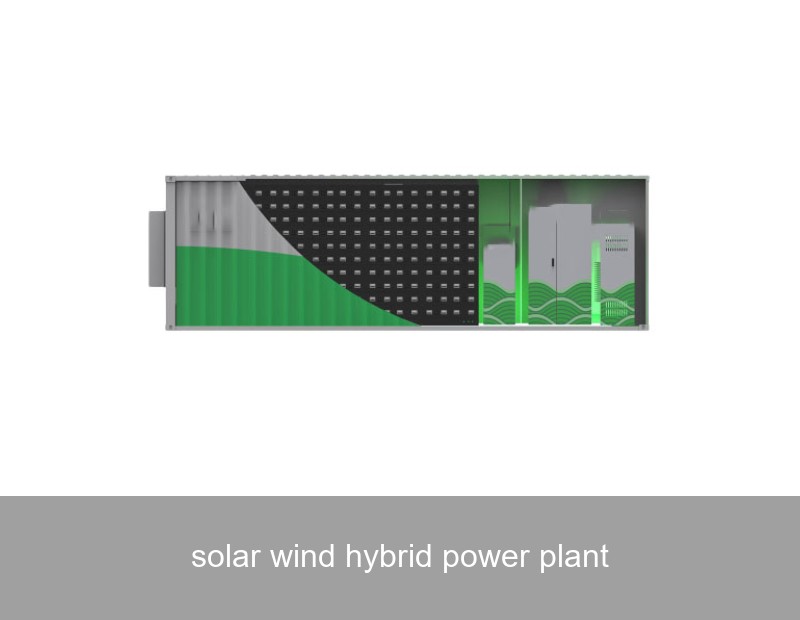
Imagine a power plant that harnesses the sun's intensity by day and captures the wind's force by night, creating a near-continuous stream of renewable energy. This isn't a futuristic concept; it's the reality of the modern solar wind hybrid power plant. By combining photovoltaic (PV) solar panels and wind turbines at a single site, these facilities leverage the complementary nature of both resources. On many days, when solar production dips in the evening, wind generation often picks up. This natural synergy is a game-changer, but it introduces a sophisticated challenge: how to manage and deliver this variable power as a stable, grid-ready commodity. The answer lies not just in generation, but in intelligent storage and control.
The Core Challenge: Bridging the Intermittency Gap
While the complementary generation profiles of solar and wind are advantageous, the combined output is still variable. A passing cloud front or a sudden lull in wind can still cause rapid ramps in power delivery. For grid operators, this unpredictability can strain infrastructure and necessitate keeping fossil-fuel plants on standby—undermining the very environmental and economic benefits of renewables.
Let's look at the data. A 2023 report by the National Renewable Energy Laboratory (NREL) highlighted that hybrid plants can increase the overall capacity factor (the ratio of actual output to maximum possible output) of a site by 5-15% compared to standalone solar or wind farms. However, the report also emphasizes that the value of this energy is maximized only when paired with storage, which can time-shift excess generation to periods of high demand or low natural production (NREL, 2023).
The Keystone Solution: Advanced Battery Energy Storage Systems (BESS)
This is where the solar wind hybrid power plant transforms from a good idea into a robust, dispatchable asset. A sophisticated Battery Energy Storage System (BESS) acts as the brain and buffer of the operation. It doesn't just store energy; it intelligently manages the flow between the solar array, the wind turbines, the grid, and the battery bank itself.
Key functions of the BESS in a hybrid plant include:
- Ramp Rate Control: Smoothing out sudden increases or decreases in power output to protect grid stability.
- Energy Time-Shifting (Arbitrage): Storing surplus energy when generation exceeds demand and injecting it when demand (and prices) are high.
- Frequency Regulation: Providing minute-to-minute adjustments to help maintain the grid's standard frequency (e.g., 60 Hz in the US, 50 Hz in Europe).
- Capacity Firming: Guaranteeing a specific power output level for a contracted duration, making the hybrid plant behave more like a traditional power plant.

Image: The visual synergy of a solar wind hybrid power plant. Source: Unsplash
Case Study in Action: The Greendale Hybrid Facility, Texas
The theoretical benefits are proven in practice. Consider the Greendale Hybrid Facility in West Texas, USA. This 150 MW facility combines 100 MW of solar PV with 50 MW of wind turbines. Initially, the plant faced challenges with curtailment (wasting energy) during peak generation hours and could not participate in valuable grid service markets.
In 2022, the operators integrated a 60 MW / 240 MWh battery storage system. The results within the first year of operation were compelling:
| Metric | Before BESS Integration | After BESS Integration |
|---|---|---|
| Curtailment Rate | ~18% of potential generation | Reduced to under 5% |
| Revenue Streams | Primarily bulk energy sales | Added frequency regulation & capacity firming contracts |
| Effective Capacity Factor | 34% | Increased to 41% |
This data illustrates a powerful truth: the storage system didn't just add cost; it added significant value, turning a variable resource into a predictable and versatile one. The solar wind hybrid power plant, with its integrated BESS, became a more profitable and grid-friendly citizen.
Engineering Synergy: Highjoule's Intelligent Storage Solutions
As a global leader in advanced energy storage since 2005, Highjoule specializes in providing the technological backbone that makes projects like Greendale successful. We understand that a solar wind hybrid power plant is more than the sum of its parts; it's a complex energy ecosystem requiring seamless integration.
Our approach centers on our HJ Sentinel energy management system (EMS) and our scalable GridMax BESS platforms. For a hybrid plant, the HJ Sentinel EMS performs the critical orchestration. Using predictive algorithms based on weather forecasts and market prices, it decides in real-time:
- Whether to send power directly to the grid or to the batteries.
- When to discharge to maximize revenue or provide grid support.
- How to optimally cycle the batteries to ensure longevity and performance.
Our GridMax BESS units, designed for utility and large commercial scale, offer the durability, safety (featuring multi-layer protection and thermal runaway prevention), and energy density required for demanding daily cycling in hybrid environments. Whether for a new greenfield solar wind hybrid power plant or a retrofit to an existing facility, Highjoule's solutions are engineered to unlock the full economic and operational potential.

Image: Advanced control systems are vital for managing hybrid plants. Source: Unsplash
Technical Considerations for a Robust Hybrid System
Designing an effective hybrid plant goes beyond simply connecting components. Key technical considerations include:
- DC vs. AC Coupling: Should the solar, wind, and storage be connected on the DC side (before the inverter) or the AC side (after)? AC-coupled systems, often favored for retrofits, offer more flexibility, while DC-coupled designs can be more efficient for new builds.
- Technology Agnosticism: A superior EMS like Highjoule's HJ Sentinel must communicate flawlessly with inverters, turbines, and SCADA systems from various manufacturers, ensuring a future-proof investment.
- Cycling Profile & Degradation: The battery's daily charge/discharge pattern must be modeled accurately. Highjoule's battery analytics ensure optimal operation to meet performance guarantees over the system's 15-20 year lifespan.
The Future is Hybrid: What's Your Next Move?
The trend is clear. From the sun-drenched plains of Southern Europe to the windy coasts of the North Sea and the diverse climates of the United States, the solar wind hybrid power plant model is gaining rapid traction. It represents a mature, logical step in the evolution of renewable energy—maximizing infrastructure use, land, and grid connection points.
With supportive policies like the EU's Green Deal and the investment tax credits for standalone storage in the US Inflation Reduction Act, the economic case for integrating storage with hybrid generation has never been stronger (European Commission).
The question for energy developers, utilities, and large energy consumers is no longer if hybrid plants will become the norm, but how to implement them most effectively. The differentiator for success will be the intelligence of the storage and control system at its heart.
Is your organization evaluating how to enhance an existing renewable asset or plan a new, resilient, and revenue-maximizing solar wind hybrid power plant? What specific grid challenge or market opportunity are you looking to address with your next project?
 Inquiry
 Online Chat