


Solar Technologies in Canada: A Bright Future Powered by Innovation and Storage
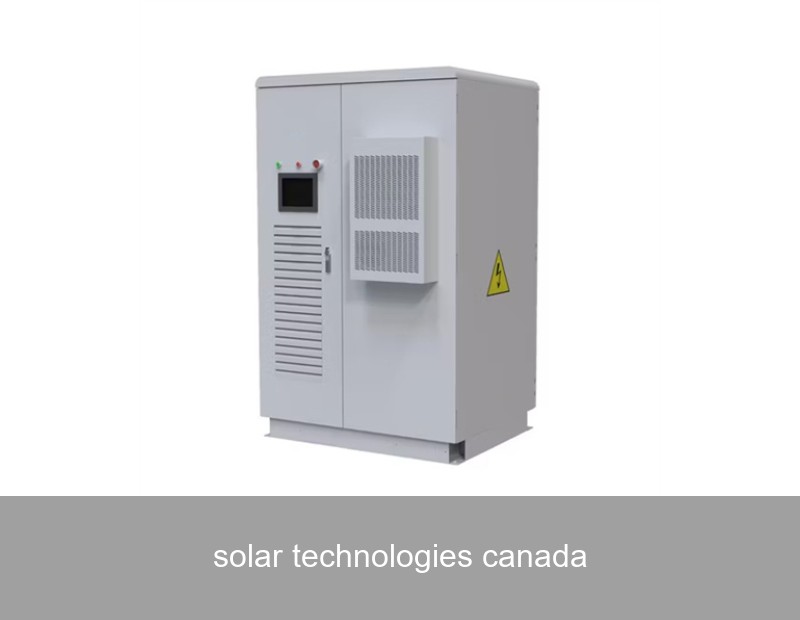
When you think of Canada, vast landscapes and long winters might come to mind. But here's something that might surprise you: Canada is experiencing a solar revolution. From the sunny prairies of Alberta to the coastal communities of Nova Scotia, solar technologies in Canada are rapidly evolving, moving beyond simple rooftop panels to become a cornerstone of a resilient, clean energy grid. However, the true potential of Canadian solar isn't just about capturing the sun's energy—it's about storing it intelligently for when it's needed most. This is where the synergy between advanced solar technologies and cutting-edge energy storage systems, like those from global leaders such as Highjoule, is writing the next chapter for Canada's energy independence.
Table of Contents
The Canadian Solar Landscape: More Than Just Snow
Contrary to popular belief, many parts of Canada receive abundant solar irradiation. Southern Alberta, for instance, receives solar energy comparable to major solar markets like Germany. The driving forces behind the growth of solar technologies in Canada are multifaceted:
- Falling Costs: The price of solar photovoltaic (PV) modules has plummeted globally, making installations economically viable.
- Supportive Policies: Provincial programs like net-metering, federal initiatives like the Canada Greener Homes Grant, and clean energy targets are incentivizing adoption.
- Corporate & Industrial Demand: Businesses are increasingly turning to solar to lock in energy costs, reduce carbon footprints, and enhance sustainability credentials.
Yet, the intermittent nature of solar power—peaking at midday and dropping to zero at night—poses a challenge for grid stability and maximizing self-consumption. This leads us to the critical piece of the puzzle.
The Storage Imperative: Why Solar Needs a Best Friend
Imagine a solar array on a Canadian commercial building. It produces a surplus of energy on a bright summer afternoon. Without storage, this excess is fed back to the grid, often at a lower rate. Then, in the evening when the sun sets and energy prices spike, the building must buy power back. This cycle is inefficient and costly.
Energy Storage Systems (ESS) act as a buffer, capturing that midday surplus and releasing it during peak demand. The benefits are profound:
| Challenge | Solution with Solar + Storage |
|---|---|
| Solar Intermittency | Provides a steady, dispatchable power supply, day and night. |
| High Peak Demand Charges | Discharges stored energy during peak times, slashing utility bills. |
| Grid Congestion & Outages | Enables backup power and grid services, enhancing resilience. |
For Canadian homeowners, this means true energy independence during grid outages, especially in remote areas. For businesses, it translates directly to improved bottom lines and operational continuity.
Case Study: Alberta's Solar Surge & The Storage Solution
Alberta, with its deregulated electricity market and excellent solar resources, is a prime example. The province has seen utility-scale solar capacity skyrocket. However, the Alberta Electric System Operator (AESO) has highlighted the need for storage to manage the variability of renewables and ensure grid reliability [AESO].
Consider a real-world application: A mid-sized agricultural processing plant in Southern Alberta installed a 2 MW solar farm. While it reduced their daytime energy costs, they still faced significant demand charges and had no backup power. By integrating a 2.5 MWh battery energy storage system, they achieved:
- 40% reduction in monthly peak demand charges.
- Ability to shift over 85% of their solar generation for use during evening operational hours.
- Critical process backup for up to 4 hours, protecting against spoilage during grid interruptions.

Image Source: Unsplash - Representative image of utility-scale solar in a Canadian context.
This case underscores a key insight: The value of solar technologies in Canada multiplies when paired with intelligent storage. It's not just about generating clean energy; it's about managing it with precision.
Highjoule's Role in Empowering the Canadian Market
This is precisely where Highjoule's expertise becomes vital. As a global leader in advanced energy storage solutions since 2005, Highjoule understands the unique demands of the Canadian climate and energy market. Our systems are engineered for performance, safety, and longevity, even in challenging conditions.
For Canadian commercial and industrial clients looking to maximize their solar investment, Highjoule offers:
- Intelligent Commercial & Industrial (C&I) ESS: Our scalable, containerized or modular systems are designed to seamlessly integrate with new or existing solar installations. They feature advanced battery management systems (BMS) and AI-driven energy management software (EMS) to optimize for cost savings, peak shaving, and grid services.
- Residential Energy Storage: Our sleek, high-capacity home battery systems allow homeowners to store their solar production, secure their homes against outages, and reduce reliance on the grid.
- Microgrid Solutions: For remote communities, industrial sites, or campuses, Highjoule designs and deploys turnkey solar-plus-storage microgrids. These systems provide reliable, 24/7 clean power, reducing diesel dependency and enhancing energy sovereignty—a particularly relevant solution for Canada's many off-grid and northern communities.

Image Source: Unsplash - Representative image of a modern Battery Energy Storage System.
By choosing a partner like Highjoule, Canadian businesses and communities aren't just buying hardware; they're investing in a smart, future-proof energy infrastructure that ensures their solar assets deliver the highest possible return—both financially and environmentally.
Future Trends: What's Next for Solar in Canada?
The trajectory for solar technologies in Canada is pointed sharply upward, and storage is the co-pilot. We're seeing exciting trends:
- Virtual Power Plants (VPPs): Networks of distributed home solar and storage systems, aggregated to act as a single power plant, providing grid stability and new revenue streams for homeowners.
- Hybrid Renewable Systems: Combining solar, wind, and storage to create more consistent and reliable clean energy generation profiles.
- Advanced Battery Chemistries: Research into solid-state and other next-generation batteries promises even higher density, safety, and performance in cold climates, a key area for Canadian innovation.
The integration of renewables is a complex, grid-wide endeavor, as noted by the International Energy Agency in their renewables reports [IEA Renewables 2023]. Canada is uniquely positioned to become a global exemplar of how to build a resilient, clean grid in a northern climate.
A Final Thought for Canadian Energy Decision-Makers
As you evaluate your path to solar, ask yourself this: Is your goal merely to generate green energy, or is it to achieve true energy resilience and financial optimization? The answer to that question will define the technology partner you choose. With the Canadian government's ambitious net-zero targets [Government of Canada Net-Zero], the time to build a smarter, more integrated system is now.
What specific energy challenge—be it soaring demand charges, reliability concerns, or a corporate sustainability target—could a tailored solar-plus-storage solution from an experienced provider solve for your operation?
 Inquiry
 Online Chat