


Solar System Inverter Settings: The Key to Unlocking Your System's True Potential
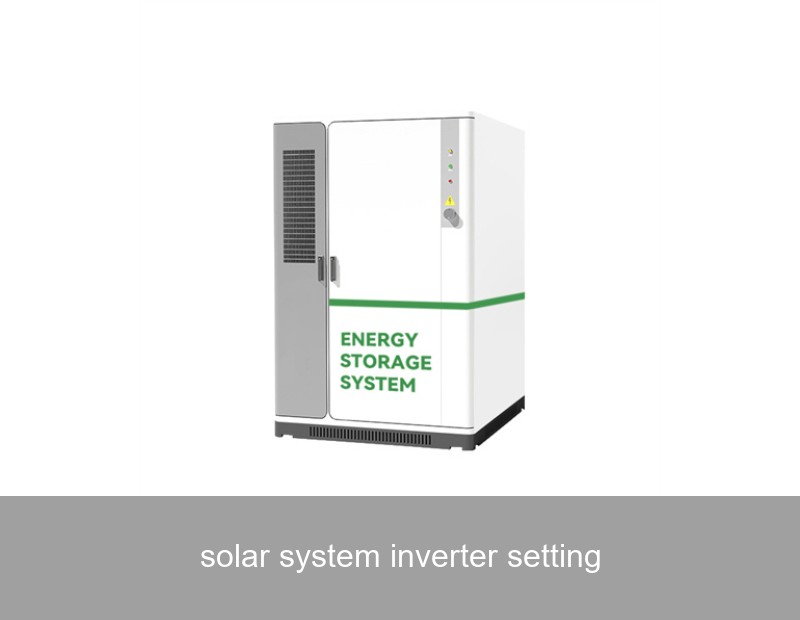
You've made the smart investment in solar panels. You see them gleaming on your roof, silently capturing the sun's energy. But are you truly getting the most out of your system? The surprising truth is that the performance and health of your entire solar array hinge on a component you rarely see and settings you might not understand: the solar system inverter setting. Think of your inverter as the brain of your solar power system. And just like any sophisticated piece of technology, how you configure its brain—its settings—determines whether it operates like a champion or an underperformer. Let's dive into why these settings are crucial and how optimizing them can significantly boost your energy independence and return on investment.
What Are Solar Inverter Settings, Really?
Your solar inverter's primary job is to convert the direct current (DC) electricity from your panels into the alternating current (AC) that powers your home and feeds the grid. But modern inverters are far more than simple converters. They are intelligent gatekeepers, and their settings are the rulebook they operate by. These parameters govern everything from voltage and frequency limits to how the system responds to grid disturbances or manages battery storage. Incorrect settings can lead to reduced efficiency, frequent nuisance shutdowns, or even safety hazards. Properly calibrated settings, however, ensure your system operates safely, complies with local grid codes, and harvests every possible kilowatt-hour from the sun.
Critical Settings for Safety, Performance, and Profit
While inverter interfaces vary, several universal settings are paramount. Let's break them down:
- Grid Profile/Country Standard: This is the most crucial setting. It configures the inverter to match the specific voltage, frequency, and safety requirements of your local utility grid (e.g., EN 50549 for Europe, UL 1741 SA for the USA). A mismatch here can cause immediate disconnection.
- Power Limitation: Sometimes, you may need to cap your inverter's output due to grid connection agreements or transformer limitations. Properly setting this ensures compliance without sacrificing necessary production.
- Start-up and Shutdown Voltages: These determine at what DC voltage from the panels the inverter starts working in the morning and shuts down at night. Optimizing these can extend daily production windows.
- Battery Charge/Discharge Parameters (for hybrid systems): This is where sophistication skyrockets. Settings here control when to charge from solar vs. grid, discharge priorities (power home vs. peak shaving), and depth of discharge to maximize battery lifespan.

Image Source: Unsplash - A modern inverter interface where critical settings are configured.
The Data Difference: How Settings Impact Your Bottom Line
Let's talk numbers. A study by the National Renewable Energy Laboratory (NREL) highlighted that improper configuration and commissioning, including inverter settings, can lead to system underperformance of 5-15% annually. For a typical 10 kW system in Southern Europe, that's a loss of 700-2,100 kWh per year. At current electricity prices, that's a significant amount of money left on the table—or rather, on your roof, unused.
Case Study: A Real-World Optimization in Germany
Consider a commercial bakery in Bavaria with a 100 kWp solar array and a 50 kWh battery system. The owner complained that despite ample sunshine, their grid electricity bills remained high, and the battery seemed to discharge erratically.
An audit revealed the issue: the inverter settings were generic. The battery was set to charge primarily from the grid at night (on a low, but not zero, tariff) and discharge evenly throughout the day. The system was not aligned with the bakery's actual load profile, which had massive energy spikes during early morning baking hours.
The Solution & Result: The settings were reconfigured using a smart, load-profile-based strategy:
- Battery charge priority shifted to mid-day solar excess.
- Discharge was scheduled aggressively for the 5 AM - 9 AM peak baking window.
- Grid feed-in power was dynamically limited during discharge to avoid unnecessary export.
Beyond the Basics: Advanced Settings for Modern Systems
As we move towards smarter grids, inverter settings are evolving from static parameters to dynamic tools:
| Advanced Function | Setting Impact | Benefit |
|---|---|---|
| Frequency-Watt Response | Controls how fast power output is reduced if grid frequency rises. | Grid stability, compliance with new regulations, potential revenue from grid services. |
| Voltage-Var Control | Adjusts reactive power (VAR) output to help manage local grid voltage. | Prevents over-voltage shutdowns, allows more solar on the same grid infrastructure. |
| Time-of-Use (TOU) Profiles | Programs battery charge/discharge around variable electricity rates. | Maximizes bill savings by discharging during highest rate periods. |
The Highjoule Approach: Intelligent Inverter Management
At Highjoule, we understand that managing these complex settings shouldn't be a full-time job for system owners. Since 2005, we've integrated this intelligence directly into our products. Our HI-Series Hybrid Inverters and Energy Management Gateway (EMG) are designed to simplify optimization.
Instead of manual, static settings, our systems use AI-driven algorithms that continuously analyze your energy production, consumption patterns, weather forecasts, and even real-time grid signals. The system then automatically adjusts key parameters—like battery charge cycles and grid interaction—to maximize your economics and system health. For our commercial and microgrid clients, this means our platform handles the complex dance of solar system inverter setting across multiple units, ensuring the entire asset performs as one harmonious, revenue-optimizing system. We provide the brain, so you reap the rewards without the complexity.

Image Source: Unsplash - Representative dashboard similar to Highjoule's monitoring platform.
Your Next Step Towards Optimal Power
The journey to optimal solar performance begins with understanding the heart of your system. Whether you're a homeowner with a new installation, a business owner with an underperforming array, or a developer planning a microgrid, the principles are the same: your inverter settings are a powerful lever for value.
So, here's a question to ponder: When was the last time you, or your installer, conducted a full review of your inverter's configuration to ensure it's perfectly aligned with your current energy goals and the latest grid requirements?
 Inquiry
 Online Chat