


Powering the Future: Why an Industrial Solar System is a Strategic Imperative
Imagine a manufacturing plant humming with activity, its production lines powered not by the volatile grid but by the quiet, consistent energy of the sun. This isn't a distant utopia; it's a present-day reality for forward-thinking industries worldwide. An industrial solar system is no longer just a "green" statement—it's a core component of strategic energy management, directly impacting operational resilience and the bottom line. For facility managers and business leaders in Europe and the US, the question has shifted from *if* to *how* to integrate solar power effectively. This is where pairing high-efficiency photovoltaics with intelligent energy storage becomes the game-changer, a synergy that companies like Highjoule have been pioneering since 2005.
Table of Contents
- The Phenomenon: Industry's Energy Crossroads
- The Data: More Than Just Sunshine and Savings
- The Case Study: A German Manufacturing Blueprint
- The Solution: Beyond Panels - The Integrated System
- Highjoule's Role: Your Partner in Intelligent Industrial Energy
- Making It Work: Key Considerations for Implementation
The Phenomenon: Industry's Energy Crossroads
Industrial operations are energy-intensive by nature. They face a triple challenge: skyrocketing and unpredictable electricity costs, increasing pressure to meet stringent corporate sustainability targets, and the growing risk of grid instability. Relying solely on the traditional grid means your production costs are tied to fossil fuel markets and your operational continuity is at the mercy of external infrastructure. This volatility creates immense financial and planning uncertainty. An on-site solar system for industry acts as a foundational energy asset, providing a measure of independence. But the real paradigm shift occurs when you view solar not as a standalone source, but as the generation pillar of a self-optimizing microgrid.

Modern industrial facilities are ideal candidates for large-scale solar installations, turning unused roof and land into power generators.
The Data: More Than Just Sunshine and Savings
Let's talk numbers. According to the International Renewable Energy Agency (IRENA), solar PV is consistently the cheapest source of electricity in history for much of the world. For an industrial user, the calculus is compelling:
- Cost Reduction: Industrial solar systems can reduce energy bills by 20-60%, depending on location, scale, and local incentives. The Levelized Cost of Energy (LCOE) is often below grid parity.
- Price Certainty: Once installed, the "fuel" (sunlight) is free for 25+ years, providing a long-term hedge against utility price inflation.
- Capacity & Demand Charges: In many regions, a significant portion of an industrial bill comes from peak demand charges. A strategic solar + storage system can shave these peaks, leading to substantial savings.
But the value extends beyond direct savings. A study by Deloitte highlights that companies with strong environmental, social, and governance (ESG) performance often see lower cost of capital and enhanced brand value—factors crucial for B2B relationships and market positioning.
The Case Study: A German Manufacturing Blueprint
Consider the real-world example of a mid-sized automotive parts supplier in Bavaria, Germany. Facing electricity costs of over €0.22/kWh and ambitious Scope 1 & 2 carbon reduction goals, they embarked on a comprehensive energy transformation in 2022.
The Challenge: Maximize self-consumption of solar energy across 24/5 manufacturing cycles, ensure power quality for sensitive machinery, and provide backup for critical loads.
- A 1.2 MW rooftop and carport solar PV array.
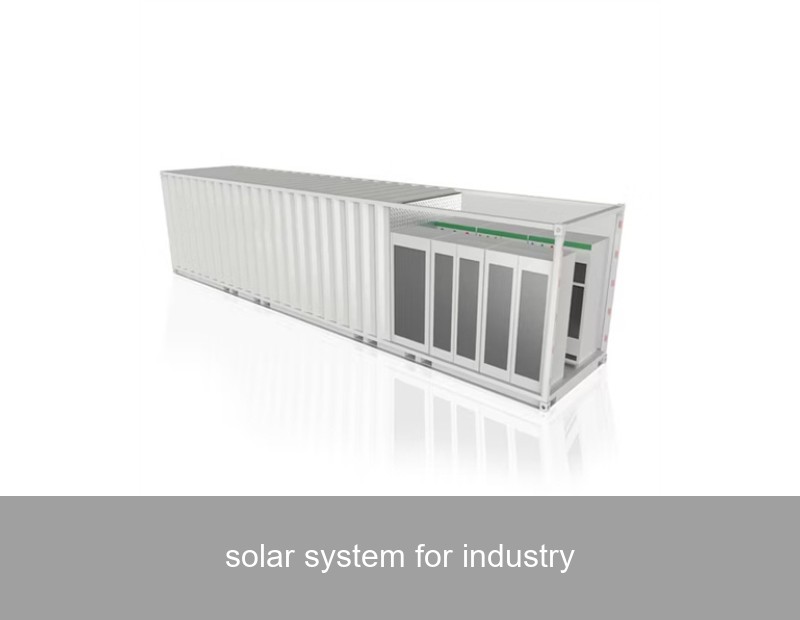
- A 500 kWh / 750 kVA containerized battery energy storage system (BESS) with advanced inverter technology.
- An intelligent energy management system (EMS) to dynamically control energy flow.
The Results (12-month post-installation):
| Metric | Outcome |
|---|---|
| Annual Energy Cost Savings | €285,000 |
| Peak Demand Charge Reduction | 40% |
| On-Site Renewable Consumption | 78% of solar generation |
| Annual CO2e Emissions Avoided | ~720 tonnes |
| ROI Period (with incentives) | < 5 years |
This case underscores that the highest ROI comes from a system designed not just to generate, but to intelligently manage and dispatch energy.
The Solution: Beyond Panels - The Integrated System
An effective solar system for industry is a triad: Generation (PV), Storage (BESS), and Intelligence (EMS).
1. High-Yield Solar PV
Industrial-grade solar modules and mounting systems are designed for durability and maximum energy yield over decades, even in challenging environments.
2. The Critical Role of Battery Storage
This is the linchpin. Solar generation peaks midday, while industrial loads may run around the clock. A battery storage system captures excess solar energy for use when the sun isn't shining. It also provides:
- Peak Shaving: Discharging the battery during short periods of highest grid demand to slash capacity charges.
- Backup Power: Seamlessly keeping critical operations online during grid outages.
- Grid Services: In some markets, systems can participate in demand response programs for additional revenue.
3. The Brain: Energy Management System
The EMS is the orchestrator. It uses weather forecasts, load profiles, and tariff structures to make real-time decisions on when to charge, discharge, or export, optimizing for cost and consumption every second of the day.

Intelligent control systems are crucial for maximizing the value of industrial solar and storage investments.
Highjoule's Role: Your Partner in Intelligent Industrial Energy
This is where Highjoule's nearly two decades of expertise comes into play. We don't just sell components; we deliver turnkey, intelligent power solutions tailored for scale and resilience. For your industrial solar and storage project, Highjoule provides:
- Highjoule H-Series BESS: Our containerized and modular battery storage solutions are engineered for industrial duty cycles. They feature industry-leading safety protocols, high round-trip efficiency, and seamless integration with any major PV inverter brand.
- Athena EMS Platform: Our proprietary energy management software is the brain of the operation. Athena uses AI-driven forecasting and optimization algorithms to ensure your system delivers the highest possible financial and operational returns.
- End-to-End Service: From initial feasibility analysis and financial modeling to system design, engineering, installation, and long-term performance monitoring, Highjoule acts as your single point of responsibility.
We understand the operational imperatives of industry—minimizing downtime, ensuring safety, and delivering predictable outcomes. Our systems are designed with these principles at their core.
Making It Work: Key Considerations for Implementation
Embarking on an industrial solar + storage project requires careful planning. Here are pivotal questions to address:
- Site Assessment: Do you have sufficient roof or land area with good solar exposure? What is the structural capacity?
- Load Analysis: What is your facility's precise energy consumption profile? Identifying baseload vs. peak load is critical for sizing storage correctly.
- Regulatory & Incentive Landscape: What are the local net metering, feed-in tariff, or investment tax credit (e.g., ITC in the US) rules? Programs like EU smart grid initiatives can influence design.
- Partner Selection: Choose a provider with proven experience in industrial projects, strong technical support, and a technology-agnostic approach to ensure the best fit for your needs.
The transition to industrial energy independence is a significant step, but it's also one of the most strategically sound investments a company can make today. It's about taking control, building resilience, and future-proofing your operations against an uncertain energy landscape.
What is the single biggest energy cost uncertainty your industrial operation is facing in the next fiscal year, and how could a predictable, on-site power generation and storage asset change your financial planning?
 Inquiry
 Online Chat