


Solar PV Battery Storage in the UK: A Complete Guide to Energy Independence
If you're a UK homeowner or business with solar panels, you've likely experienced a frustrating paradox: the sun shines brightest when you're often out or using the least power. You watch your meter spin backwards, exporting clean energy to the grid for a modest feed-in tariff, only to buy it back at a much higher price in the evening. This is the core challenge that solar PV battery storage in the UK is designed to solve. By adding a battery system, you can capture that surplus solar energy and use it on demand, slashing your energy bills and boosting your self-consumption dramatically. As a global leader in advanced energy storage since 2005, Highjoule is at the forefront of this intelligent energy revolution, providing smart, efficient solutions that make this independence a tangible reality.
Table of Contents
- The UK Energy Shift: Why Solar Alone Isn't Enough
- How Solar Battery Storage Works: Your Personal Power Bank
- Key Benefits of Adding Battery Storage in the UK
- Real-World Case Study: A UK Family's Journey to 85% Self-Consumption
- Choosing the Right System: What to Look For
- Highjoule's Tailored Solutions for the UK Market
- The Future is Bright: What's Your Next Step?
The UK Energy Shift: Why Solar Alone Isn't Enough
The UK has seen a remarkable surge in solar installations, driven by both environmental consciousness and rising electricity costs. However, the traditional solar setup has a fundamental timing mismatch. National Grid ESO data shows that peak solar generation occurs around midday, while peak domestic demand is typically between 4 pm and 7 pm. This means without storage, a typical household might only use 30-50% of the solar energy it generates directly, exporting the rest.
With the closure of the legacy Feed-in Tariff (FiT) scheme and the introduction of Smart Export Guarantee (SEG) rates—which often offer only 1-5p per kWh—the financial incentive to export has diminished. The real value now lies in using the energy you generate. This is where integrating a battery transforms your system from a daytime contributor to a round-the-clock asset.

Image Source: Unsplash - Representative image of UK solar installation.
How Solar Battery Storage Works: Your Personal Power Bank
Think of your new battery system as a sophisticated energy reservoir. Here's the simple cycle:
- Generation: Your solar panels convert sunlight into DC electricity.
- Conversion & Primary Use: An inverter converts it to AC power for your immediate home use.
- Storage: Any excess energy, instead of going to the grid, charges your battery.
- Discharge: When the sun sets or your consumption rises, the battery seamlessly discharges to power your home.
- Grid Interaction (Optimised): Only when the battery is full do you export. Only when the battery is depleted (and based on your settings) do you import from the grid, often at cheaper off-peak rates using advanced tariffs.
Modern systems like those from Highjoule are managed by intelligent energy management systems (EMS). This software brain learns your consumption patterns, weather forecasts, and tariff rates to optimise every kilowatt-hour for maximum savings and efficiency.
Key Benefits of Adding Battery Storage in the UK
Investing in solar PV battery storage in the UK delivers a compelling multi-layered return:
- Dramatically Lower Energy Bills: Increase your self-consumption of solar power from ~40% to 80% or more, drastically reducing grid imports.
- Energy Security & Resilience: During grid outages, certain systems (with backup functionality) can keep your lights on and essential appliances running.
- Maximise Smart Tariffs: Pair your battery with time-of-use tariffs (like Agile or Octopus Go). Charge your battery with cheap off-peak grid electricity and use it during expensive peak hours.
- Future-Proofing: Prepare for electric vehicle (EV) charging and further electrification of heating, managing the increased demand cost-effectively.
- Reduced Carbon Footprint: Maximise the use of your own clean energy, decreasing reliance on grid-mix fossil fuels.
Real-World Case Study: A UK Family's Journey to 85% Self-Consumption
Let's look at the tangible impact. The Davies family in Staffordshire had a 4kW solar array installed in 2019. While pleased with their reduced bills, they were frustrated by high evening energy use. In early 2023, they installed a Highjoule Harmony Home Battery System with a usable capacity of 13.5kWh.
| Metric | Before Battery (2022 Avg) | After Battery (First 6 Months, 2023) | Change |
|---|---|---|---|
| Solar Self-Consumption | 48% | 85% | +77% increase |
| Grid Import (Monthly Avg) | 620 kWh | 210 kWh | 66% reduction |
| Monthly Energy Cost* | £102 | £35 | £67 saved |
*Based on a blended electricity rate of 30p/kWh for import and a 4p/kWh SEG export. Savings increased further after switching to an off-peak tariff for occasional top-up charging.
"The system just manages itself," Mrs. Davies noted. "We hardly think about energy now, but our direct debit has been cut in half. Seeing the app where we power the house from the battery all evening is incredibly satisfying." This case exemplifies the real-life financial and practical benefits achievable today.
Choosing the Right System: What to Look For
Not all battery storage is created equal. Key considerations for UK homeowners include:
- Usable Capacity (kWh): Match this to your evening/night energy usage. 5-15kWh is common for families.
- Power Rating (kW): How much power it can deliver at once. Crucial for running multiple high-load appliances simultaneously.
- Depth of Discharge (DoD): A 95% DoD means you can use 95% of the battery's rated capacity without harming it.
- Efficiency (Round-trip): Look for >95%. Highjoule systems, for instance, achieve 97%, meaning minimal energy is lost in the storage process.
- Scalability & Integration: Can you add more batteries later? Does it integrate seamlessly with existing or new solar PV?
- Intelligent Software & Warranty: The brain of the system is critical. Also, seek a strong warranty (often 10+ years).

Image Source: Unsplash - Representative image of a modern home battery unit.
Highjoule's Tailored Solutions for the UK Market
With nearly two decades of global experience, Highjoule designs its systems with the specific challenges of the UK climate and energy market in mind. Our solutions are built for reliability, intelligence, and maximum return on investment.
For residential customers, the Highjoule Harmony Home System is a standout. It's a modular, AC-coupled battery system, meaning it can be easily retrofitted to existing solar installations. Its AI-driven energy manager not only optimises for self-consumption but can also be set to capitalise on dynamic energy tariffs, automatically charging when electricity is cheapest. With a compact design, high cycle life, and a user-friendly app that provides real-time insights and control, it empowers UK households to take complete charge of their energy.
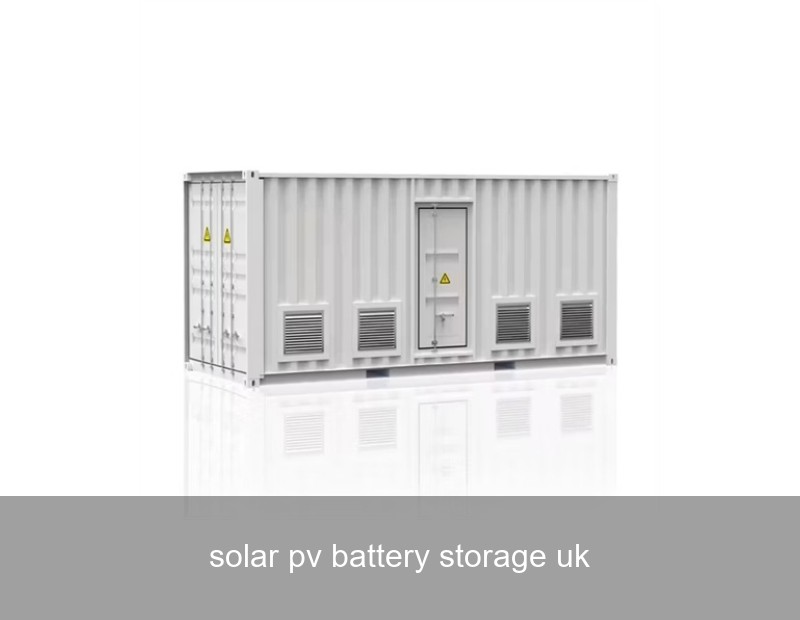
For commercial and industrial applications, Highjoule's GridMAX series offers scalable, containerised solutions. These systems help businesses manage peak demand charges (Triads and DUoS in the UK), provide backup power for critical operations, and participate in grid-balancing services, turning energy management into a revenue stream. Our expertise extends to microgrids, supporting communities and businesses in creating resilient, localised energy networks.
Highjoule's commitment is to provide more than just hardware; we deliver a comprehensive service from initial consultancy and system design through to installation support and long-term monitoring, ensuring your solar PV battery storage investment performs optimally for years to come.
The Future is Bright: What's Your Next Step?
The UK's energy landscape is evolving rapidly. With ambitions for a net-zero grid and the continued volatility of fossil fuel prices, the logic of generating, storing, and managing your own power has never been stronger. Technologies like vehicle-to-grid (V2G) and advanced local energy trading are on the horizon, and a battery system places you at the centre of this exciting transition.
Curious about what your specific savings could be? Or how a Highjoule system could be configured for your home's unique energy profile? The best way to start is with a clear picture of your current consumption and generation. Why not take a look at your last few energy bills and your solar inverter's data, and ask yourself: How much of my own clean energy am I currently sending away, and what would it mean for my wallet and my peace of mind to bring it under my own control?
For further reading on UK energy trends, you can refer to authoritative sources like National Grid ESO or the UK Government's Energy Trends reports.
 Inquiry
 Online Chat