


Your Solar Powered House Project: A Blueprint for Energy Independence and Savings
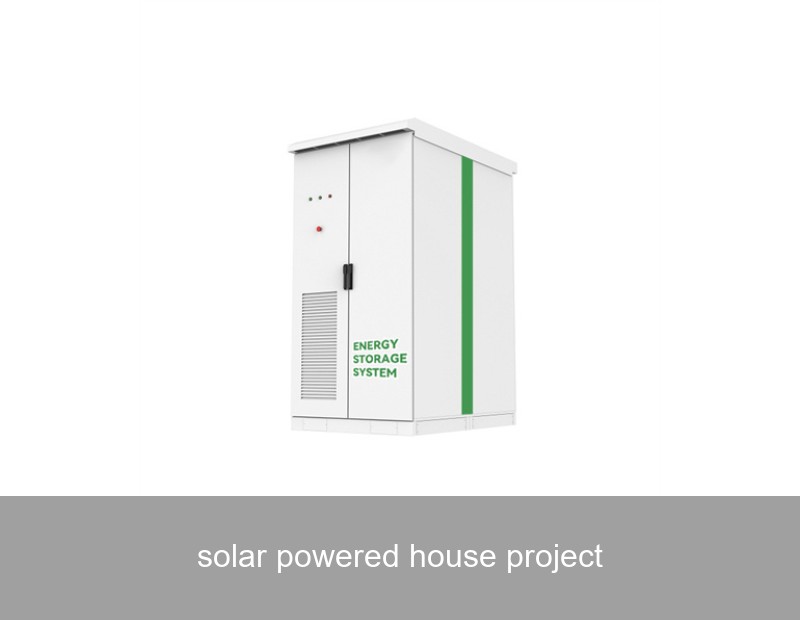
Imagine a home that not only shelters your family but also powers its life—quietly, cleanly, and independently. This is the promise of a modern solar powered house project. It's no longer a futuristic concept for the eco-elite; it's a practical, financially savvy home upgrade sweeping through neighborhoods in Europe and the United States. But what does it truly take to transform sunlight into reliable, everyday electricity for your home? As a Highjoule product technology expert, I've seen the landscape evolve from simple panel installations to sophisticated, intelligent energy ecosystems. Let's demystify the process and explore how a well-planned solar powered house project can be your ultimate step towards resilience and control over your energy future.
The Energy Independence Phenomenon: More Than Just Panels on a Roof
The drive towards solar homes isn't just about being green—it's a direct response to a clear economic and security phenomenon. Grid electricity prices have been on a rollercoaster, with the U.S. EIA reporting an average increase of over 4% annually for residential customers in the past decade, and European households facing even steeper hikes due to geopolitical pressures. At the same time, the cost of solar photovoltaic (PV) modules has plummeted by over 80% since 2010. This convergence creates a powerful financial incentive. But here's the catch many discover too late: generating solar energy is only half the battle. The sun doesn't shine on demand, which means your panels produce a surplus at noon but nothing at 8 PM when you need to cook dinner and watch TV. This mismatch between production and consumption is the central challenge a modern solar powered house project must solve.

Image: A modern energy-independent home. Source: Unsplash (Representative image)
Beyond Panels: The Storage Imperative
This is where the conversation gets exciting. To truly unlock independence, your project needs a brain and a battery. The old model of sending excess solar power back to the grid for a small credit (net metering) is becoming less favorable as utilities adapt. The new model is self-consumption: storing your daytime solar bounty for use anytime. The data is compelling. A typical home with solar panels alone might achieve 30-40% self-consumption—using 30-40% of the solar energy it produces directly. Pair those panels with a correctly sized battery energy storage system (BESS), and that figure can soar to 70% or even 90%.
Think of it this way: your solar panels are excellent earners, but without a savings account (the battery), you're forced to spend their income immediately or give it away. A battery storage system lets you bank that solar income for a rainy day, or more accurately, for a calm evening, a power outage, or a period of peak grid rates.
Real-World Case Study: The Freiburg Family Home
Let's ground this in reality. Consider the Müller family in Freiburg, Germany. In 2022, they embarked on a comprehensive solar powered house project for their 4-person household. Their system comprised:
- PV Array: 12 kWp rooftop system
- Storage: A 15 kWh Highjoule HES-I Series integrated storage unit
- Energy Management: Highjoule's HarmonyOS platform for intelligent control
The results after one full year were meticulously tracked:
| Metric | Result | Impact |
|---|---|---|
| Total Solar Generation | 11,800 kWh | -- |
| Grid Electricity Purchased | 1,150 kWh | 85% reduction vs. pre-solar |
| Self-Consumption Rate | 88% | Majority of solar used directly |
| Grid Independence During Outages | Full backup for >24h | Enhanced resilience |
| Annual Energy Cost Savings | €2,850 | Payback period significantly shortened |
This case highlights the transformative power of integrating generation with smart storage. The Highjoule system didn't just store energy; its AI-driven HarmonyOS learned the family's usage patterns, automatically prioritizing solar charging of the battery, powering home loads, and even scheduling high-consumption tasks like laundry during peak production times. You can explore more real-world data on solar adoption trends from authoritative sources like the International Energy Agency (IEA).
Key Components for a Successful Solar Powered House Project
A resilient solar home is a symphony of components working in concert. Understanding each is crucial for planning.
- High-Efficiency Solar Panels: The primary energy harvesters. Monocrystalline silicon panels are the current standard for residential use due to their high efficiency and longevity.
- Solar Inverters: The translators. They convert the direct current (DC) from your panels into the alternating current (AC) your home uses.
- Battery Storage System (The Game-Changer): This is the heart of modern energy independence. Lithium-ion phosphate (LFP) batteries, like those used in Highjoule systems, are now the preferred choice for safety, longevity (often over 6,000 cycles), and stable performance.
- Energy Management System (The Brain): Software that intelligently orchestrates energy flow—from panels, to battery, to home, to grid—maximizing savings and convenience.
- Backup Gateway (Optional but Recommended): A critical device that safely isolates your home from the grid during an outage, allowing your solar and battery system to form a "microgrid" and keep your lights on.
How Highjoule Powers Your Solar Vision: Seamless, Intelligent Integration
Since 2005, Highjoule has been at the forefront of solving the very energy mismatch challenge we've discussed. Our philosophy is that a solar powered house project should be simple, efficient, and utterly reliable for the homeowner. That's why we design our systems with integration in mind.
For residential projects like yours, the Highjoule HES-I (Home Energy System Integrated) Series is a prime example. It's not just a battery in a box. It's a pre-integrated unit that combines the battery, inverter, cooling system, and safety controls into one sleek, quiet cabinet. This "all-in-one" design simplifies installation, reduces points of failure, and is optimized to work flawlessly with virtually any new or existing solar array. For larger homes or those with electric vehicle charging, our modular HES-M Series allows you to scale storage capacity as your needs grow.
The true magic, however, is powered by Highjoule HarmonyOS. This proprietary energy management platform is the intelligence behind the hardware. It continuously analyzes weather forecasts, electricity rate schedules (in areas with time-of-use rates), and your historical consumption to make real-time decisions. Should it store energy now for the evening peak? Should it power the home directly and export a surplus to the grid? HarmonyOS handles it autonomously, ensuring you get the maximum economic and practical benefit from your investment without having to push a single button.

Image: An example of a clean, integrated home battery installation. Source: Unsplash (Representative image)
Planning Your Solar Powered House Project: A Practical Checklist
Ready to start your journey? Here’s a logical step-by-step approach to ensure success:
- Energy Audit: Understand your consumption. Review 12 months of utility bills to find your baseline kWh usage and pattern. Tools like the U.S. Department of Energy's Energy Saver guides can help with this assessment.
- Site Assessment: A professional will evaluate your roof's orientation, shading, and structural integrity to determine viable solar potential.
- System Sizing & Design: This is where expertise matters. Your installer (working with partners like Highjoule) will design a system that matches your energy goals—whether it's maximum bill savings, full backup power, or a specific ROI target.
- Financing & Incentives: Research is key! In the U.S., the federal Investment Tax Credit (ITC) now applies to solar and storage. In Europe, countries like Germany, Italy, and Spain offer various grants and tax benefits. These can dramatically reduce your net cost.
- Professional Installation & Commissioning: Choose an accredited installer. A proper commissioning process includes testing all safety functions, connecting the monitoring platform, and walking you through the system's operation.
So, as you contemplate taking control of your energy destiny, what specific energy goal is most compelling for your household—is it achieving near-total grid independence, securing essential backup power, or simply locking in a predictable, lower energy cost for the next 25 years?
 Inquiry
 Online Chat