


Solar Powered Homes for Sale: Your Gateway to Energy Independence and Value
Imagine a home that not only shelters your family but also powers your life, slashes your bills, and even earns you money. This isn't a futuristic dream; it's the reality of today's "solar powered homes for sale" market. Across Europe and the US, a quiet revolution is transforming rooftops and redefining property value. But what makes these homes more than just houses with panels? Let's explore the true power behind the listing.
Table of Contents
- The Phenomenon: More Than Just a Green Label
- The Data: Quantifying the Solar Advantage
- The Case Study: A German Home's Journey to Net-Positive
- The Missing Link: Why Storage is the True Game-Changer
- Highjoule's Solution: Intelligent Energy Independence
- Finding & Evaluating Your Solar Powered Home
- Is Your Future Home Waiting, Powered by the Sun?
The Phenomenon: More Than Just a Green Label
Gone are the days when solar panels were a niche, expensive add-on. Today, a "solar powered home for sale" represents a comprehensive, intelligent energy system. Buyers aren't just purchasing square footage; they're investing in a predictable, low-cost operational future. The appeal spans from the environmentally conscious in California to the pragmatically minded in Bavaria, all united by a desire for resilience against rising energy prices and grid instability.
However, a critical distinction exists: a home with solar panels is not the same as a truly energy-optimized home. The former simply offsets grid consumption during the day. The latter, often featuring integrated battery storage, operates as a personal microgrid, providing power day and night, during outages, and maximizing self-consumption of clean energy.
The Data: Quantifying the Solar Advantage
The numbers compellingly tell the story. According to research from the U.S. Department of Energy, solar homes can see significant value appreciation. A study by the Lawrence Berkeley National Laboratory found that homes with solar photovoltaic (PV) systems sold for a premium, effectively translating the future energy savings into present-day home value.
Let's break down the typical financial and energy profile of a well-equipped solar home:
| Feature | Impact | Benefit to Homeowner |
|---|---|---|
| 5-10 kW Solar PV System | Offsets 70-100% of daytime usage | Drastic reduction in electricity bills |
| High-Efficiency Panel Tier (e.g., Monocrystalline) | Higher energy yield per square meter | More power from limited roof space, better long-term performance |
| Smart Energy Monitoring | Real-time visibility into production & consumption | Enables behavioral savings and system health checks |
| Integrated Battery Storage | Increases self-consumption to 80%+ | Energy independence, backup power, time-of-use optimization |
The bottom line? The premium for a solar home often pays for itself, and then the system starts paying you.
The Case Study: A German Home's Journey to Net-Positive
Let's look at a real-world example from Freiburg, Germany. The Schmidt family purchased a 220m² single-family home with a 9.8 kWp solar array and a 12 kWh Highjoule Harmony Home battery system already installed.
- The Challenge: High energy costs (~€0.35/kWh) and the desire for a carbon-neutral lifestyle, coupled with occasional grid fluctuations in their suburban area.
- The Existing Setup: The previous owner had installed Highjoule's system for its seamless integration and advanced energy management software.
- The Data-Driven Result: In their first year, the Schmidts achieved an 86% self-consumption rate of their solar energy—far above the typical 30-40% for storage-less systems. Their annual electricity bill from the grid was reduced to a mere €185 for baseline and winter backup. During a regional grid outage in the fall, their home continued to operate normally for over 22 hours on battery power alone.
- The Value: When comparing similar homes in the area, their real estate agent confirmed the Highjoule-equipped system added a measurable premium and made the property stand out, selling in just 11 days on the market.

Image Source: Unsplash (Representative image of a modern energy-independent home)
The Missing Link: Why Storage is the True Game-Changer
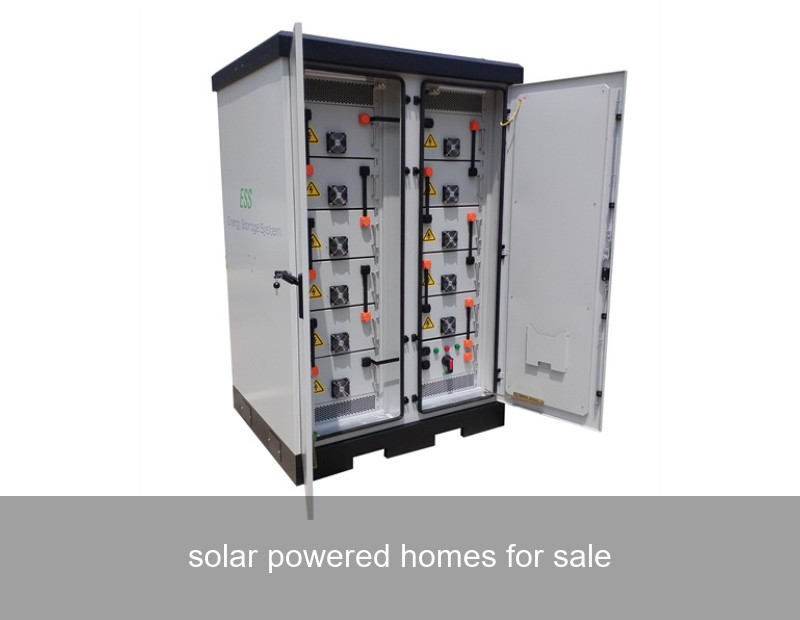
This case study highlights the pivotal role of storage. Without it, excess solar energy produced at midday is fed back to the grid, often at low feed-in tariffs. At night, you're back to buying expensive grid power. A battery system like the one from Highjoule breaks this cycle. It stores your surplus sunshine for use when you need it most—in the evening, during peak rate periods, or during an outage. This turns a solar home from a partial solution into a fortress of energy independence.
Highjoule's Solution: Intelligent Energy Independence
When evaluating a "solar powered home for sale," understanding the caliber of the technology is key. Highjoule, a global leader since 2005, designs systems that go beyond mere hardware. Our Harmony Home series for residential applications is an integrated ecosystem:
- High-Density Lithium-Ion Batteries: Compact, safe, and with a long cycle life, engineered for daily use over decades.
- Adaptive Power Conversion: Efficiently manages energy flow between solar, battery, home, and grid.
- Neuron Energy OS: The intelligent brain. This software platform uses weather forecasting, usage patterns, and grid price signals (where available) to autonomously optimize your energy flow for maximum savings and resilience. You can monitor and control everything from a simple smartphone app.
For homeowners looking to retrofit or for developers building the next generation of sustainable communities, Highjoule provides tailored solutions that ensure a solar home is a high-performance asset, not just a marketing point. Our systems are designed to comply with the strictest international standards (UL, IEC) for safety and reliability, a crucial factor for both European and North American markets.

Image Source: Unsplash (Representative image of a sleek home battery installation)
Finding & Evaluating Your Solar Powered Home
So, you're ready to shop. Here’s your checklist to assess a solar home's true potential:
1. System Interrogation
- Age & Health of Panels: Most premium panels have 25+ year performance warranties. Ask for the installation date and recent production logs.
- Storage, Storage, Storage: Is there a battery? What's its usable capacity (kWh) and power rating (kW)? Brands like Highjoule signify a focus on long-term system intelligence.
- Monitoring Access: Request access to the system's monitoring portal. A year's worth of production/consumption data is worth a thousand promises.
2. Financial & Legal Due Diligence
- Ownership: Are the panels owned outright, leased, or under a Power Purchase Agreement (PPA)? Owned systems add the most value and simplify transactions.
- Warranty Transfers: Ensure all equipment and installer workmanship warranties are transferable to you as the new homeowner.
- Local Incentives: Research remaining local feed-in tariffs, net metering policies, or tax credits that may transfer. The DSIRE database is a great resource for the US.
Is Your Future Home Waiting, Powered by the Sun?
The market for solar powered homes is evolving from a specialty segment to a mainstream expectation for the savvy buyer. It represents a fundamental shift: viewing a home not as a passive consumer of utilities, but as an active, intelligent hub of personal energy production. The right system—one with robust storage and intelligent management like Highjoule's solutions—doesn't just save you money; it grants peace of mind and true independence.
As you browse listings, will you see a solar array as just another feature, or will you recognize it as the heart of a modern, resilient, and valuable living space? What question will you ask first about the home's energy system?
 Inquiry
 Online Chat