


Solar Powered Auto Irrigation System: The Ultimate Guide to Sustainable Farming
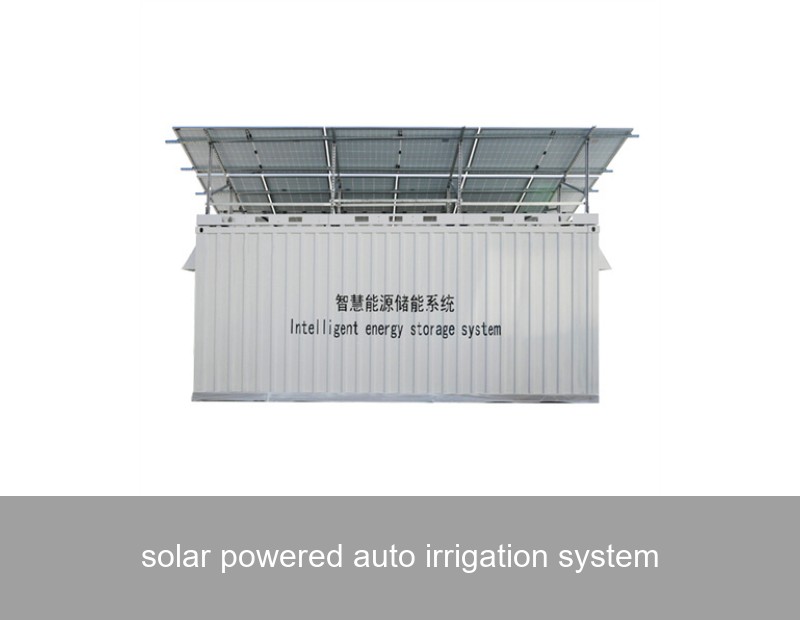
Imagine a farm where the irrigation system runs quietly, powered by the sun, watering crops precisely when needed, and slashing energy bills to zero. This isn't a vision of the distant future; it's the reality enabled by today's solar powered auto irrigation system. For farmers and land managers in Europe and the U.S., integrating solar energy with automated irrigation isn't just an eco-friendly choice—it's a powerful strategy for boosting resilience, cutting operational costs, and securing food production against volatile energy prices. As a product technology expert at Highjoule, a global leader in advanced energy storage since 2005, I've seen how the right power solution can transform agricultural operations. Let's explore how this technology works and why it's becoming indispensable for modern, sustainable agriculture.
Table of Contents
- The Water-Energy Nexus: A Costly Challenge
- How Solar Powered Auto Irrigation Systems Work
- Key Components of a Robust System
- Real-World Case Study: A Vineyard in California
- The Critical Role of Energy Storage
- Highjoule Solutions for Reliable Agricultural Power
- Getting Started with Your Solar Irrigation Project
The Water-Energy Nexus: A Costly Challenge
Traditional irrigation is energy-intensive. Whether it's pumping groundwater or moving water across fields, diesel generators and grid electricity represent a significant and fluctuating cost center. In the EU, agriculture accounts for around 4% of total final energy consumption, with irrigation being a major contributor. In drought-prone regions like California or Southern Europe, these costs can skyrocket. The phenomenon is clear: reliable water access requires reliable power, but grid dependence or fossil fuels create financial and environmental strain.
Data from the FAO highlights the growing pressure on agricultural resources. Meanwhile, the falling cost of photovoltaic (PV) panels—by over 80% in the last decade—presents a compelling solution. A solar powered auto irrigation system decouples water pumping from the grid, creating a self-sufficient loop where the sun fuels food growth. It's a classic PAS framework solution: the Problem of high energy costs and emissions, the Agitation of price volatility and grid unreliability in remote areas, and the Solution of a decentralized, solar-and-storage-powered irrigation setup.

Image source: Unsplash. Solar panels providing power for agricultural operations.
How Solar Powered Auto Irrigation Systems Work
At its core, the system is an elegant synergy of three technologies: solar generation, smart control, and fluid dynamics. Here's the step-by-step logic:
- Energy Capture: Solar PV panels convert sunlight into direct current (DC) electricity.
- Power Management: A solar inverter converts DC to alternating current (AC) to run standard pump motors. In DC-based systems, a solar charge controller manages the power directly.
- Automated Control: A programmable logic controller (PLC) or a dedicated irrigation timer, powered by the solar system, uses data from soil moisture sensors or weather forecasts to decide when and how much to irrigate.
- Water Delivery: The pump is activated, delivering water through drip lines or sprinklers with precision, minimizing waste.
This automation is key. It ensures water is applied at optimal times (e.g., early morning to reduce evaporation), directly addressing the "auto" in solar powered auto irrigation system. The system can be designed to run purely on real-time solar generation (with pumps varying speed based on available sunlight) or, for full reliability day and night, be integrated with battery storage.
Key Components of a Robust System
| Component | Function | Consideration |
|---|---|---|
| Solar PV Array | Primary power source | Size based on pump horsepower, daily water needs, and local solar irradiance. |
| Pump (Submersible/Surface) | Moves water from source to field | Match pump type and curve to total dynamic head (TDH) and flow requirements. |
| Inverter/Controller | Conditions solar power for the pump | Must be compatible with the pump motor type (AC or DC). |
| Irrigation Controller & Sensors | Brains of the automation | Soil moisture, humidity, and rainfall sensors enable true "smart" irrigation. |
| Battery Energy Storage System (BESS) | Stores excess solar energy | Enables irrigation at night/cloudy days, stabilizes power, and extends system lifespan. |
Real-World Case Study: A Vineyard in Sonoma, California
Let's move from theory to practice. A mid-sized vineyard in Sonoma County faced rising electricity costs and wanted to ensure irrigation for its delicate grapes during peak summer, even during Public Safety Power Shutoffs (PSPS) implemented to prevent wildfires. Their goal was to achieve water and energy independence for a critical 5-acre drip-irrigation block.
The Solution Deployed: A 25kW ground-mounted solar array was paired with a specialized solar variable frequency drive (VFD) to directly power a 15HP submersible pump. Crucially, the system was integrated with a 75kWh Highjoule CubeSeries battery storage unit and an energy management system. The automation was handled by a cloud-based irrigation platform using soil probe data.
The Results (Data after 2 Years):
- Energy Cost Savings: 100% reduction in grid electricity for irrigation, saving over $8,500 annually.
- Water Savings: Precision irrigation reduced water usage by an estimated 22% compared to the old timer-based schedule.
- Reliability: The system provided uninterrupted irrigation through multiple multi-day grid outages, potentially saving the annual crop worth $200,000+.
- ROI: The project, including storage, achieved payback in under 7 years, factoring in state incentives.
This case underscores that a solar powered auto irrigation system with integrated storage is not merely a cost but a strategic investment in business continuity.
The Critical Role of Energy Storage: Beyond the Daylight Hours
Many early solar irrigation systems lacked batteries. They worked only when the sun shone, which often doesn't align with optimal irrigation windows (like nighttime to reduce evaporation). This limitation is where advanced battery energy storage systems (BESS) become a game-changer. Storage acts as a "water tower" for energy—capturing the midday solar surplus and releasing it on demand.
For a farmer, this means:
- 24/7 Irrigation Readiness: Water crops any time without grid reliance.
- Pump Protection: Stable voltage from batteries prevents damage from solar power fluctuations.
- System Scalability: Storage allows you to right-size your solar array for seasonal needs, not just peak summer sun.

Image source: Unsplash. A modern containerized battery energy storage system.
Highjoule Solutions for Reliable Agricultural Power
This is where Highjoule's expertise directly intersects with sustainable agriculture. Since 2005, we've specialized in making renewable energy reliable. For a robust solar powered auto irrigation system, our CubeSeries and GridShield battery storage products are ideal. They are designed for commercial/industrial durability and can be seamlessly integrated with new or existing solar irrigation setups.
Our CubeSeries offers modular, scalable lithium iron phosphate (LFP) battery cabinets. Their high cycle life and safe chemistry are perfect for the daily charge-discharge cycles of irrigation. The integrated Highjoule Energy Operating System (EOS) can be configured to prioritize solar self-consumption, ensuring every possible kilowatt-hour from your panels goes first to charging the batteries and running the pump, creating a hyper-efficient loop.
For farms at the edge of the grid or building microgrids, our GridShield systems provide both backup power and advanced grid services. Imagine your irrigation storage also helping to stabilize the local community grid—a true model of distributed, sustainable infrastructure. Partnering with Highjoule means you're not just buying a battery; you're getting a holistic power management solution designed for critical applications like automated irrigation.
Getting Started with Your Solar Irrigation Project
Embarking on this transition requires careful planning. Here is a logical step ladder to follow:
- Audit: Precisely measure your current water needs (flow rate, total dynamic head) and energy consumption for pumping. Tools from the U.S. Department of Energy can help.
- Site Assessment: Evaluate solar resource (using tools like PVWatts), available space for PV panels, and proximity to water source and fields.
- System Design: Work with qualified integrators who understand both solar technology and irrigation hydraulics. Insist on including storage in your design from the start for full functionality.
- Financing & Incentives: Explore grants, tax credits (like the U.S. Investment Tax Credit), and low-interest green loans available in the EU and U.S. for agricultural renewable energy projects.
- Implementation & Monitoring: After installation, use the system's data monitoring (a key feature of Highjoule's EOS) to track performance, water savings, and energy independence in real-time.
The journey to a sun-powered farm is clearer than ever. With the right technology partnership, your irrigation system can become a pillar of resilience and profitability. What is the first step you will take to assess the potential of solar and storage for your water management needs?
 Inquiry
 Online Chat