


Optimizing Your Solar Power Plant Layout for Maximum Energy Yield and ROI
When we think of solar energy, the image of gleaming panels under the sun often comes to mind. But what truly separates a high-performing solar asset from an underperforming one? The answer often lies not just in the quality of the panels, but in the foundational solar power plant layout. A strategic, optimized layout is the silent engineer of your project's success, directly impacting energy production, long-term reliability, and ultimately, your return on investment. In this article, we'll explore why the layout of a solar power plant is a critical design phase and how modern technology is revolutionizing this process.
Table of Contents
- The Hidden Challenge: More Than Just Panels on a Field
- Key Elements of a High-Performance Solar Plant Layout
- The Data-Driven Layout: From Guesswork to Precision
- Case Study: A 50 MW Plant in Spain
- The Modern Layout Imperative: Integrating Battery Energy Storage (BESS)
- How Highjoule Elevates Solar Plant Design and Operation
- Looking Ahead: Is Your Solar Layout Ready for the Future Grid?
The Hidden Challenge: More Than Just Panels on a Field
Imagine two solar plants using identical panels and inverters, built on adjacent plots of land with similar sunshine. Yet, one consistently generates 5-10% more electricity annually. This discrepancy is rarely about equipment failure; it's typically a result of the initial solar farm layout design. Poor spacing leads to shading losses. Inefficient wiring increases resistance and energy loss. Suboptimal inverter placement raises maintenance costs. The layout decisions made on the drawing board cast a long shadow over the plant's 25+ year lifespan.

Image Source: Unsplash - A well-planned layout is visual and functional.
Key Elements of a High-Performance Solar Plant Layout
A sophisticated layout balances multiple competing factors. Let's break down the core components:
- Panel Orientation and Tilt: This is Solar Design 101. The azimuth (compass direction) and tilt angle are calculated to maximize annual irradiance capture for a specific location. In the Northern Hemisphere, panels typically face true south.
- Row Spacing and Shading Analysis: This is where engineering gets complex. Rows must be spaced to minimize inter-row shading, especially during low-sun winter months, while also minimizing land use. Advanced software simulates sun paths across the year to find the sweet spot.
- Electrical Architecture: How are panels grouped into strings? Where are combiner boxes, inverters, and transformers placed? An optimized solar power plant layout reduces cable lengths (lowering cost and power loss) and ensures voltage stays within safe, efficient limits.
- Topography and Site Constraints: The land itself dictates much of the layout. Slopes, drainage paths, soil type, and existing infrastructure all must be meticulously mapped and accommodated.
| Layout Factor | Poor Design Impact | Optimized Design Benefit |
|---|---|---|
| Row Spacing | Significant shading losses, reduced morning/evening generation | Up to 5% higher annual energy yield |
| Electrical Wiring | Higher resistive losses (>1.5%), increased capex on cables | Losses kept below 1%, lower capital expenditure |
| Inverter Placement | Longer O&M times, potential ventilation issues | Faster maintenance, better cooling, reduced downtime |
The Data-Driven Layout: From Guesswork to Precision
Gone are the days of relying solely on static rules of thumb. Today, the most successful layouts are born from a synergy of high-fidelity data and powerful simulation tools. Engineers use:
- LiDAR (Light Detection and Ranging) surveys to create precise 3D terrain models.
- Historical and satellite-based irradiance data from sources like NREL's National Solar Radiation Database.
- Advanced PVsyst or Helioscope software to run hourly energy yield simulations across the plant's lifetime, modeling every shadow, temperature effect, and wiring loss.
This data-centric approach transforms the solar farm layout design into a dynamic financial model, where adjusting a row angle directly shows its impact on the Levelized Cost of Energy (LCOE).
Case Study: Layout Optimization for a 50 MW Plant in Andalusia, Spain
Let's look at a real-world application. A developer was planning a 50 MW fixed-tilt plant in southern Spain. The initial, conventional layout used standard spacing ratios. Before breaking ground, the engineering team conducted a detailed optimization study.
Phenomenon: The site had a gentle, consistent south-facing slope. The initial design did not fully exploit this natural advantage.
Data & Analysis: Using granular terrain data, the team modeled a variable-row-spacing approach. Rows at the top (north) of the slope were placed slightly closer together, as the slope naturally reduced shading risk. Rows further down were spaced according to the optimized profile. Furthermore, they simulated different stringing configurations to match inverter voltage windows perfectly.
Result: The optimized solar power plant layout achieved a 3.7% increase in predicted annual energy production compared to the baseline, without adding a single extra panel. This translated to an estimated €2.1 million in additional revenue over the plant's first 10 years of operation, purely from intelligent design. The marginal increase in engineering time paid for itself hundreds of times over.
The Modern Layout Imperative: Integrating Battery Energy Storage (BESS)
Today, the conversation about layout of a solar power plant is incomplete without considering battery storage. Co-locating a Battery Energy Storage System (BESS) is no longer a futuristic concept; it's a strategic necessity for maximizing revenue in markets with variable electricity prices or for providing grid stability services.
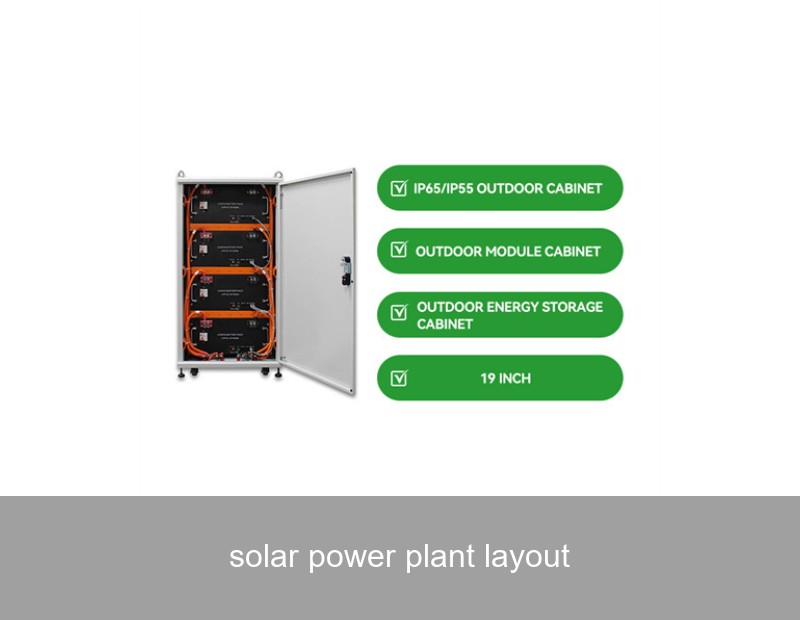
This adds a new layer to layout planning: Where do you place the battery containers? How do you route the DC and AC cabling between the solar field and the storage system to minimize losses? The electrical design must seamlessly integrate PV and storage inverters. This is where partnering with a provider that masters both domains becomes crucial.

Image Source: Unsplash - Solar and storage are a natural pairing.
How Highjoule Elevates Solar Plant Design and Operation
At Highjoule, we understand that the boundary between solar generation and smart storage is blurring. Our expertise isn't confined to one side of the meter. For developers and asset owners, this integrated perspective is invaluable from the earliest layout stages.
Our Highjoule HIQ Platform is an energy management system that can be modeled during the design phase. By simulating the combined operation of your PV array and our commercial & industrial BESS solutions, we can help optimize the entire system's footprint and electrical interface. For instance, our HIQ-Core Industrial Battery systems are designed for scalable, containerized deployment, making them easier to site within a constrained plant layout. Thinking about storage early avoids costly redesigns later and ensures your plant is built for profitability in today's dynamic energy markets, not yesterday's.
Furthermore, for microgrid or off-grid applications, the solar power plant layout is intrinsically tied to storage from day one. Highjoule's integrated control systems manage the complex dance between solar production, battery charging/discharging, and load demand, ensuring reliability and fuel savings. You can learn more about grid service opportunities from authoritative sources like the U.S. Department of Energy.
Looking Ahead: Is Your Solar Layout Ready for the Future Grid?
The energy landscape is shifting towards decentralization and flexibility. A solar plant built today may need to provide frequency regulation, participate in virtual power plants, or manage increased curtailment in the coming decade. The question for every developer and EPC is: Does your current solar farm layout design have the inherent flexibility and technological foundation to adapt to these future revenue streams? Have you designed the electrical infrastructure and left the physical space to seamlessly add storage or other grid-support assets?
We invite you to consider: What single change to your standard layout process could yield the most significant long-term value for your next project? Could it be a more detailed shading analysis, a storage-ready design, or a simulation that models 25 years of operational scenarios? The most profitable solar plants are those designed not just for the sun, but for the smart grid of tomorrow.
 Inquiry
 Online Chat