


Why Solar Power Companies in Egypt Are Leading a Global Energy Revolution
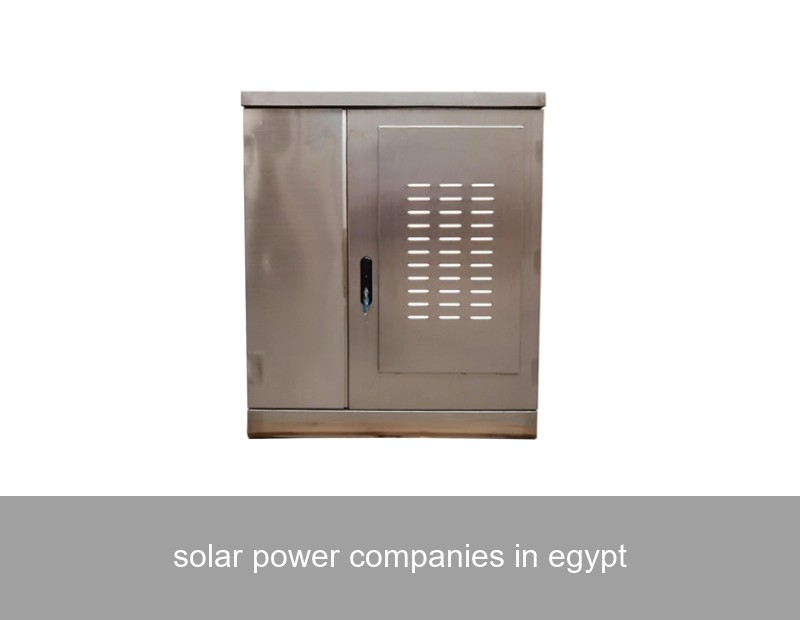
Picture a nation blessed with some of the most intense and consistent sunlight on the planet. Now, imagine that nation strategically harnessing this resource, not just for its own needs, but as a blueprint for a sustainable future. This is the reality unfolding in Egypt today. For global observers, investors, and energy enthusiasts, understanding the rise of solar power companies in Egypt offers critical insights into the future of renewable energy. It's a story of perfect geography meeting ambitious policy, creating a hotspot for innovation that is attracting worldwide attention. As a leader in advanced energy storage, Highjoule recognizes this dynamic landscape as a masterclass in integrating massive renewable potential with the grid stability that enables true energy independence.
Table of Contents
The Egyptian Sun: A Statistical Powerhouse
Let's start with the raw numbers, because they are staggering. Egypt's solar irradiance—the power received from the sun—is among the highest globally, with vast areas receiving over 2,000 kWh per square meter annually. To put that in perspective, that's nearly double the solar potential of most parts of Germany, a world leader in installed solar capacity. This isn't just good weather; it's a dense, consistent, and untapped energy stream. The government's "Integrated Sustainable Energy Strategy" targets 42% of the country's electricity from renewables by 2035, with solar playing the starring role. This clear policy direction has been the starting gun for a surge in both international and domestic solar power companies in Egypt, transforming arid land into power-generating assets.

But here's a question you might be asking: "If the sun is so reliable, why isn't the entire grid already solar-powered?" This leads us to the core technological challenge that every growing solar market faces.
Beyond Panels: The Critical Role of Energy Storage
The phenomenon is clear: the sun doesn't shine at night, and energy demand doesn't disappear. This creates the "duck curve"—a steep drop in solar generation in the evening just as homes and businesses need power most. For solar power companies in Egypt, and for the national grid, this intermittency is the primary hurdle to achieving even higher penetration of solar energy.
The data is unequivocal. A grid with high renewable penetration without storage faces instability, curtailment (wasting excess solar energy), and reliance on fossil-fuel peaker plants. This is where advanced Battery Energy Storage Systems (BESS) become the indispensable co-star to solar PV. Think of BESS not as a backup, but as an intelligent energy buffer. It:
- Stores Excess Daytime Energy: Captures surplus solar power at midday for use in the evening peak.
- Provides Grid Stability: Offers frequency regulation and voltage support, essential for a smooth-running grid.
- Enables Firm Capacity: Allows solar plants to dispatch power predictably, even after sunset, making them as reliable as traditional plants.
For commercial and industrial (C&I) entities in Egypt investing in solar, adding storage is the key to maximizing self-consumption, reducing demand charges, and ensuring operational resilience against grid fluctuations.
Case Study: The Benban Solar Park - A Data-Driven Success
No discussion of solar power companies in Egypt is complete without examining the landmark Benban Solar Park near Aswan. As one of the world's largest solar installations, with a total capacity of 1.8 Gigawatts (GW), it's a living laboratory for utility-scale solar.
But the real story isn't just its size. The park, developed by multiple international consortia, faced the classic challenge of integrating such a massive, intermittent resource into the national grid. The solution involved significant investment in grid infrastructure and, increasingly, discussions around incorporating large-scale storage. The park's success is measurable: it's estimated to offset over 2 million tons of CO2 emissions annually and powers hundreds of thousands of homes. However, industry analysts point out that the next phase of growth for projects like Benban will depend on pairing them with storage to unlock their full potential and reduce integration costs. A report by the International Energy Agency (IEA) highlights the growing global trend of solar-plus-storage as a cost-competitive and dispatchable resource.

Highjoule's Role in Empowering Solar Ambitions
This is where Highjoule's global expertise directly aligns with the needs of the Egyptian market. For over 18 years, we've specialized in designing intelligent, efficient, and sustainable energy storage solutions for precisely these scenarios. Whether it's a sprawling industrial facility near Cairo looking to slash energy costs or a remote microgrid in a developing region requiring reliable power, our technology provides the missing link.
Highjoule's H-Series Commercial & Industrial (C&I) BESS is engineered for the demands of large-scale solar integration. Its modular design allows for scalable power and energy capacity, making it an ideal partner for solar power companies in Egypt and end-users alike. Key features include:
| Feature | Benefit for Egyptian Solar Projects |
|---|---|
| Advanced Lithium-Ion Chemistry | High cycle life and efficiency, perfect for daily solar charge/discharge cycles in a hot climate. |
| Integrated Energy Management System (EMS) | Intelligently decides when to store, use, or sell solar energy based on weather forecasts and tariff structures. |
| Grid-Forming Capability | Can support isolated microgrids or provide black-start capabilities, crucial for industrial continuity. |
| Thermal Management System | Specifically designed to maintain optimal performance in high-ambient temperatures like those in Egypt. |
Furthermore, our Microgrid Solutions offer turnkey power independence for resorts, agricultural operations, or remote communities, combining solar PV, Highjoule storage, and backup generation into a seamless, resilient system. By partnering with local solar power companies in Egypt, Highjoule provides the technological backbone that transforms a solar installation from a simple energy saver into a strategic, revenue-generating, and resilient asset.
The Future: Challenges and Opportunities for Solar in Egypt
The path forward for Egypt's solar sector is bright but requires navigating several currents. Challenges include securing financing for capital-intensive storage projects, streamlining regulations for behind-the-meter C&I systems, and continuing to strengthen the grid. However, the opportunities are monumental. The falling global cost of both solar PV and battery storage (BloombergNEF reports consistent price declines) makes the economic case stronger every year.
Egypt's strategic location also positions it as a potential green hydrogen hub, using its abundant solar power to produce clean fuel for export—a process that is inherently dependent on large-scale, reliable renewable generation and storage. The vision extends beyond electricity to transforming the entire energy economy.

So, as we watch the evolution of solar power companies in Egypt, we're really observing a global test case. Can a nation with abundant resources, clear vision, and the right technology leapfrog to a sustainable, secure, and prosperous energy future? The evidence from Benban and the growing C&I market suggests a resounding "yes."
What unique energy challenge does your business or community face that a combination of solar and intelligent storage could solve?
 Inquiry
 Online Chat