


Understanding Solar Panel Prices in KSA: A Smart Investor's Guide
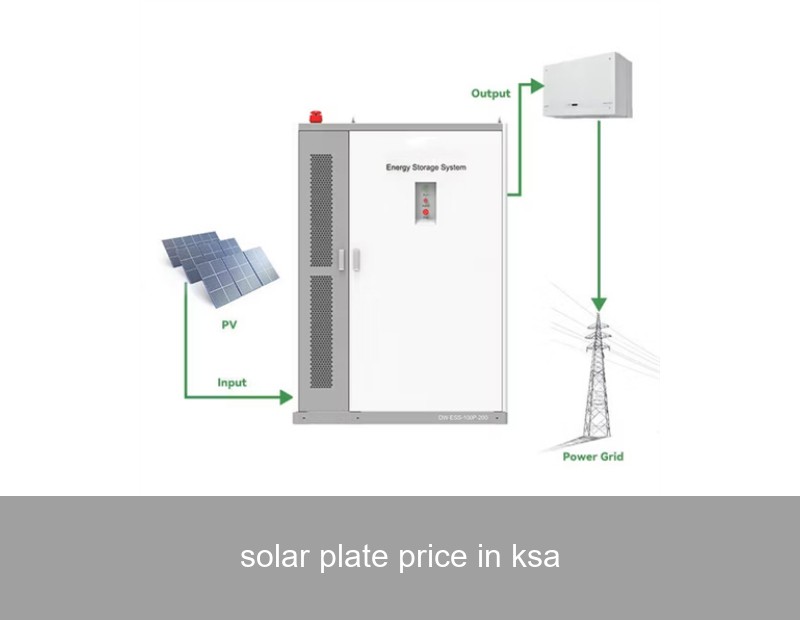
If you're exploring solar energy in the Kingdom of Saudi Arabia, the question of "solar plate price in KSA" is likely at the forefront of your mind. It's a logical starting point, but focusing solely on the per-panel cost can be a misleading metric. The true value of a solar investment lies not in the cheapest upfront price, but in the long-term performance, reliability, and total energy yield of the entire system. In a market like KSA, blessed with abundant sunshine but also demanding harsh climatic conditions, the choice of technology—particularly the battery storage system that captures and manages that solar power—is what ultimately defines your return on investment. This guide will unpack the factors influencing solar costs and demonstrate why an integrated, high-performance energy solution is key to maximizing your savings and energy independence.
Table of Contents
- The Real Breakdown of Solar System Costs in Saudi Arabia
- Why Battery Storage is the Critical (and Often Overlooked) Component
- Engineered for Extremes: Highjoule's Integrated Solutions for KSA
- Case Study: A Riyadh Commercial Complex's Journey to Energy Resilience
- Beyond the Price Tag: Framing Your Solar Purchase as a Future-Focused Investment
The Real Breakdown of Solar System Costs in Saudi Arabia
When you receive a quote for a solar photovoltaic (PV) system, the "solar plate price" or module cost is typically just one piece of the puzzle. For a comprehensive view, let's examine the typical cost distribution for a commercial or industrial-scale system in the Saudi market:
| System Component | Approximate Cost Share | Key Considerations for KSA |
|---|---|---|
| Solar PV Modules ("Plates") | 25-35% | Efficiency degradation rates in high heat, dust resilience, warranty terms. |
| Power Inverters | 15-20% | Conversion efficiency, reliability in temperature swings, grid-compliance features. |
| Battery Energy Storage System (BESS) | 25-40% | Cycle life, depth of discharge, thermal management, safety certifications. |
| Balance of System (Mounting, Cabling, etc.) | 10-15% | Quality of racking for wind resistance, durability of connectors. |
| Installation, Design, & Soft Costs | 10-20% | Engineering expertise, permitting, O&M planning. |
As the table illustrates, the battery storage system represents a significant and value-defining portion of the investment, especially for systems designed to provide backup power or maximize self-consumption of solar energy. Choosing a low-cost, low-quality BESS can jeopardize the entire system's financial and operational goals.
Why Battery Storage is the Critical (and Often Overlooked) Component
Think of it this way: your solar panels are excellent at generating power when the sun shines. But what about the evening peak demand periods? Or during rare but critical grid interruptions? This is where your battery system earns its keep. In KSA's environment, not all batteries are created equal. Standard consumer-grade batteries can suffer from:
- Accelerated Aging: Prolonged exposure to high ambient temperatures drastically reduces battery lifespan and capacity.
- Inefficiency: Poor thermal management leads to energy loss as heat, meaning you store less of the solar energy you paid to capture.
- Safety Risks: Inadequate cooling and battery management systems can increase the risk of thermal runaway in extreme heat.
Therefore, the question shifts from "What is the solar plate price?" to "What is the levelized cost of stored energy over my system's lifetime?" This metric factors in longevity, efficiency, and maintenance—and here, premium technology like that from Highjoule shines.

Image Source: Unsplash (Representative image of advanced battery technology)
Engineered for Extremes: Highjoule's Integrated Solutions for KSA
At Highjoule, with nearly two decades of experience as a global leader in advanced energy storage, we design our systems with precisely these challenges in mind. Our approach moves beyond simply supplying components to offering intelligent, integrated power solutions. For the Saudi market, our HPS Series (High-Performance Storage) and GridSynergy Microgrid Controllers are particularly relevant.
Our HPS battery systems feature industry-leading liquid cooling technology. Unlike passive air-cooled systems, this actively maintains an optimal temperature range for the lithium-ion cells, even when external temperatures soar above 50°C (122°F). The result? Extended cycle life, consistent performance year-round, and enhanced safety. When paired with our smart energy management system, it allows facility managers to seamlessly shift solar energy to the most valuable times of day, avoid peak demand charges, and ensure critical operations never lose power.
For larger commercial, industrial, or microgrid applications, Highjoule provides end-to-end project support—from initial feasibility and design to commissioning and long-term performance monitoring. We understand that a successful project in KSA isn't just about hardware; it's about delivering guaranteed resilience and a predictable financial return.
Case Study: A Riyadh Commercial Complex's Journey to Energy Resilience
Let's look at a real-world application. A large mixed-use commercial complex in central Riyadh was facing two primary issues: high utility costs due to peak demand tariffs and concerns about power quality affecting sensitive equipment. Their goal was to reduce operational expenses and gain backup power capability without interrupting daily business.
The Solution: A turnkey system featuring a 1.2 MWp solar PV array integrated with a 750 kWh Highjoule HPS battery storage system and a GridSynergy controller.
The Data-Driven Outcome (12 months post-installation):
- Demand Charge Reduction: The system's intelligent peak shaving capability reduced the facility's peak grid draw by 40%, directly slashing a major portion of the electricity bill.
- Self-Consumption Optimization: The system increased the direct use of onsite solar generation from an estimated 35% to over 80%, minimizing the export of low-value energy.
- Reliability: The complex has experienced several brief grid disturbances without any interruption to tenant operations, as the Highjoule system provided seamless islanding and transition.
- Performance in Heat: Data logs confirmed the HPS system maintained its rated capacity and round-trip efficiency throughout the summer months, with internal cell temperatures staying within a 5°C band of the set point.
This case demonstrates that the initial investment in a robust, smart storage solution directly translated into measurable financial savings and operational benefits, far outweighing the consideration of any single component's price. You can explore more global data on storage value streams from authoritative sources like the International Renewable Energy Agency (IRENA) or the U.S. National Renewable Energy Laboratory (NREL).

Image Source: Unsplash (Representative image of energy system monitoring)
Beyond the Price Tag: Framing Your Solar Purchase as a Future-Focused Investment
So, how should you, as a savvy business owner, facility manager, or project developer in Saudi Arabia, approach your solar and storage procurement?
First, shift the conversation from upfront cost to total cost of ownership and value creation. Request detailed financial modeling that shows the net present value (NPV) and internal rate of return (IRR) of different system configurations over 15-20 years. A system with a slightly higher initial cost but a superior battery like Highjoule's will often show a significantly higher IRR due to longer life and lower degradation.
Second, prioritize partners with proven expertise in system integration and local conditions. Ask for case studies and performance data from similar climates. A provider that simply imports generic equipment may offer a lower "solar plate price," but they cannot guarantee the system's performance in the harsh Arabian climate.
Key Questions to Ask Your Solar Provider:
- What is the guaranteed end-of-life capacity and degradation rate of your battery system at an average ambient temperature of 35°C+?
- Can you provide a simulation of my specific load profile with peak shaving and energy arbitrage savings?
- What is the protocol for battery thermal management, and what safety certifications does the BESS hold?
- Do you offer remote monitoring and performance guarantees (O&M contracts)?
By now, you see that the journey to a successful solar project in KSA is about more than finding the best "solar plate price." It's about building a resilient, intelligent energy asset. What specific energy challenge—whether it's demand charges, reliability, or sustainability goals—is most critical for your operation to solve with solar today?
 Inquiry
 Online Chat